President of the Maungdaw Township Council and Member of the Chamber of Deputies for Maungdaw South, 1956-1962

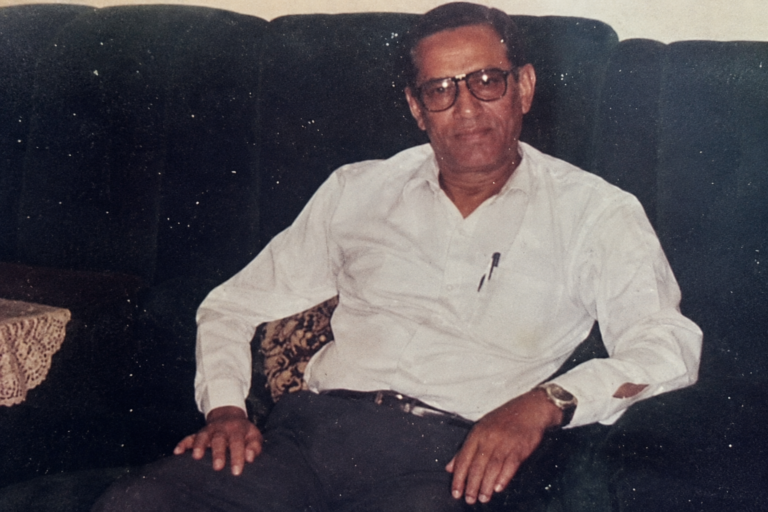
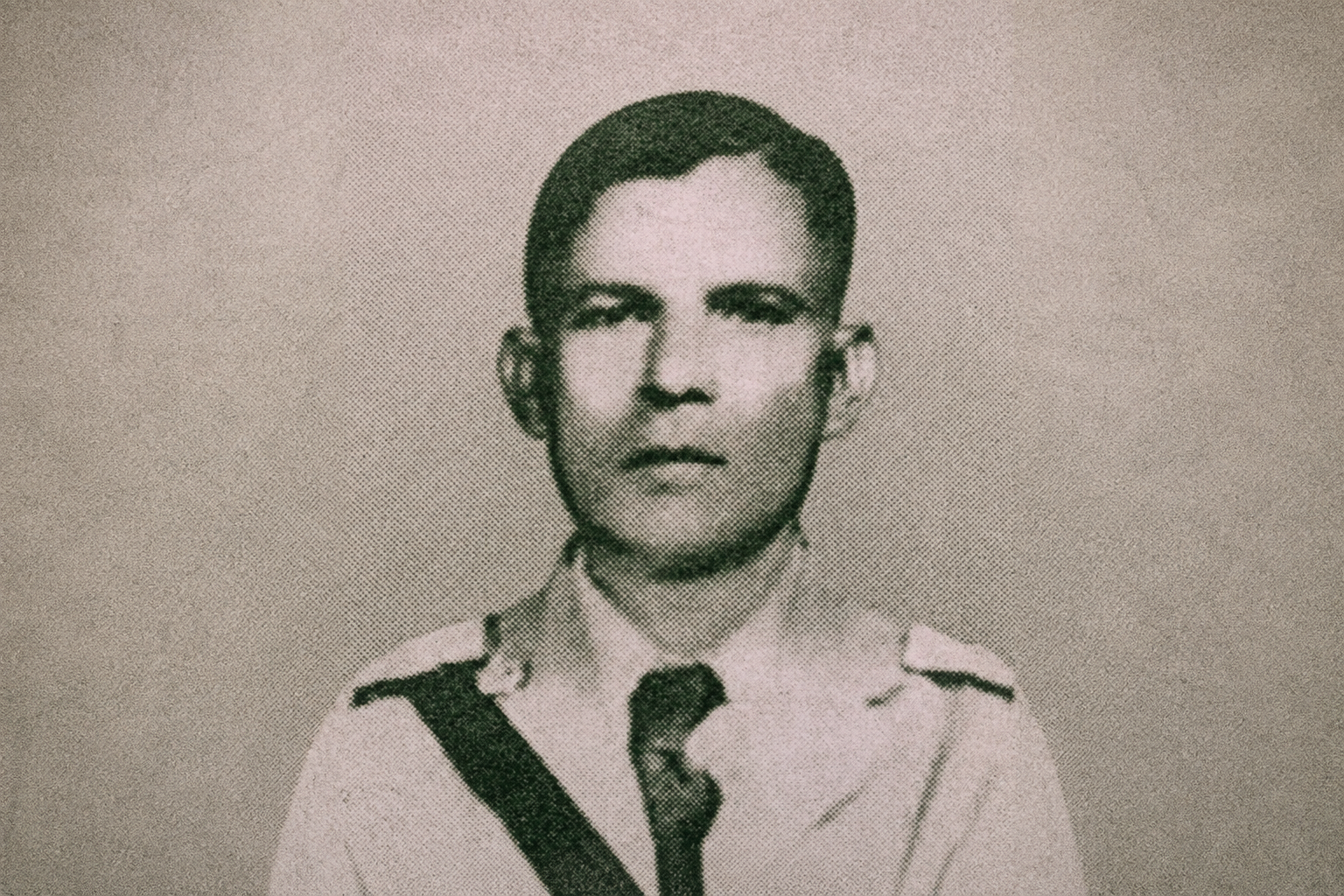
Abul Khair, a Rohingya MP and former British Burma police officer (Photo: Wikimedia Commons. AI-enhanced)
Abul Khair, recorded in official Burmese gazettes and parliamentary Hansards as U Abul Khair or Abul Khair MP, was a Rohingya political leader, former colonial police officer, municipal administrator, and Member of the Union Parliament of Burma. Representing the borderland constituency of Maungdaw South in the Chamber of Deputies from 1956 until General Ne Win's March 1962 coup, he built his political career on a foundation of colonial law enforcement service, municipal governance, and a consistent, constitutionalist defense of Rohingya citizenship and minority rights.
At a Glance
Birth and Family Background
Abul Khair was born in the early decades of the twentieth century in Maungdaw Township, within the Akyab (Sittwe) District of the Arakan Division in British Burma. The borderland town of Maungdaw, positioned along the eastern bank of the Naf River opposite Teknaf in East Bengal, later East Pakistan and now Bangladesh, served as a principal commercial, agricultural, and administrative center for Arakan's indigenous Muslim population.
He was born into an established agrarian and civic family of high social standing within the local Rohingya community. His family possessed agricultural land in Maungdaw Township and maintained deep roots in regional trade and civic affairs, part of the rural landowning gentry that provided local leadership during the late British colonial era. Specific archival details regarding his mother's maiden name and the identities of all his siblings remain unverified in official British colonial gazettes, though local community histories preserve his lineage as rooted in the historic Muslim settlements of Maungdaw South.
Education and Language Competency
Abul Khair's early education reflected the bi-cultural educational framework available to prominent families in colonial Arakan. He began his studies in local traditional Islamic madrasas and primary vernacular schools in Maungdaw, achieving literacy in Arabic, Urdu, and the local Rohingya dialect. Recognizing the imperative of colonial administrative mobility, his family enrolled him in government-accredited secondary institutions in Akyab, the administrative capital of Arakan Division, where he completed his secondary education at an Anglo-Vernacular High School and passed the imperial standard examinations.
During this period, Abul Khair attained high fluency in written and spoken Burmese, alongside formal English and vernacular Bengali. His multilingualism enabled him to navigate British civil service requirements, interact with Burman political elites in Rangoon, and maintain direct, unmediated communication with his rural constituents in northern Arakan.
Colonial Police Career
Prior to entering national electoral politics, Abul Khair built a distinguished civil career in colonial law enforcement, enlisting in the Burma Police, an executive branch that operated under the broader cadre of the Indian Imperial Police structure until the administrative separation of Burma from British India under the Government of Burma Act 1935, effective 1 April 1937. Native officers who demonstrated administrative capability, language proficiency, and executive discipline were promoted to executive supervisory ranks such as Sub-Inspector, Inspector, or Assistant District Superintendent.
Abul Khair served as an executive police officer across the Arakan Division, with postings that exposed him to the diverse socio-political landscape of the province. In Buthidaung, he managed riverine patrol, agrarian criminal investigations, and rural public order along the Mayu River valley. In the southern island district of Kyaukpyu, he served within a predominantly Rakhine Buddhist populace, gaining direct operational experience in central Arakanese civil court procedures and district administration. In Sandoway (Thandwe), he held executive duties in southern Arakan, establishing an institutional record as a neutral colonial administrator. And in Maungdaw and Akyab, he supervised border security, customs enforcement, and municipal police operations along the Naf River frontier.
His police service records reflect operational responsibilities that included counter-dacoity operations, land boundary enforcement, border control along the Naf River, and mediating agrarian tenancy conflicts between tenant farmers and absentee landlords. His tenure coincided with World War II, the Japanese invasion and occupation of Burma (1942-1945), and the devastating inter-communal violence that erupted in Arakan in 1942. As a police officer trained in colonial administrative neutrality, he survived the political upheavals of the war and emerged in the immediate post-war era as a respected community elder capable of liaising between the British military administration, local village headmen, and nationalist leaders in Rangoon. He retired honorably from civil police service in the late 1940s to transition into municipal public governance.
Political Awakening and the AFPFL
The decade spanning 1940 to 1950 transformed the political landscape of Arakan. Following the devastation of World War II and the end of British colonial rule, the Muslims of northern Arakan faced intense political choices. While some factions explored alignment with the All-India Muslim League advocating for annexation into East Pakistan, and others joined local armed insurgencies, a substantial bloc of educated Rohingya civic leaders chose strict integration within the emerging Union of Burma. Abul Khair aligned decisively with this constitutional nationalist stream, rejecting armed separatism and communal irredentism, and arguing that the long-term survival, legal citizenship, and socio-economic advancement of the Rohingya people depended on full participation in Burma's democratic institutions.
Following Burma's independence on 4 January 1948, the Anti-Fascist People's Freedom League (AFPFL), the dominant national coalition founded by General Aung San and led by Prime Minister U Nu, sought to build political bases in frontier ethnic regions. Abul Khair joined the AFPFL in the early 1950s, becoming an influential figure in the party's Maungdaw District Executive Committee. His decision was strategic: the ruling party controlled federal development funds, held cabinet authority over education and interior security, and officially recognized the distinct identity and citizenship rights of Arakanese Muslims. In return, Abul Khair mobilized rural Muslim voters in Maungdaw behind the AFPFL platform of national unity, constitutional democracy, and state-sponsored development.
President of the Maungdaw Township Council, 1955-1956
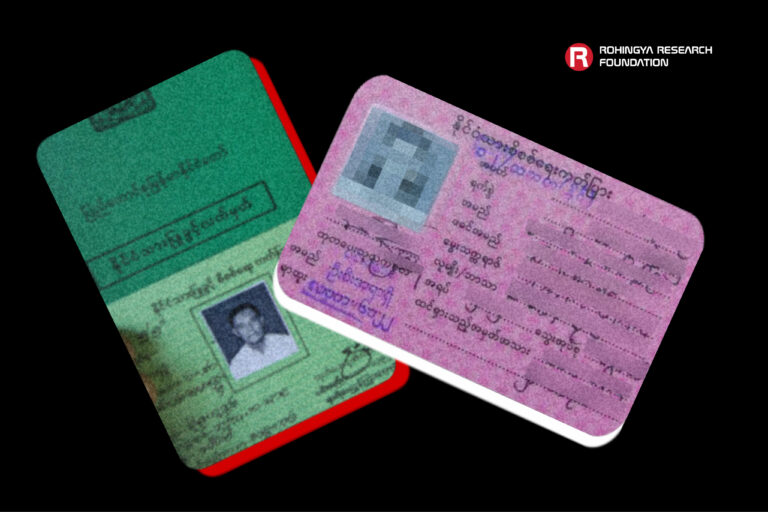
In 1955, Abul Khair was elected President of the Maungdaw Township Council, nominated by the AFPFL, reflecting both official party backing and strong local support among town elders, rural headmen, and merchant guilds. As President, he exercised executive authority over local municipal governance during a critical period of post-war reconstruction, reorganizing local market fees, river ferry concessions, and property assessments to create a stable municipal fund; establishing municipal medical dispensaries and sanitation protocols in Maungdaw town and surrounding village tracts; streamlining local residency registries that later proved critical documentation for residents during national registration drives; and serving as the chief civilian authority coordinating with federal border forces and customs officials along the Naf River transit corridors.
His tenure was also marked by concrete civil infrastructure projects: constructing and grading all-weather gravel roads connecting Maungdaw town to southern coastal villages such as Alethankyawi and Kanyin Chaung; building jetties and landing stages along the Naf River and connecting estuaries to improve agrarian transport for local rice farmers and fishermen; expanding and modernizing public bazaars in Maungdaw South with standardized stalls for local Muslim and Rakhine traders; and partnering with district agricultural officers to repair saltwater dykes and earthen embankments protecting low-lying paddy fields from coastal inundation. His effective management of the Township Council established his reputation as a capable administrator, setting the stage for his entry into national legislative politics in 1956.
Expanding Education in Northern Arakan
A cornerstone of Abul Khair's career was his commitment to educational reform. During the colonial era and early post-independence period, educational facilities in Maungdaw and Buthidaung were severely underfunded, with secondary education concentrated in Akyab, creating prohibitive financial and logistical barriers for rural Muslim students, who often faced long, costly, and hazardous journeys by sea or river simply to sit for national matriculation examinations.
Recognizing that educational disenfranchisement entrenched poverty and political vulnerability, Abul Khair mounted a dedicated campaign to expand state education, successfully petitioning the Ministry of Education in Rangoon to convert local middle schools into fully accredited State High Schools across Maungdaw South, and securing federal authorization to establish official national matriculation examination centers directly in Maungdaw and Buthidaung, allowing local Rohingya and Rakhine students to complete national standard exams in their home townships for the first time. He also encouraged Burmese language instruction in primary schools to enable Muslim youth to sit for state civil service exams, while protecting local Islamic vernacular instruction in village primary schools.
The 1956 General Election
The April 1956 Burmese general election was a competitive contest between the ruling AFPFL coalition and the opposition National United Front, alongside independent ethnic candidates. In Maungdaw South, the incumbent MP was Daw Aye Nyunt, known as Zura Begum, a prominent Rohingya female politician who had won the seat in 1951 with 75.41 percent of the vote, the daughter of community leader U Po Khine and wife of Sultan Ahmed, the MP for Maungdaw North.
Despite her legislative record, the AFPFL Maungdaw District Committee sought a candidate with extensive executive and administrative experience to address growing border security challenges and municipal development needs, and officially selected Abul Khair as its candidate. He ran a well-organized campaign mobilizing rural farming communities, municipal trade guilds, and village elders, focused on expanding local schools, securing federal agricultural development funds, protecting civil citizenship rights, and improving borderland infrastructure. The election resulted in a decisive victory for Abul Khair, who achieved the highest individual vote share among all Rohingya candidates elected to the Union Parliament in the 1956 national elections, succeeding Daw Aye Nyunt while her husband Sultan Ahmed continued to serve alongside him as MP for Maungdaw North, a transition that underscored the institutional maturity of the local electoral process during Burma's parliamentary era.
Union Parliament Career, 1956-1962
Abul Khair was formally sworn in as a Member of the Chamber of Deputies, the lower house of the Pyidaungsu Hluttaw, in Rangoon following the 1956 election, representing Maungdaw South continuously across two parliaments until the military takeover on 2 March 1962. He joined the voting bloc of the ruling AFPFL, working closely with Prime Minister U Nu, Defense Minister U Ba Swe, and Cabinet Minister Sultan Mahmud. He served on several parliamentary select committees dealing with border administration, public education, and municipal law reform. His legislative style was characterized by procedural diligence, direct advocacy for constituency needs, and a consistent effort to integrate northern Arakan into national development programs.
He regularly used parliamentary question hours to hold ministry officials accountable on issues affecting borderland residents. In September 1956, he secured federal budgetary sanction for State High Schools in Maungdaw South, funding secondary school construction and teacher salaries. In March 1957, he questioned the Minister of Interior on delays in issuing National Registration Cards in Maungdaw, demanding removal of the administrative bottlenecks. In August 1958, he delivered a speech on border policing, customs regulation, and protecting agrarian civilian populations from military harassment, advocating for civil oversight of border police units operating along the East Pakistan frontier. He also inquired about state distribution of agricultural relief credit to paddy farmers following seasonal cyclones, questioned the Ministry of Commerce over transit permit delays harming borderland micro-economies, requested permanent medical officers, midwives, and anti-malarial supplies for rural health centers, and advocated for qualified Muslim youth from Arakan to be recruited into the Union Police Force, Customs Department, and state teaching cadres.
| Date | Topic | Action |
|---|---|---|
| Sep 1956 | Educational Infrastructure | Motion for federal funding of State High Schools in Maungdaw South |
| Mar 1957 | Civil Registration & NRCs | Question to the Minister of Interior on NRC issuance delays |
| Aug 1958 | Border Security & Naf River Rights | Speech advocating civil oversight of border police units |
| Nov 1959 | National Identity & Minority Rights | Supported U Nu's recognition of the Rohingya as indigenous |
| May 1960 | Arakan Statehood Deliberations | Submitted formal memorandum opposing unconditional inclusion |
The 1960 Election and Realignment
When the AFPFL split in 1958 into the "Clean" faction led by U Nu and Thakin Tin and the "Stable" faction led by U Ba Swe and U Kyaw Nyein, Abul Khair aligned with U Nu's Clean AFPFL, which subsequently contested the 1960 elections as the Pyidaungsu (Union) Party. In the February 1960 general election, he stood for re-election in Maungdaw South under the Pyidaungsu banner, running on a platform endorsing U Nu's commitments to make Buddhism the state religion while preserving constitutional minority guarantees, establishing the Mayu Frontier Administration, and expanding regional schools. He won re-election by a substantial majority, defeating rival candidates from the Stable AFPFL and Rakhine nationalist organizations, and returned to the Chamber of Deputies for a second term.
Arakan Statehood and Constitutional Autonomy
The political issue of Arakan statehood dominated Burmese parliamentary debates between 1958 and 1961. Ethnic Rakhine nationalist parties, led by the Arakan National United Organization, mobilized intensely for the creation of a unified Arakan State within the Union of Burma. This proposal presented a profound constitutional challenge for the Rohingya parliamentary delegation, including Abul Khair, Sultan Mahmud, Abul Bashar, and M. A. Gaffar. While supporting federal decentralization in principle, these leaders expressed deep concern that an autonomous Arakan State governed from Akyab by a Rakhine Buddhist majority would result in the political marginalization, cultural assimilation, and economic disenfranchisement of the Muslim population of northern Arakan. Abul Khair argued that any constitutional reorganization must account for the unique demographic, linguistic, and historical realities of Maungdaw and Buthidaung, where Muslims constituted a large majority, maintaining that the Rohingya were an indigenous national group entitled to administrative self-determination within the Union of Burma.
The 1960 Statehood Memorandum
In response to Prime Minister U Nu's appointment of the Arakan Statehood Enquiry Commission in 1960, Abul Khair co-authored a historic constitutional submission with his parliamentary colleague Abul Bashar, MP for Buthidaung South, titled "The Remarks of Mr Abul Bashor and Mr Abul Khair on Arakan's Statehood." The document formally declared that the Muslim-majority townships of Maungdaw, Buthidaung, and western Rathedaung could not be unconditionally incorporated into a unified Arakan State governed from Akyab, and proposed instead that if an Arakan State were established, northern Arakan must be created as a separate, autonomous administrative territory governed directly by the central Union Government in Rangoon. The authors demanded explicit constitutional protections guaranteeing equal civil rights, freedom of religious practice, preservation of the Rohingya language, and proportional representation in local government and civil service cadres, and warned that forcing Muslim-majority areas into a regional state structure without local consent would lead to inter-communal friction, economic disruption, and political instability along the border. This memorandum provided the primary rationale for the central government's creation of the Mayu Frontier Administration on 1 May 1961, a special administrative zone encompassing Maungdaw, Buthidaung, and western Rathedaung that operated directly under the Ministry of Defense and central government supervision.
Rohingya Identity and Citizenship
Throughout his legislative career, Abul Khair articulated a clear understanding of identity that integrated local heritage with national Burmese citizenship. In parliamentary debates and public meetings, he affirmed that the Muslims of northern Arakan were "Rohingya," an indigenous ethnic nationality (Tainggyinei) rooted in Arakan for centuries. He supported Prime Minister U Nu's public radio declarations in November 1959, which affirmed that the Rohingya possessed equal national status with the Kachin, Kayah, Karen, Mon, Rakhine, Shan, and Burman nationalities, while emphasizing loyalty to the Union of Burma and rejecting irredentist calls to secede or join neighboring nations.
Under the 1947 Constitution of the Union of Burma, citizenship was defined under Section 11, granting statutory citizenship to persons belonging to indigenous nationalities or those who had resided in the territories of the Union for at least eight out of ten years prior to 1942. Abul Khair consistently advocated for the systematic administrative issuance of National Registration Cards to all residents of Maungdaw South, intervening directly with the Ministry of the Interior when local officials delayed registration processing or raised arbitrary documentation hurdles. He maintained that the Rohingya fulfilled all statutory criteria under the 1948 Union Citizenship Act and the 1949 Residents Registration Act, arguing against exclusionary administrative measures that sought to classify indigenous border populations as foreign residents.
The Mayu Frontier Administration
The establishment of the Mayu Frontier Administration on 1 May 1961 represented a significant policy achievement for the Rohingya parliamentary group. Designed as a special administrative region comprising Maungdaw Township, Buthidaung Township, and the western part of Rathedaung Township, it was administered directly by military officers reporting to the central government in Rangoon, bypassing the regional district administration in Akyab. Abul Khair supported it as an effective interim measure that secured local administrative autonomy, protected Muslim civil rights, and brought federal security resources directly into the border area, working closely with MFA administrators as MP for Maungdaw South to coordinate public works projects, expand educational facilities, and stabilize the borderland economy until the administration was disbanded following the military coup.
Rejection of the Mujahideen Insurgency
Following Burma's independence, an armed Muslim insurgency, the Mujahideen movement, erupted in northern Arakan, demanding an independent Islamic state or annexation to East Pakistan. Some political opponents and military hardliners attempted to cast all Rohingya political leaders as sympathizers of the armed insurgency. Historical records confirm that Abul Khair maintained a strict policy of constitutionalism and rejected the Mujahideen insurgency. As a former colonial police officer, his professional career was grounded in statutory law and public order, and throughout the 1950s he repeatedly condemned political violence, urged armed insurgents to surrender under government amnesty programs, and argued in parliament that political goals must be pursued exclusively through constitutional elections and democratic representation.
While Abul Khair maintained cordial relations with religious leaders, he functioned primarily as a secular civil administrator and constitutional parliamentarian rather than a clerical figure. He collaborated with the Jamiat-ul-Ulama of Arakan, a prominent civic and religious organization led by Sultan Ahmed, on issues regarding religious freedom and community welfare, but remained a member of the secular AFPFL party rather than a religious organization.
Legislative Relationships
Abul Khair maintained close working relationships with his fellow Rohingya legislators, forming an effective caucus within the Union Parliament. Sultan Mahmud, as the highest-ranking Rohingya official in the executive cabinet, worked closely with Abul Khair to secure federal ministerial approval for health clinics, agricultural credits, and educational resources in Maungdaw and Buthidaung. Abul Bashar, MP for Buthidaung South, was Abul Khair's primary legislative partner; the two frequently co-signed parliamentary motions and jointly drafted the 1960 submission on Arakan Statehood. Sultan Ahmed, MP for Maungdaw North, co-managed constituency affairs for Maungdaw District; while Sultan Ahmed focused on Parliamentary Secretary duties and religious affairs, Abul Khair concentrated on municipal administration and secondary educational infrastructure.
Abul Khair also built productive working relationships with senior national figures. He was a consistent supporter of Prime Minister U Nu's constitutional platform, welcomed U Nu's public recognition of Rohingya national identity, and hosted the Prime Minister during official executive visits to Maungdaw in the late 1950s. He worked with Defense Minister U Ba Swe on border security matters, ensuring local police and border units maintained professional standards and respected the civil rights of rural Muslim cultivators, and interacted with Brigadier General Aung Gyi during the setup of the Mayu Frontier Administration in 1961, advocating for civilian-military administrative cooperation in frontier townships.
Inter-Communal Relations with the Rakhine Community
Abul Khair's administrative and legislative career reflected a practical approach to inter-communal relations. Having served as a colonial police officer in southern Rakhine-majority townships like Kyaukpyu and Sandoway, he understood Rakhine political concerns and maintained open communication with moderate Rakhine politicians in the Union Parliament. In Maungdaw, he ensured that municipal public works, market stall allocations, and primary education funds benefited both Muslim and Rakhine residents. While opposing Rakhine nationalist plans for an unconditional regional state that would encompass Muslim-majority townships, he avoided divisive rhetoric, emphasizing that civic peace and economic development in Arakan depended on mutual constitutional respect between the two communities.
The 1962 Coup and Its Aftermath
On 2 March 1962, General Ne Win launched a military coup d'état, arresting Prime Minister U Nu, cabinet ministers including Sultan Mahmud, and key legislative leaders. The Revolutionary Council abolished the 1947 Constitution, dissolved the Pyidaungsu Hluttaw, terminated municipal township councils, and replaced civilian administration with military security administrative committees. The coup ended democratic parliamentary governance in Burma and terminated Abul Khair's formal legislative career. The Mayu Frontier Administration was subsequently dismantled, and northern Arakan was re-integrated into the military-administered Arakan Division. Former MPs were placed under security surveillance, political parties were banned, and the state-controlled press ceased coverage of minority parliamentary figures.
Post-1962 Community Life
Following the dissolution of parliament, Abul Khair returned permanently to Maungdaw. Refusing to join military-sponsored political organizations or military-dominated local committees, he retired from formal state politics. During the 1960s and 1970s, he functioned as an influential elder statesman in Maungdaw, focusing his efforts on informal dispute resolution, supporting rural madrasas and secular schools, and helping local farmers document land ownership rights. His deep knowledge of colonial law, statutory registration procedures, and administrative regulations made him a trusted counselor for community members navigating increasingly restrictive military rule.
The 1978 Refugee Crisis
In 1978, the Burmese military regime under Ne Win launched Operation Nagamin ("Dragon King"), a large-scale military and immigration operation in northern Arakan marked by widespread human rights abuses, arbitrary arrests, and document confiscations, driving over 200,000 Rohingya residents across the Naf River into East Pakistan, now Bangladesh. During this crisis, Abul Khair leveraged his prestige as a former imperial police officer and former Member of Parliament to assist displaced civilian families, working quietly with local village elders to preserve historical family registries, national registration card receipts, and school certificates that proved indigenous Burmese residence. When Bangladesh and Myanmar negotiated a UN-sponsored repatriation agreement in late 1978 and 1979, these preserved records proved critical in assisting thousands of refugees in demonstrating their right of return to Maungdaw and Buthidaung.
Death and Commemoration
Abul Khair passed away in the post-1978 era in Maungdaw Township, surrounded by his immediate family and community members. His funeral in Maungdaw was attended by thousands of local residents, including village headmen, Islamic scholars, local teachers, and representatives from neighboring townships. He was buried in a local Muslim cemetery in Maungdaw Township. In the decades since, he has been commemorated within the Rohingya diaspora and local community archives as a dedicated public servant who defended minority rights through constitutional, democratic means.
Legacy
Abul Khair's life spanned three distinct eras: British colonial police administration, post-independence municipal governance, and parliamentary service in the Union Parliament. His key achievements include applying his law enforcement and municipal executive experience to establish stable civil governance in the Maungdaw borderland; creating official examination centers and state high schools in northern Arakan that opened pathways for youth to enter university education and national public service; and articulating a clear legal framework for Rohingya identity and citizenship within the Union of Burma, while negotiating for administrative autonomy through the Mayu Frontier Administration during the Arakan statehood debates.
Modern scholarship on post-independence Burmese political history emphasizes the role played by minority parliamentarians like Abul Khair, evaluating him as a member of an influential generation of educated, democratic Rohingya leaders who sought full integration into the Burmese state on the basis of constitutional equality. Unlike separatist insurgents or radical nationalists, Abul Khair worked entirely within the statutory framework of the Union of Burma, and his parliamentary speeches, municipal initiatives, and statehood submissions offer clear historical evidence of the Rohingya community's deep democratic engagement and recognized citizenship during Burma's parliamentary era.
Complete Timeline
Tap any year for the fuller account.
c. 1910s+
c. 1930s+
1935-48+
1955-56+
Apr 1956+
May 1956+
Feb 1960+
May 1960+
1 May 1961+
2 Mar 1962+
1978+
Post-1978+
Related Figures
Read more about his fellow Rohingya parliamentarians of Burma's post-independence era:
Sources & Bibliography
This profile is built from official electoral gazettes, Union Parliamentary Hansard records, community archival documentation, and secondary academic scholarship on Arakan and Rohingya political history.
- Wikipedia — Abul Khair (legislator).
en.wikipedia.org - University of Dhaka — Securitization of "Rohingyas" in Myanmar: An Analysis.
reposit.library.du.ac.bd - Scribd — A Comprehensive History of Arakan, by Dr. Mohammed Yunus.
scribd.com - Scribd — Towards Understanding Arakan History, by Abu Anan.
scribd.com - Scribd — Report on the Conditions and Sufferings of the Rakhaines in Maungdaw.
scribd.com - Wikipedia (Bengali) — Abul Khair (legislator).
bn.wikipedia.org - Wikipedia — Aye Nyunt.
en.wikipedia.org - Munich Personal RePEc Archive — Future of Rohingyas: Dignified Return to Myanmar or Restoring.
mpra.ub.uni-muenchen.de - Master Aman Ullah Archive — Community archival documentation on Rohingya parliamentary history.
masteramanullah.com