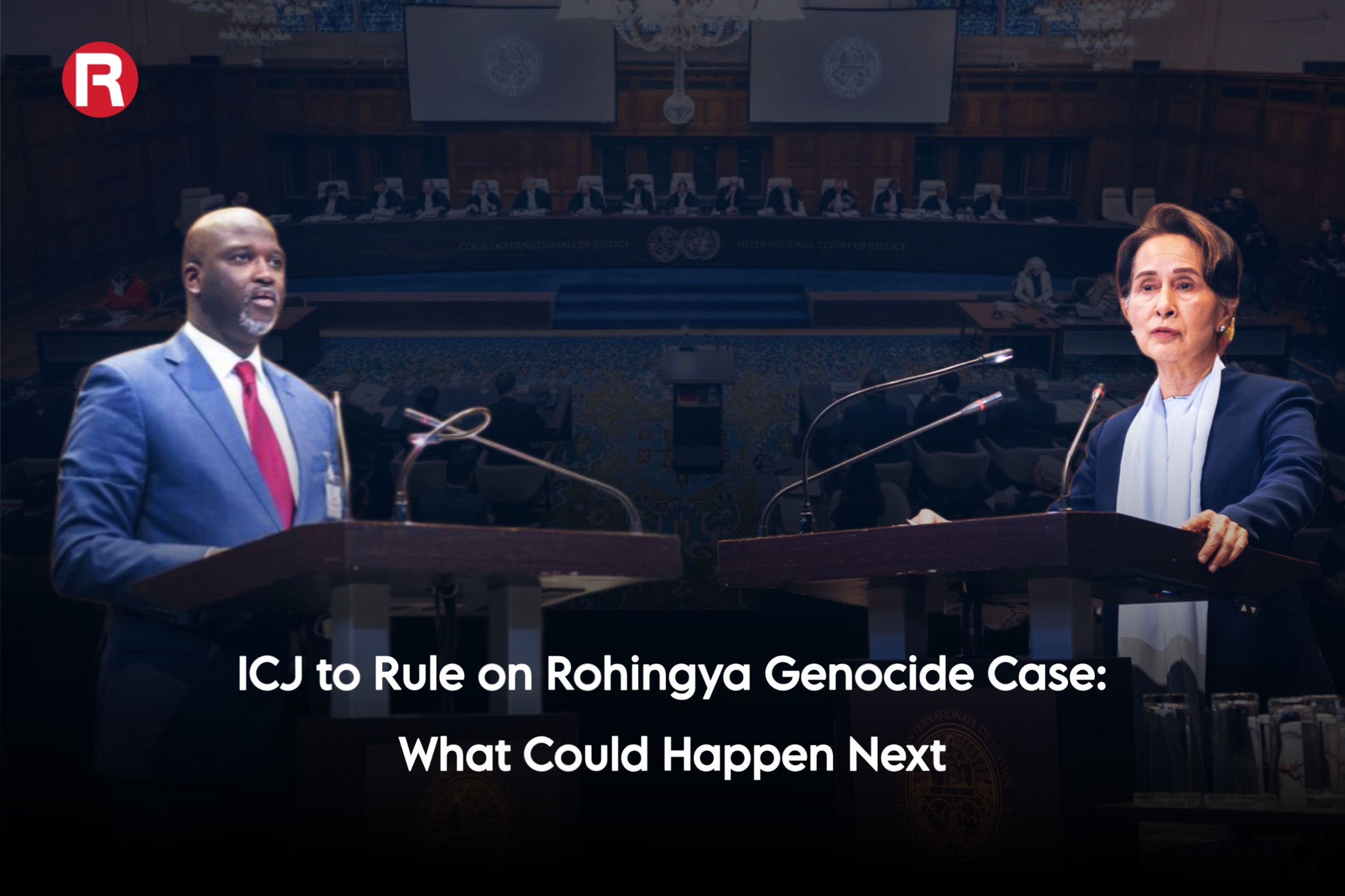
The UN's top court will decide on 19 November whether Myanmar committed genocide against the Rohingya. A look at the case, the hearings, and what a "yes" or "no" ruling could mean.

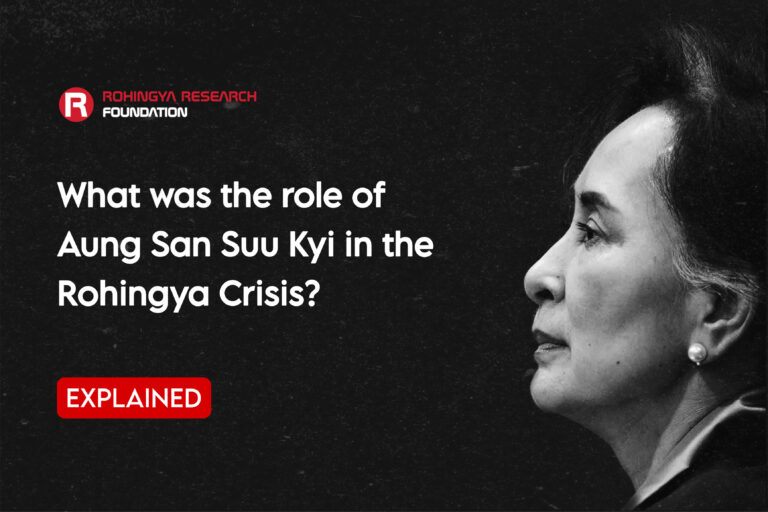
Gambia's Justice Minister Abubacarr Tambadou (left) and Myanmar's Aung San Suu Kyi (right) at the ICJ in The Hague, December 2019
The International Court of Justice (ICJ) will deliver its final judgment in The Gambia v. Myanmar on 19 November 2026, the court announced on 3 November. The judges in The Hague will decide whether Myanmar, as a state, is responsible for genocide against the Rohingya.
The ruling is final. There is no appeal, and it will close a case that began seven years ago.
What happened to the Rohingya
In August 2017, Myanmar’s security forces launched a campaign of massacres, rape and arson against Rohingya Muslims in northern Rakhine State. More than 700,000 people fled to neighbouring Bangladesh, according to Human Rights Watch.
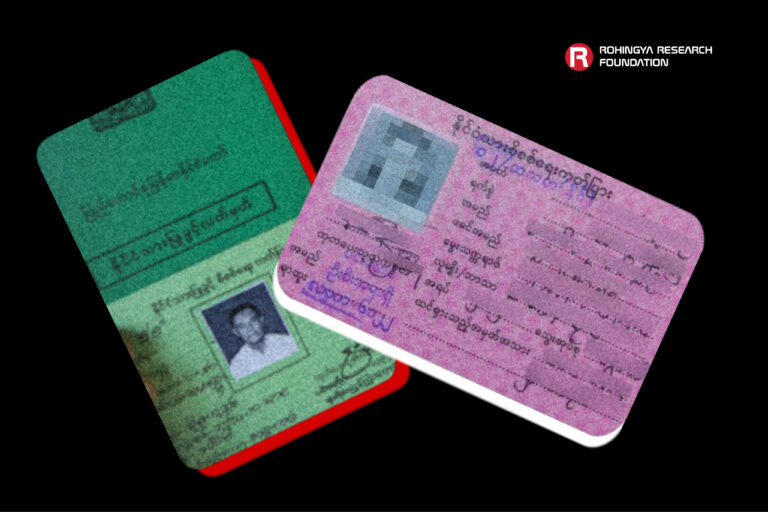
Myanmar’s military called the operations a counterterrorism response to attacks by the Arakan Rohingya Salvation Army (ARSA), an armed group. The Rohingya had faced decades of discrimination before 2017, and most were denied citizenship under Myanmar’s 1982 citizenship law.
Why The Gambia brought the case
The Gambia, a small West African country, filed the case on 11 November 2019 with the backing of the Organisation of Islamic Cooperation (OIC). It had no direct link to the events in Myanmar.
It could still sue because both countries are parties to the 1948 Genocide Convention. Article 9 of the treaty lets any member take another member to the ICJ over disputes about genocide. Myanmar ratified the convention in 1956 and The Gambia in 1978.
This was the first time a country with no direct connection to alleged crimes used the convention to bring a case. In 2022, the court confirmed that every member has a shared interest in preventing genocide, so The Gambia had the right to sue.
This is not a criminal trial. No individual can be jailed. The court is asked to decide whether the state of Myanmar broke its legal duties under the convention.
Three rounds of hearings in seven years
The court has held public hearings three times. Each round dealt with a different question.
The first came in December 2019, when The Gambia asked for emergency protection for the Rohingya still in Myanmar. In January 2020, the court unanimously ordered Myanmar to prevent genocidal acts, preserve evidence and report back regularly. Myanmar went on to submit 12 reports.
The second, in February 2022, dealt with Myanmar’s objections to the case. Myanmar argued, among other things, that The Gambia was acting as a proxy for the OIC. In July 2022, the court rejected all of its objections and the case moved ahead.
The third and final round, on the merits, ran from 12 to 29 January 2026. Over three weeks, lawyers for both sides presented their arguments and questioned witnesses and an expert. The judges then began their deliberations.
Between hearings, both sides filed long written arguments from 2020 to 2024. In 2025, the court allowed 11 countries to join on legal questions, including the UK, Canada, France, Germany, the Netherlands and the Maldives.
The Gambia argued that Myanmar’s forces killed, raped and burned villages with the intent to destroy the Rohingya as a group. Myanmar argued that its operations targeted ARSA fighters, and that there is no proof of genocidal intent.
If the court finds Myanmar responsible
A guilty finding would make Myanmar the first state ever held responsible by the ICJ for directly committing genocide.
The Gambia has asked the judges to order Myanmar to stop all violations, make genocide a crime under its own law and put suspected perpetrators on trial.
It also wants reparations for the Rohingya. These include a safe and dignified return home, the return or replacement of property, family reunification, and protection from discrimination, including the right to call themselves Rohingya and to move freely.
Where return or repair is not possible, The Gambia asks for compensation. It also wants Myanmar to promise not to repeat the violations.
The court can grant all, some or none of these. It may also find that Myanmar ignored its 2020 emergency order.
For the Rohingya, a ruling would be a permanent, official record that what happened was genocide. Rights groups say a ruling would support Rohingya demands for citizenship, safe return and justice. It would also add weight to other cases, such as the International Criminal Court’s investigation and an Argentine court’s 2025 arrest warrants for military leader Min Aung Hlaing.
For Myanmar, the military government would face a binding legal finding of genocide. Under the UN Charter, Myanmar would be legally bound to comply.
The closest example is Bosnia v. Serbia in 2007. The ICJ found that genocide took place at Srebrenica, where more than 7,000 Bosnian Muslim men and boys were killed. But it ruled that Serbia had not committed it, and found Serbia guilty only of failing to prevent and punish it.
The court ordered no money in that case. It said the ruling itself was enough, and told Serbia to hand over suspects such as general Ratko Mladić, who was arrested in 2011.
Unlike Bosnia, The Gambia argues that Myanmar’s own army carried out the killings, not a separate armed group.
If the court does not find genocide
The hardest part of any genocide case is proving intent: that the state meant to destroy the group, in whole or in part. Under the court’s own test, intent can be drawn from a pattern of conduct only if it is the only reasonable conclusion. Myanmar argues this test has not been met.
A “no” verdict would not have to be all or nothing. The court could still find that Myanmar failed to prevent genocide or failed to punish those responsible, as it did with Serbia in 2007.
It could also rule that Myanmar ignored the 2020 emergency order, or describe serious crimes in detail without calling them genocide.
The closest example is Croatia v. Serbia in 2015. The two countries accused each other of genocide during the 1990s Balkan wars, and the court rejected both claims. It accepted that killings and mass expulsions took place, but said intent to destroy a group was not proven. Neither side had to pay anything.
For the Rohingya, other legal routes would remain open. War crimes and crimes against humanity are separate crimes from genocide. The International Criminal Court’s investigation and national cases, such as the one in Argentina, target individuals and would continue regardless of the ICJ’s ruling.
For Myanmar, a rejection would mean the court found the genocide claim against it not proven. Myanmar has maintained throughout the case that its 2017 operations were counterterrorism measures, not genocide.
Can the ruling be enforced?
The judgment is legally binding, but the ICJ has no police or army. If Myanmar does not comply, The Gambia can turn to the UN Security Council, which can decide on measures to enforce it. The council has never used this power, and China and Russia, both veto holders, vetoed a council resolution on Myanmar in 2007.
The UN General Assembly can also call for compliance, and individual countries can apply their own pressure.
Since late 2023, Rohingya in Rakhine State have been caught in fighting between the military and the Arakan Army, which now controls most of the state. Human Rights Watch has documented abuses against Rohingya by both sides, including killings, arson and forced recruitment.
The 19 November judgment will be the court’s first final ruling on whether genocide was committed against the Rohingya. Four other genocide cases are now pending before the ICJ, and its reasoning in this case is expected to be cited in them.