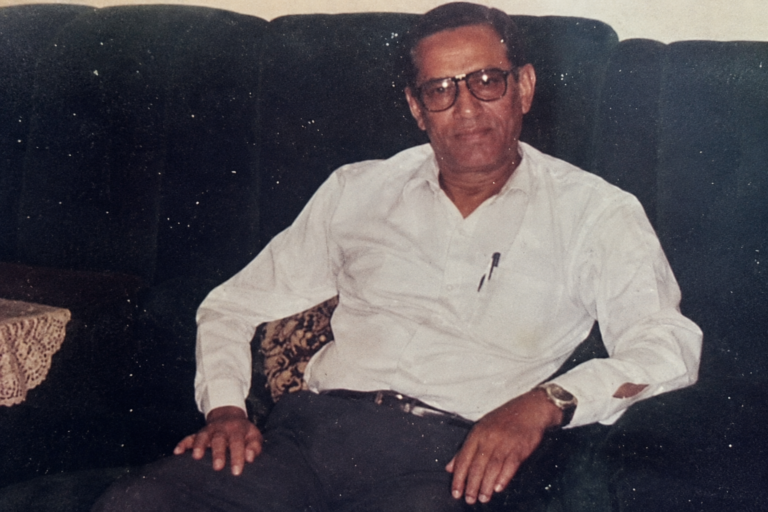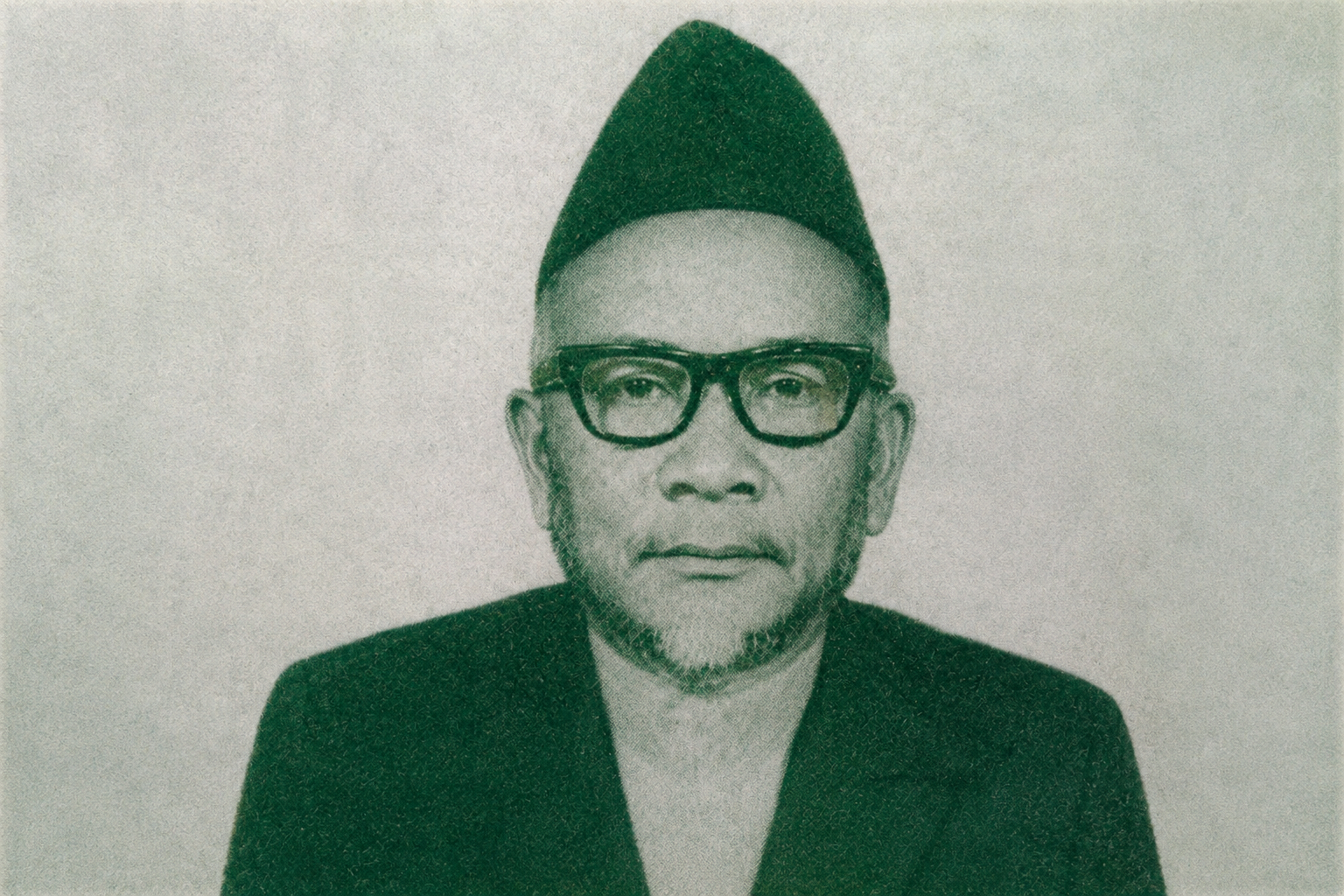
Former Union Minister of Health under Prime Minister U Nu, Member of Parliament for Buthidaung North, and President of the Arakan Muslim Association

Sultan Mahmud, politician from Arakan and Minister of Health of Burma. (Image digitally restored and enhanced using AI)
Sultan Mahmud, recorded across colonial civil lists, Burmese parliamentary and cabinet records, and the Rangoon press, was a Muslim statesman, Union Minister of Health, and one of the highest-ranking Muslim cabinet officers in modern Burmese history. As Member of Parliament for Buthidaung North and president of the Arakan Muslim Association, he spent his career arguing that Arakan's Muslim population could secure its rights through constitutional negotiation rather than armed insurrection, a strategy that directly produced the short-lived Mayu Frontier District of 1961.
At a Glance
Family and Origins
Sultan Mahmud was born in Akyab (now Sittwe), the administrative and commercial capital of Arakan Division, into the established Muslim urban merchant and landowning gentry of coastal Arakan. This class maintained trade and cultural ties across the Bay of Bengal, linking Akyab to Chittagong and Calcutta. Colonial census registers indicate Akyab's Muslim population combined long-settled indigenous Arakanese Muslim families, tracing heritage to the early modern Kingdom of Mrauk-U (1430–1784), with merchant families who expanded operations after 1826 under British administration.
His father was an influential civic figure in local trade and property management, giving the family the means to provide Mahmud with an advanced education. Archival evidence places his lineage within the established framework of Arakanese Muslim urban gentry, a class that leveraged its socio-economic standing to advocate for community welfare and political representation, rather than within any single, later-imposed ethnonym.
Childhood in a Cosmopolitan Seaport
Mahmud grew up in Akyab during a period of rapid economic growth and demographic change. As a major seaport on the Bay of Bengal, the city was a multi-ethnic municipality where Rakhine Buddhists, Arakanese Muslims, South Asian Hindu and Muslim traders, Bamar civil servants, and British colonial officials interacted daily. Raised in this environment, he became fluent in Burmese, the local Arakan Muslim dialect (later known as Rohingya), Bengali, and English. Growing Burmese nationalist sentiment and rising intercommunal economic friction during his formative years instilled in him an early awareness of the fragile constitutional position Arakan's Muslim minority occupied within the wider imperial structure.
Education in Calcutta
After primary and middle schooling in Akyab under the standard Burmese and English colonial curriculum, Mahmud's family sent him to Calcutta, the intellectual and political capital of the Bengal Presidency, for university study during the interwar years, a period when Bengal was the epicenter of intense debate over Indian self-governance, constitutional reform, and minority safeguards. That education grounded him in British imperial law, political history, economics, and constitutional theory, distinguishing him from many contemporary provincial politicians and equipping him with the administrative vocabulary he would later use negotiating directly with British colonial governors and, after independence, with Prime Minister U Nu.
From New Delhi Secretariat to Akyab Notable
Before entering parliamentary politics, Mahmud built a career spanning civil administration and commercial enterprise. Records place him in an administrative post within the Central Legislative Assembly apparatus in New Delhi prior to Burma's formal separation from British India in April 1937, work that gave him direct operational insight into legislative drafting, secretariat management, and imperial civil service procedure. Returning to Arakan, he managed family commercial interests and took up leadership roles in Akyab's civic and religious bodies, mediating trade disputes, funding municipal education, and organizing relief for impoverished rural communities in Akyab and Buthidaung, building the elite patronage network that would carry him into politics after the war.
1942: Documenting the Letma Massacre
World War II reshaped Mahmud's political trajectory. As British forces withdrew and the Imperial Japanese Army advanced in 1942, Arakan collapsed into intercommunal violence. In a historical account published in the Rangoon daily The Nation on 12 April 1959, titled "Muslim in Arakan," Mahmud rejected characterizing the violence as a mere "communal riot," instead documenting it as an unprovoked massacre beginning on 28 March 1942 at the Muslim village of Letma in Myebon Township.
| Aspect | Mahmud's Account, The Nation (1959) |
|---|---|
| Outbreak | 28 March 1942, Letma village, western bank of the Lemro River, Myebon Township |
| Initial nature | Unprovoked massacre of defenseless Muslim agrarian villages by armed irregulars |
| Affected townships | Myebon; Minbya; Myohaung (Mrauk-U); Pauktaw; Ponnagyun; Rathedaung |
| Displacement | ~22,000 refugees reached Subirnagar Camp, Rangpur, India |
| Retaliation | Destitute refugees massing in Maungdaw launched retaliatory attacks on local Rakhine |
During the wartime occupation, British security records indicate Mahmud was arrested by military authorities after the 1945 Allied reoccupation, accused of participating in anti-colonial activity and allegedly assisting Japanese forces and the Burma Independence Army. He served ten months at Jhingergacha jail in Jessore (now Bangladesh). Released after Japan's surrender, he returned to Akyab and founded the Arakan Muslim Association (AMA) to organize the region's traumatized Muslim population into a constitutional political movement.
1947: Strategist, Not Candidate
Mahmud did not stand as a direct candidate in the April 1947 Constituent Assembly election, but operated as the AMA's principal regional strategist, forging alliances with General Aung San's AFPFL. The election in Arakan returned Muslim leaders aligned with his network, including M. A. Gaffar for Buthidaung and Sultan Ahmed for Maungdaw. Mahmud organized campaign machinery in Akyab and Buthidaung, mobilizing voters behind constitutionalist candidates over religious separatists or advocates of union with East Pakistan, establishing the AMA as the authoritative moderate voice of Arakanese Muslims to the central government in Rangoon.
Though not a seated delegate, Mahmud worked in close coordination with Gaffar and Ahmed, drafting memoranda on citizenship rights and minority safeguards. That advocacy fed directly into Section 11 of the 1947 Constitution, which guaranteed citizenship to persons born in the Union belonging to an indigenous race, or whose ancestors had resided in the territory for at least two generations before 1942, a framework President Sao Shwe Thaik explicitly affirmed covered Arakan's Muslims as an indigenous population of the Union.
Independence and the Mujahid Rebellion
When the Union of Burma became independent on 4 January 1948, an armed Muslim insurgency, the Mujahid movement, led by Cassim and other commanders, erupted in northern Arakan, demanding an autonomous Islamic territory or annexation to East Pakistan. Mahmud unequivocally condemned the rebellion, arguing that armed violence and secessionism would alienate the central state and destroy the legitimate constitutional rights he was working to secure. Using the Rangoon and Akyab press, he urged Muslim youths to lay down arms and pursue grievances through parliamentary politics, a stance that earned him the trust of U Nu and the military, and established him as the principal mediator between the state and Arakan's civilian Muslim population.
A Decade in the Chamber of Deputies
Mahmud's formal parliamentary career began in 1957, when he contested and won the by-election for Buthidaung North following the incumbent MP's death, running under the AFPFL banner and taking his seat in the lower Chamber of Deputies. When the AFPFL split in 1958 into U Nu's "Clean" faction and the "Stable" faction of Ba Swe and Kyaw Nyein, Mahmud aligned his Arakan Muslim bloc decisively with U Nu, later reorganized as the Pyidaungsu (Union) Party. He was re-elected in the 1960 general election with a substantial majority, serving until the legislature was forcibly dissolved by the March 1962 coup.
| Year | Constituency | Party | Outcome | Role |
|---|---|---|---|---|
| 1957 (by-election) | Buthidaung North | AFPFL | Elected | Member of Parliament |
| 1958 | — | AFPFL Cabinet | Appointed | Union Minister of Health |
| 1960 (general) | Buthidaung North | Pyidaungsu | Re-elected | Union Minister of Health |
Political Organizations
Mahmud led and organized several civic bodies to mobilize Muslim political power while keeping it integrated with national parties: the Arakan Muslim Association (AMA), the primary political vehicle he founded after the war, focused on civil rights, constitutional safeguards, and regional representation; the AFPFL Clean faction, later the Pyidaungsu Party, where he sat on U Nu's executive committee; the Arakan National Muslim Organization (Ya-Ta-Ma-Pha), formed with Rangoon University student and civic leaders around 1954 to 1960 to promote Muslim higher education; and the Jam'iyyat ul-Ulama of North Arakan, a council of religious scholars providing clerical endorsement for his parliamentary strategy.
Mahmud and M. A. Gaffar: Two Modes of Leadership
Mahmud and M. A. Gaffar represented two distinct but complementary strands of mid-century Arakanese Muslim leadership: Gaffar the rural community advocate and elected Constituent Assembly delegate who formally submitted the term "Rohingya" to Burma's central government in 1949, Mahmud the urban notable and cabinet-level power broker operating from Rangoon.
| Dimension | M. A. Gaffar | Sultan Mahmud |
|---|---|---|
| Base | Buthidaung / Maungdaw | Akyab / Buthidaung North |
| Education | Chittagong, Dacca, Aligarh | University of Calcutta |
| 1947 Assembly | Elected delegate | External strategist & advisor |
| Parliamentary role | MP; Parl. Sec. for Health | MP; Cabinet Minister of Health |
| Terminology used | Formally championed "Rohingya" (1949) | Used "Arakanese Muslim," "Arakanese Indian," and "Rohingya" |
The two maintained a lasting strategic partnership. When Mahmud took the Health Ministry portfolio, Gaffar served alongside him as Parliamentary Secretary within that same ministry, an axis that funneled state health resources and medical personnel directly into neglected northern Arakan townships.
The Alliance With U Nu
The partnership between Prime Minister U Nu and Mahmud was one of the more consequential inter-ethnic alliances of Burma's parliamentary era. U Nu, pursuing a philosophy of "unity in diversity," needed reliable minority partners to stabilize the periphery, and Mahmud delivered the northern Arakan voting bloc that helped sustain U Nu's government against rival factions. In return, U Nu relied on Mahmud to counter the Arakan National Union Organization (ANUO), a Rakhine Buddhist nationalist party pushing for a unified, Buddhist-dominated Arakan State, since a state on those terms would have marginalized the Muslim population entirely. That alliance culminated in Mahmud's 1958 cabinet appointment and, in 1961, U Nu's acceptance of Mahmud's recommendation to carve northern Arakan out as the Mayu Frontier District.
Rivals and Fellow Ministers
Rakhine Buddhist nationalist leaders in the ANUO viewed Mahmud as their principal adversary, accusing him of attempting to partition Arakan; Mahmud countered that Rakhine leaders' refusal to guarantee confessional equality made separate administration necessary. Sultan Ahmed, MP for Maungdaw and long-serving Parliamentary Secretary to the Ministry of Minority Affairs, worked closely with him managing minority affairs and patronage in Rangoon. National Burmese Muslim cabinet colleagues U Raschid (Trade/Mines) and U Khin Maung Lat (Justice) represented urban Bamar and Indian Muslim constituencies, and occasionally clashed with Mahmud over party resource allocation, since he represented the distinct territorial interests of Arakanese Muslims specifically.
Minister of Health
Mahmud was appointed Union Minister of Health on 18 June 1958, succeeding U Tun Tin. Following the interregnum of General Ne Win's Caretaker Government (1958–60) and U Nu's decisive 1960 election win, he was reappointed to the same portfolio in the Pyidaungsu government, serving continuously until the March 1962 coup, when he was succeeded by Commodore Than Pe. From Ministry headquarters in Rangoon, he oversaw national healthcare infrastructure, medical education, public health legislation, and pharmaceutical distribution across the Union.
Health Policy: Hospitals, Disease Control, Scholarships
Mahmud prioritized hospital expansion in western Burma, funding and constructing Akyab General Hospital into a regional medical center and establishing the Buthidaung Civil Hospital for northern Arakan. He launched nationwide campaigns against endemic disease, expanding malaria eradication teams, tuberculosis clinics, and smallpox vaccination drives in cooperation with the WHO and UNICEF. He also pressed the Ministry of Education to build rural State Middle Schools, including Shaheb Bazaar and Minglagyi State Middle Schools, and established a state scholarship program sending Arakanese Muslim students to pursue medical, engineering, and academic degrees at universities in the United Kingdom.
The 1960 Memorandum and the Mayu Frontier District
On 20 October 1960, responding to U Nu's Statehood Consultative Committee examining Arakanese statehood, Mahmud and his parliamentary colleagues submitted a memorandum outlining two constitutional options for resolving the territory's future.
| Proposal | Key Provisions |
|---|---|
| Option A: Confessional Power-Sharing | Gubernatorial alternation between Muslim and Buddhist figures; parity in Executive Council, Speaker, and Deputy Speaker posts; guarantees for cultural, linguistic, and religious autonomy |
| Option B: Administrative Separation | Northern Arakan separated into an autonomous province bounded by the Kaladan River, administered directly from Rangoon; protection for Rohingya-language programs and Islamic education |
May 1, 1961
As a direct consequence of Mahmud's memorandum, U Nu bypassed Rakhine Buddhist nationalist demands and established the Mayu Frontier District, bounded by the Mayu Range and the Naf River and comprising Maungdaw, Buthidaung, and western Rathedaung. Administered directly from Rangoon by civil and military officers, it secured Muslim local governance until its dissolution after the 1962 coup.
Defending Muslim Political Representation
Mahmud consistently argued Muslims were not foreign settlers or colonial immigrants but indigenous citizens (taingyintha) entitled to civic equality, legislative representation, civil service appointments, and state protection. Through the AMA, he secured representation in municipal councils, local civil service boards, and military recruitment drives, and used indigenous-language programming on the Burmese Broadcasting Service to promote Muslim civic identity and demonstrate national loyalty. Between 1957 and 1962, Arakanese Muslims held executive, parliamentary, and administrative power in the Union of Burma in no small part because of that sustained institutional work.
The 1962 Coup and Exile
On the morning of 2 March 1962, General Ne Win's military coup overthrew U Nu's government, arrested cabinet ministers, abolished the Union Parliament, and suspended the 1947 Constitution, ending Burma's Westminster-style parliamentary democracy. Targeted for his cabinet role and advocacy for minority autonomy, Mahmud evaded immediate detention and, recognizing the Revolutionary Council intended to dismantle minority protections, escaped across the border into East Pakistan to seek asylum. The regime formally abolished the Mayu Frontier District's civilian administration in February 1964, folding the area into a unified, Buddhist-dominated Arakan State by 1974.
Later Life and Disenfranchisement
Mahmud spent 1962 to 1970 in exile in East Pakistan, maintaining contact with political exiles and diaspora communities while Ne Win's regime nationalized private enterprise, expelled South Asian populations, and stripped minority communities of political rights. Following a general political amnesty in 1970, he returned to Burma and retired entirely from public life, living under military surveillance in Yangon. He lived to witness the 1982 Citizenship Law formally exclude the Rohingya from the list of 135 recognized national races (taingyintha), stripping most Arakanese Muslims of citizenship, a policy that directly reversed the constitutional protections he had spent his career building.
A Contested Death Date
Tertiary reference sources frequently list Mahmud's death as 1982 in Yangon, at age 81 or 82. Primary community records, local memorial documents, and specialized regional monographs instead record his death in 1994 in Yangon, corroborated by regional death notices and family testimony. The 1982 date appears to originate as a copying error in early unverified digital entries; this profile follows the primary community record of 1994. His funeral was attended by surviving colleagues from the parliamentary era and prominent Muslim civic figures, and he was buried in a Muslim cemetery in Yangon.
What Contemporaries Said
An indispensable cabinet colleague and a stabilizing force in Arakan.
Prime Minister U NuCabinet assessmentAn educated, pragmatic, and articulate minister managing his portfolio efficiently.
British Embassy, RangoonDiplomatic dispatches, late 1950sRakhine Buddhist politicians took the opposite view, regarding him as a strategist who manipulated U Nu's cabinet to block Rakhine statehood and partition Arakan. Contemporary Rangoon papers, including The Nation and The Guardian, generally portrayed him as a moderate parliamentarian, covering his public health initiatives alongside his debates on Arakan's administrative status.
What Later Historians Said
Moshe Yegar, in The Muslims of Burma (1972), identifies Mahmud as the central political figure among Arakanese Muslims of the 1950s, emphasizing his parliamentary tactics and alliance with U Nu. Jacques P. Leider reads him as an elite urban notable navigating the tension between national integration and regional minority protection, describing the 1960 memorandum as a realistic attempt to prevent majoritarian domination in Arakan. Robert H. Taylor, in The State in Myanmar (2009), frames his ministerial appointment as a pragmatic alliance U Nu used to counter regional ethno-nationalism and maintain central state authority.
Historical Significance
Mahmud's significance rests on three contributions: demonstrating that minorities could pursue rights through constitutional democracy rather than armed violence; directly producing the Mayu Frontier District (1961–64) as a precedent for territorial self-governance; and modernizing public health infrastructure across western Burma, from Akyab General Hospital to rural disease-control and scholarship programs that outlasted his own career.
Disputed Claims
Tap each item below for detail.
What year was he actually born?+
1982 or 1994, when did he die?+
Was he really "Cabinet Secretary" in New Delhi?+
Did he identify as Rohingya, Arakanese Muslim, or Arakanese Indian?+
Complete Timeline
Tap any year for the fuller account.
c. 1900 disputed: 1919+
1920s–30s+
1942+
1945–46+
1946+
1947+
1948+
1957+
18 Jun 1958+
12 Apr 1959+
1960+
20 Oct 1960+
1 May 1961+
2 Mar 1962+
1970+
1982+
1994+
Primary Documents
| Date | Document | Author / Issuing Body | Archive / Citation |
|---|---|---|---|
| 17 Sep 1947 | Memorandum on Muslim Minority Representation in Independent Burma | General Council of Burma Moslem Associations | Burma Office Records, British Library (IOR/L/PO) |
| 15 May 1949 | Memorandum of Appeal for the Recognition of Rohingya Ethnicity | M. A. Gaffar, MP & Constituent Assembly Delegates | Secretariat of the Prime Minister, Rangoon |
| 3 Jul 1958 | Gazette Extraordinary: Appointment of Cabinet Ministers | Ministry of Information, Government of Burma | Burma Weekly Bulletin, Vol. VII, No. 12, p. 88 |
| 12 Apr 1959 | "Muslim in Arakan" (Historical Analysis of 1942 Massacres) | Sultan Mahmud | The Nation, Rangoon, Sunday Issue, p. 4 |
| 20 Oct 1960 | Memorandum Submitted to the Statehood Consultative Committee | Sultan Mahmud & Arakanese Muslim MPs | Statehood Consultative Committee Archives, Rangoon |
| 1 May 1961 | Decree Establishing the Mayu Frontier Administration District | Prime Minister's Office / Ministry of Defense | Union Gazette / Military Administration Decrees |
| 21 Nov 1961 | Constitution of the Arakan National Muslim Organization | Ya-Ta-Ma-Pha Executive | Ya-Ta-Ma-Pha Central Office, Akyab |
Contradictions and Unknowns
Despite extensive archival research, real gaps remain in the historical record.
His personal diaries, correspondence, and political files were largely lost or destroyed during his flight into exile after the 1962 coup, and no central repository of his private papers has been located in public archives. British military security records confirm his ten-month detention at Jhingergacha jail, but the specific interrogation and tribunal charge sheets remain uncatalogued in British Library India Office files. Full verbatim Hansard volumes covering his budget speeches as Health Minister remain physically inaccessible within the National Archives of Myanmar. And while his immediate descendants live in Yangon and abroad, a complete family tree backed by verified colonial civil registry documents has not been independently confirmed; this profile acknowledges these archival limits rather than substituting conjecture for evidence.
Sources & Bibliography
This profile is built from Burmese and British colonial archival records, Rangoon press coverage, and secondary academic scholarship on Arakan and Rohingya political history. Archive reference numbers are cited inline where they identify a specific primary document.
- Wikipedia — Sultan Mahmud (minister).
en.wikipedia.org - Wikipedia — Ministry of Health (Myanmar).
en.wikipedia.org - USB News24 — Muslims Have Lived in Arakan Since the Early 700s, for Nearly 1,000 Years.
usbnews24.com - Online Burma Library — Arakan, March 2011.
burmalibrary.org - Ek Khaale — They Did Not Deny Us, Rohingya, Chapter 2.
ekkhaale.org - DiVA Portal — Beyond Federalism? Inclusion, Citizenship, and Minorities Without Territory in Myanmar's Spring Revolution.
diva-portal.org - Network Myanmar — Rohingya: The History of a Muslim Identity in Myanmar, by Jacques P. Leider.
networkmyanmar.org - Taylor & Francis — Beyond Federalism? Inclusion, Citizenship, and Minorities Without Territory.
tandfonline.com - David Publishing Company — Rohingya Crisis: An Analysis Through a Theoretical Perspective.
davidpublisher.com - Network Myanmar — Background Paper on Rakhine State.
networkmyanmar.org - EFSAS — The Rohingya Issue, Its Wider Ramifications for South Asia.
efsas.org - Kerala Tourism (archival PDF) — Rohingya People.
keralatourism.org - Wikipedia — Mayu Frontier District.
en.wikipedia.org - University of Dhaka — Securitization of "Rohingyas" in Myanmar: An Analysis.
reposit.library.du.ac.bd - Myanmar Wikipedia — Sultan Mahmud (Burmese-language entry).ဆူလ်တန် မာမွတ် – ဝီကီပီးဒီးယား
my.wikipedia.org - Network Myanmar — First Paperback Edition Extracts.
networkmyanmar.org - ResearchGate — Rohingya, the State-Directed Most Oppressed Ethnic Minority in the World.
researchgate.net - NetIPR — The Muslims of Burma, by Moshe Yegar.
netipr.org - Rohingya.org — Rebuttal to U Khin Maung Saw's Misinformation on Rohingya.
rohingya.org - Cambridge University Press — Enacting Border Governance Through Multi-Scalar Violence: Exclusion and Discrimination of Rohingya People in Rakhine State.
cambridge.org - ProQuest — Framing the Rohingya Crisis of 2017: A Comparative Content Analysis of Four Newspapers.
proquest.com - Online Burma Library — Arakan.
burmalibrary.org - Frontiers in Political Science — Statelessness of an Ethnic Minority: The Case of Rohingya.
frontiersin.org - Dhaka Tribune — The 17 Rohingya, Including a Woman, in the Burmese Parliament.
dhakatribune.com - Wikipedia — Rohingya People.
en.wikipedia.org - Rohingya.no (RCN) — More Periods of Persecution.
rohingya.no - Cambridge University Press — "Technically Illegal," Chapter 4, Buried in the Red Dirt.
cambridge.org - EFSAS — The Rohingya Issue, Its Wider Ramifications for South Asia (full paper).
efsas.org - Dhaka Courier — Is a Safe Zone Possible in Rakhine State?
dhakacourier.com.bd - New Lines Institute — Statelessness, the Root Cause of the Rohingya Crisis, Needs to Be Addressed.
newlinesinstitute.org - Scribd — The Rohingyas of Arakan and Their Quest for Justice.
scribd.com