Three-term Member of Parliament for Buthidaung South and Parliamentary Secretary under Prime Minister U Nu, who represented Northern Arakan during Myanmar's post-independence democratic era

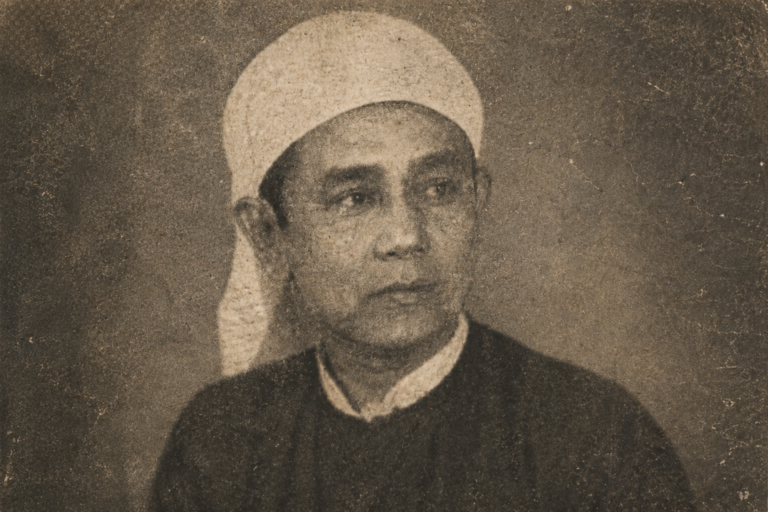
U Abul Bashar (AI-generated representation. No verified photograph located)
U Abul Bashar, frequently transliterated as Abul Basher, was a prominent Arakanese Muslim lawmaker and political executive who represented the Buthidaung South constituency in the Chamber of Deputies, the lower house of the Union Parliament of Burma, from 1951 to 1962. Serving across three consecutive parliamentary terms following the general elections of 1951-1952, 1956, and 1960, he was elevated to the position of Parliamentary Secretary during the administration of Prime Minister U Nu, possessing administrative powers equivalent to a Deputy Minister and making him one of the highest-ranking executive officials from Northern Arakan during the democratic era. His political career ended on 2 March 1962, when General Ne Win staged a military coup d'état, dissolved the Union Parliament, and abolished the 1947 Constitution.
At a Glance
Name and Identity
Establishing the identity of U Abul Bashar requires meticulous archival cross-referencing to distinguish him from contemporary namesakes across South and Southeast Asia. In mid-twentieth-century Burmese government gazettes, English-language press reports, and local administrative documents, Romanized transliterations of Muslim names varied widely depending on phonetic recording. Archival records confirm that "Abul Bashar" and "Abul Basher" refer to the same individual representing Buthidaung South. In official Burmese legislative rosters, his name was prefixed with the Burmese honorific "U" (ူးသ), rendering his title as U Abul Bashar. In Bengali-script community publications and regional genealogies, his name appears as আবুল বাশার or আবুল বশর. The Arabic/Islamic origin of the name derives from Abu al-Bashar, a traditional honorific meaning "Father of Mankind."
Birth and Family
The precise birth date, birth year, and specific village-level birthplace of U Abul Bashar are not documented in the sources located. Historical records establish his primary residence and community base within Buthidaung Township, situated in the Mayu District of Northern Arakan. Surviving legislative records from the 1950s do not list the names of his parents, wife, or children. Information regarding specific family occupations prior to his entry into national politics remains unverified in primary archival material.
Education
Documentary evidence regarding Abul Bashar's early schooling, Islamic religious education, or formal institutional qualifications is not documented in the sources located. While parliamentary peers such as Sultan Mahmud attended university in Rangoon and Daw Aye Nyunt completed high school at St. Anne's Convent in Akyab, equivalent formal academic credentials for Abul Bashar have not survived in accessible legislative archives. His subsequent appointment as Parliamentary Secretary confirms a high degree of administrative literacy in both Burmese and English, as well as fluency in local governance protocols.
Early Life and Professional Career
Prior to his election to the Chamber of Deputies in 1951, Abul Bashar operated as a civic figure and community organizer in the Mayu region of Northern Arakan. Following the severe destruction of World War II and the communal turmoil of 1942 in Arakan, local leadership in Buthidaung required individuals capable of mediating between agrarian village societies and the central government in Rangoon. Abul Bashar emerged from this post-war reconstruction period as an influential figure advocating for municipal stabilization, rural security, and economic rehabilitation.
Before entering national parliamentary politics, Abul Bashar engaged in regional commerce and local municipal administration in Buthidaung Township. Whether he held formal civil service titles or practiced law prior to 1951 remains unverified in available archival records. From 1951 through March 1962, his primary profession was that of a full-time legislator, parliamentarian, and executive officer within the Union government.
The Buthidaung South Constituency
The constituency of Buthidaung South was a crucial electoral district located within Buthidaung Township in the Akyab District of Arakan Division. Under the 1947 Constitution, Buthidaung Township was divided into two lower house constituencies: Buthidaung North and Buthidaung South. Buthidaung South encompassed the southern agrarian village tracts along the Mayu River valley, riverine trading hubs, and rural settlements extending toward the border with Rathedaung Township. The electorate consisted predominantly of indigenous Arakanese Muslims, later self-identifying as Rohingya, along with a minority Rakhine Buddhist population. The constituency existed from the establishment of democratic parliamentary districts in 1951 until the democratic system was abolished by the military junta in March 1962.
Political Career Overview
Abul Bashar's public career spanned the entire constitutional democratic era of independent Burma, 1948 to 1962. He entered national politics during the country's first post-independence general elections in 1951-1952. Operating within the political network of the ruling Anti-Fascist People's Freedom League (AFPFL) headed by Prime Minister U Nu, he built a durable electoral foundation in Buthidaung South. Over eleven years, he achieved electoral success in three national general elections, in 1951, 1956, and 1960. His political trajectory culminated during his third parliamentary term, when he was appointed Parliamentary Secretary, serving directly under cabinet ministers in Rangoon and helping oversee regional administration in Northern Arakan.
The 1951 Election and First Parliament
Burma's inaugural post-independence general election was conducted in phases between June 1951 and April 1952 due to nationwide insurgencies. Once security was re-established in Northern Arakan, elections were held for the Chamber of Deputies. Abul Bashar stood as a candidate for Buthidaung South and secured victory, becoming the constituency's representative in the First Union Parliament.
In the First Union Parliament (1951-1956), Abul Bashar served alongside four other Muslim MPs elected from Northern Arakan: M. A. Gaffar (Buthidaung North), Sultan Ahmed (Maungdaw North), Daw Aye Nyunt (Maungdaw South), and U Pho Khaing (Akyab West).
The 1956 Election and Second Parliament
In the April 1956 general election, Abul Bashar successfully defended his seat in Buthidaung South against rival regional candidates. During the 1956-1960 parliamentary term, he worked closely with Sultan Mahmud, who assumed the cabinet portfolio of Minister of Health under Prime Minister U Nu.
The 1960 Election and Parliamentary Secretary
Following the 1958 split of the ruling AFPFL into the "Clean" faction, led by U Nu, and the "Stable" faction, led by Ba Swe and Kyaw Nyein, and the interim Caretaker Government of General Ne Win (1958-1960), fresh general elections were held in February 1960. Abul Bashar aligned with U Nu's Clean AFPFL, later renamed the Union Party or Pyidaungsu Party, contesting Buthidaung South for the third time and securing re-election to the Chamber of Deputies.
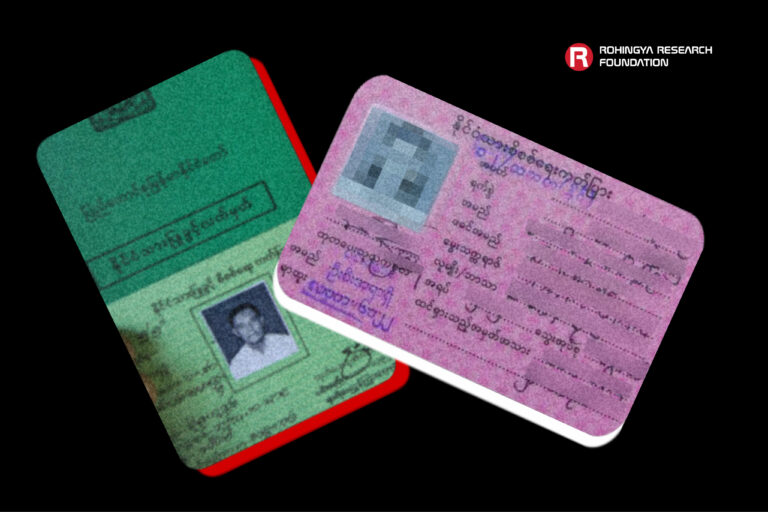
During his third parliamentary term (1960-1962), Abul Bashar was appointed Parliamentary Secretary. In the executive framework of the Union of Burma, Parliamentary Secretaries performed roles equivalent to Deputy Ministers, handling legislative affairs, answering parliamentary questions, and managing executive portfolios alongside Cabinet Ministers. His documented parliamentary initiatives focused on supporting the administrative separation of the Muslim-majority Mayu District, comprising Buthidaung, Maungdaw, and northern Rathedaung, directly under the Ministry of Defence in 1961 to protect local civil rights; cooperating with Minister Sultan Mahmud and M. A. Gaffar to secure National Registration Cards and official recognition for Arakanese Muslims as indigenous citizens (taing-yinei) of the Union of Burma; and advocating for river transport funding, rural health clinics, and rice distribution networks across Buthidaung Township.
Direct textual transcripts of individual floor speeches by Abul Bashar remain preserved in the physical archives of the Burma Parliamentary Proceedings in Yangon; specific digitized extracts are unverified in accessible online databases.
| Year | Constituency | Affiliation | Result |
|---|---|---|---|
| 1951-52 | Buthidaung South | AFPFL | Elected |
| 1956 | Buthidaung South | AFPFL | Re-elected |
| 1960 | Buthidaung South | Clean AFPFL (Pyidaungsu) | Re-elected; appointed Parliamentary Secretary |
Political Affiliations
Throughout his legislative career, Abul Bashar remained affiliated with the governing political coalitions of Burma. From 1951 to 1958, he was part of the mainstream Anti-Fascist People's Freedom League, collaborating with the All Burma Muslim Congress and Arakanese Muslim political blocs. From 1958 to 1962, he was part of the Clean AFPFL / Union Party (Pyidaungsu), supporting Prime Minister U Nu's policy platform of democratic governance, constitutional protections, and administrative safeguards for minority nationalities. He participated actively in the parliamentary caucus of Arakanese Muslim legislators that coordinated strategy regarding statehood proposals for Arakan.
Community Work and Rohingya Identity
The terminology used to describe Abul Bashar reflects the political evolution of ethnic nomenclature in post-colonial Burma. Official election records and government gazettes from 1951 to 1962 typically classified him as "Muslim" or "Arakan Muslim" (Rakhine Pyi-thu Muslim). In September 1954 and November 1959, Prime Minister U Nu and Defense Minister U Ba Swe declared in public radio broadcasts and community addresses in Buthidaung and Maungdaw that the local Muslim population were "Rohingya," possessing equal national status as indigenous citizens alongside the Kachin, Kayah, Karen, Mon, Rakhine, and Shan. Academic studies and community archives document Abul Bashar as an integral figure among early Rohingya democratic parliamentarians.
In Buthidaung South, Abul Bashar engaged in extensive civic work, facilitating the construction of rural primary schools, supporting charitable religious trusts (waqf), and representing agrarian communities in land tenure negotiations.
Relationship with Other Rohingya Politicians
Abul Bashar belonged to the founding generation of post-independence Muslim lawmakers from Northern Arakan. His political relationships can be contextualized within the successive legislative generations of the region: the colonial legislative predecessors of 1936 to 1947, Gani Markan, elected in 1936 from Maungdaw-Buthidaung, and U Tanvy Markan, elected in 1939, who established early precedent for native Muslim representation; the Constituent Assembly generation of 1947, M. A. Gaffar (Buthidaung) and Sultan Ahmed (Maungdaw), who helped draft the 1947 Constitution; and the first and second parliamentary cohort of 1951 to 1960, in which Abul Bashar served alongside Sultan Mahmud (Minister of Health), M. A. Gaffar (MP and Parliamentary Secretary), Sultan Ahmed (MP and Parliamentary Secretary), Daw Aye Nyunt / Zura Begum (MP for Maungdaw South), and Abul Khair (MP for Maungdaw South).
This coalition formed a unified legislative bloc that resisted proposals to absorb the Mayu region into an unrestricted Arakan State without minority guarantees.
| Generation | Figure | Constituency | Period |
|---|---|---|---|
| Colonial Predecessors | Gani Markan | Maungdaw-Buthidaung | 1936 |
| Colonial Predecessors | U Tanvy Markan | Maungdaw-Buthidaung | 1939 |
| Constituent Assembly | M. A. Gaffar | Buthidaung | 1947 |
| Constituent Assembly | Sultan Ahmed | Maungdaw | 1947 |
| First/Second Cohort | U Abul Bashar | Buthidaung South | 1951-62 |
| First/Second Cohort | Sultan Mahmud | Buthidaung North | 1957-62 |
| First/Second Cohort | Daw Aye Nyunt | Maungdaw South | 1951-56 |
| First/Second Cohort | Abul Khair | Maungdaw South | 1956-62 |
The 1962 Coup and Later Life
On 2 March 1962, General Ne Win overthrew the civilian government, arrested Prime Minister U Nu and Cabinet Minister Sultan Mahmud, dissolved the Union Parliament, and suspended the 1947 Constitution. Following the coup, Abul Bashar was stripped of his legislative seat and executive office as Parliamentary Secretary. Unlike cabinet-level ministers who faced prolonged detention in Rangoon, Abul Bashar retired from national politics and returned to private life in Arakan under military surveillance. Archival records indicate no subsequent political involvement under Ne Win's Burma Socialist Programme Party regime.
Death
Specific details concerning the date, location, cause of death, or burial site of U Abul Bashar are not documented in the sources located.
Historical Legacy
Abul Bashar holds a significant place in the political history of Myanmar as a three-term elected Member of Parliament, in 1951, 1956, and 1960, and Parliamentary Secretary. His executive service under Prime Minister U Nu demonstrates that Muslims from Northern Arakan were fully integrated into the constitutional structure, electoral processes, and governance of post-independence Burma.
Complete Timeline
Tap any year for the fuller account.
c. 1910-20+
1951-52+
25 Sep 1954+
Apr 1956+
1958+
Feb 1960+
1960-61+
1 May 1961+
2 Mar 1962+
Post-1962+
Related Figures
Read more about the generation of Rohingya parliamentarians he served alongside:
Sources & Bibliography
This profile is built from academic archival studies, Union Parliamentary records, and cross-referenced Rohingya community historical sources.
- Scribd — Report on the Conditions and Sufferings of the Rakhaines in Maungdaw.
scribd.com - University of Dhaka — Securitization of "Rohingyas" in Myanmar: An Analysis, by Mst Tahmina Akter.
reposit.library.du.ac.bd - Scribd — Nasir Uddin, The Rohingya: An Ethnography of Subhuman Life, Oxford University Press, 2020.
scribd.com - Online Burma Library — Arakan, March 2011.
burmalibrary.org - Scribd — Towards Understanding Arakan History, by Abu Anan.
scribd.com - Wikipedia — Aye Nyunt.
en.wikipedia.org - Scribd — The Rohingyas of Arakan and Their Quest for Justice.
scribd.com - Wikipedia — Arakan Division.
en.wikipedia.org - NetIPR — A History of Arakan (Past & Present), by Dr. Yunus.
netipr.org - Wikipedia — Gani Markan.
en.wikipedia.org