Ministry of Health Malaria Control Officer, Founding Member and Chairman of the National Democratic Party for Human Rights

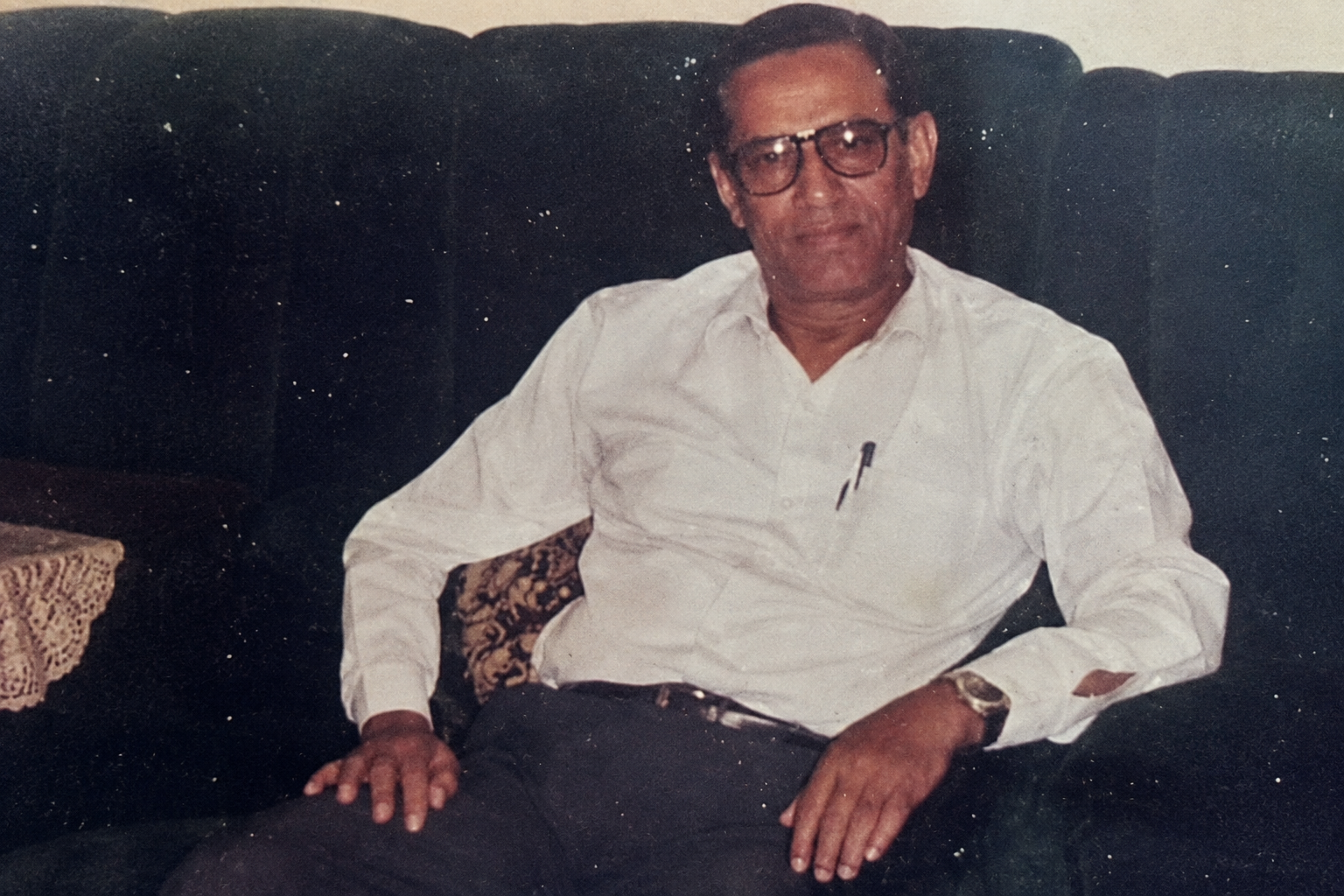
Nur Ahmed - U Tin Maung (Photo: Aman Ullah / Facebook)
Nur Ahmed, officially recorded in government registers as U Tin Maung, was a Burmese politician, healthcare professional, and parliamentarian-elect who represented the Buthidaung (2) constituency in northern Rakhine (Arakan) State following the May 1990 Myanmar General Election. Standing as a candidate for the National Democratic Party for Human Rights (NDPHR), he secured election to the Pyithu Hluttaw (People's Assembly) with a decisive plurality of valid votes, though he was never permitted to take his seat. Before entering electoral politics, he built a career in the Burmese civil service within the Ministry of Health, directing anti-malaria operations across Buthidaung and Sittwe districts, and later rose to become Chairman of the NDPHR at the time of its ban by military authorities in 1992.
At a Glance
Names and Identity
In twentieth-century Myanmar, ethnic minority citizens, particularly non-Buddhist populations in borderland regions, frequently maintained dual naming conventions: an official Burmese-language name registered for civil service records, citizenship documentation, and formal election ballots, alongside an ethnic or religious name used within the local community, family structure, and intra-ethnic political organizations. Primary state records published by the Election Commission of Myanmar explicitly link these dual identifiers using the standard Burmese alias notation "(a)" or "(aka)," an abbreviation for ah-ka ("also known as"). In candidate gazettes and official election result announcements for the 1990 general election, he is recorded as U Tin Maung (aka Nur Ahmed) or U Tin Maung (a) Nur Ahmed.
Birth and Family
Nur Ahmed was born in 1928 in the village of Phon Nyo Lake, also rendered in administrative maps and human rights documentation as Phone Nyo Lake, Hpon Nyo Leik, or Hpon Nyo Lake, located in Buthidaung Township, Arakan Division (present-day Rakhine State), British Burma. Phon Nyo Lake historically constituted a principal rural settlement tract in southern Buthidaung Township, positioned along riverine trade routes connecting Buthidaung town with surrounding agricultural areas, and was populated predominantly by ethnic Muslim agriculturalists alongside smaller Rakhine communities.
Official candidate profile documents compiled during the 1990 general election record his father's name as U Shawmalote. Details concerning his mother, spouse, siblings, or direct descendants were omitted from published parliamentary records, standard practice under the State Law and Order Restoration Council (SLORC) regime to protect relatives of opposition parliamentarians from state surveillance and administrative reprisals. His childhood is not documented in the sources available.
Education
Nur Ahmed completed his primary and secondary schooling in northern Arakan, attending Buthidaung State High School. Graduating from the state secondary system during the early post-independence era, he pursued professional technical training within the national public health framework. Between 1954 and 1956, he relocated to Rangoon (Yangon) after gaining admission to the official Health Assistant Training Course operating in Insein Township. The Insein Health Assistant Training School served as the Union government's main tertiary institution for qualifying mid-level public health officers intended for rural medical deployment; its two-year curriculum encompassed epidemiology, tropical disease control, basic clinical care, and rural health administration. Upon completing the program in 1956, he qualified as a certified Health Assistant.
Career in the Ministry of Health
Following his graduation in 1956, Nur Ahmed entered the civil service of the Union of Burma within the Ministry of Health. He was posted to the Anti-Malaria Department, an administrative division later reorganized as the Malaria Control Unit under the Department of Public Health. During the 1950s and 1960s, malaria remained endemic across northern Arakan's forested ranges and coastal river systems. Operating as a Health Assistant and eventually rising to serve as Head of the Malaria Control Unit in Buthidaung and Sittwe (Akyab), Nur Ahmed supervised regional vector-control campaigns, indoor residual insecticide spraying, parasite screening, and local epidemiological field teams.
Primary electoral biographies record that his formal civil service career with the Ministry of Health concluded around 1968. Available documentation does not confirm whether his departure from government service resulted from voluntary retirement, administrative reorganization under General Ne Win's Revolutionary Council, or local political shifts.
Political Background, 1968-1988
After concluding his civil service career in 1968, Nur Ahmed returned to community life in Buthidaung Township. His years of public health service across rural village tracts afforded him extensive geographical familiarity and civic standing among both Muslim and Rakhine village elders. Throughout the Burma Socialist Programme Party (BSPP) era, 1962 to 1988, independent political parties were outlawed and formal opposition organizing was prohibited under single-party rule. Community leadership in northern Arakan was consequently maintained through informal civic mediation, village elder councils, and local educational committees. Nur Ahmed utilized his administrative experience and literacy in Burmese and English to assist local residents with state bureaucracy, civil registration, and land matters.
Founding the NDPHR
When widespread popular demonstrations in August 1988 forced the collapse of the BSPP government, the military seized power under the State Law and Order Restoration Council (SLORC) and announced multi-party elections. Leaders across various ethnic minority communities organized political parties to contest the promised elections. In late 1988, Muslim scholars, lawyers, former civil servants, and educators from northern Rakhine State established the National Democratic Party for Human Rights (NDPHR). While party founders initially sought to register using the ethnic designation "Rohingya," military authorities rejected ethnic markers for the group, and the party leadership adopted "National Democratic Party for Human Rights" to prioritize civil liberties, democratic reform, and equal citizenship rights.
The core founding leadership of the NDPHR included U Tin Maung (Nur Ahmed), U Chit Lwin (Ebrahim), Fazul Ahmed, and U Kyaw Min (Zul Nurain). Nur Ahmed joined the leadership as a member of the Central Executive Committee (CEC), taking responsibility for party organizational operations in Buthidaung Township.
The 1990 General Election
The Burmese multi-party general election took place on 27 May 1990. The NDPHR fielded candidates across northern Rakhine State, focusing on the heavily Muslim-populated townships of Maungdaw and Buthidaung, as well as Sittwe. Nur Ahmed registered as the NDPHR candidate for Buthidaung (2), a contest that attracted eight candidates, including representatives from the military-backed National Unity Party (NUP), rival ethnic parties, and independent figures.
The Election Commission divided Buthidaung Township into two parliamentary constituencies for the 1990 election. Buthidaung (1) encompassed northern rural village tracts and Buthidaung's urban quarters, and was won by NDPHR candidate U Kyaw Min with 30,997 votes (74 percent). Buthidaung (2) encompassed the southern rural village tracts, including Phon Nyo Lake, Kyar Nyo Pyin, and riverine settlements extending south toward Rathedaung, and was won by Nur Ahmed. Voter turnout in Buthidaung (2) was high, with 46,037 of 55,095 registered electors casting ballots, an 83.56 percent participation rate. Out of 40,143 valid votes cast, Nur Ahmed won 20,045 votes (49.93 percent, officially rounded to 50 percent in state summaries), securing a decisive plurality over all seven competing candidates and winning election to the Pyithu Hluttaw.
Nur Ahmed personally managed the NDPHR electoral campaign across the rural village tracts of southern Buthidaung. Campaign activities were conducted under severe logistical constraints, as military security forces monitored opposition gatherings and restricted inter-township movement. Campaign messaging focused on restoring constitutional democracy, securing full citizenship rights under the law, ending arbitrary taxation and forced labor, and promoting local economic infrastructure. Nur Ahmed conducted village-level meetings, engaging local elders, agriculturalists, and religious teachers. Rather than making radical constitutional claims, his speeches emphasized ethnic harmony in Arakan, peaceful coexistence with the Rakhine population, and strict adherence to universal human rights principles.
| Constituency | Candidate | Votes | % | Result |
|---|---|---|---|---|
| Buthidaung (2) | Nur Ahmed (U Tin Maung) | 20,045 | 49.93% | Elected |
| Buthidaung (2) | 7 opposing candidates (combined) | 20,098 | 50.07% | Defeated |
| Buthidaung (1) | U Kyaw Min | 30,997 | 74% | Elected |
A Parliament That Never Convened
Upon the official announcement of election results, Nur Ahmed held the legal status of Member of Parliament-elect (Pyithu Hluttaw Representative-elect). However, he was never permitted to take his seat in an active national legislature. On 27 July 1990, the ruling junta issued SLORC Declaration No. 1/90, stating that the May 1990 election did not transfer sovereign legislative power or establish a parliamentary government. Instead, SLORC asserted that the elected representatives were only empowered to draft a new national constitution under military direction, while martial law would continue indefinitely. As a result, the Pyithu Hluttaw elected in 1990 was never convened.
Between mid-1990 and early 1992, Nur Ahmed operated under intense state surveillance; Military Intelligence units monitored his movements in Buthidaung and restricted political gatherings. Despite these restrictions, NDPHR representatives sought to coordinate with other victorious opposition groups, aligning with the United Nationalities League for Democracy (UNLD), an umbrella alliance of non-Burman ethnic parties that included the Arakan League for Democracy, led by Dr. Saw Mra Aung, and the Shan Nationalities League for Democracy. NDPHR parliamentarians-elect contributed to joint platform discussions advocating for ethnic equality, federal autonomy, and civil liberties.
Chairman of the NDPHR
While initial 1989 party filings listed him as a member of the Central Executive Committee, official state gazettes confirm that Nur Ahmed rose to become Chairman of the NDPHR during its final operational phase. On 18 March 1992, the military regime issued SLORC Order No. 8/92, officially banning and deregistering the National Democratic Party for Human Rights, claiming the party violated the Political Parties Registration Law. Official election-tracking documentation published at the time explicitly records that Nur Ahmed was the Chairman of the NDPHR when SLORC banned the party in 1992. Following Order No. 8/92, the party's offices were closed, its assets confiscated, and its executive leadership subjected to direct legal prosecution or flight.
Correcting the Record: The 1988 Arrest Claim
A recurring inaccuracy in secondary sources claims that Nur Ahmed was a prominent street leader or was jailed during the August 1988 pro-democracy demonstrations (the 8888 Movement). This claim stems from a documented biographical conflation. The official candidate entry for a different man, U Tin Maung of the Kalewa Constituency in Sagaing Division, states that he was arrested for over one month for his involvement in the 1988 uprising, and separately describes his education at Pyawbwe High School and his career as a mining engineer. The official 1990 candidate entry for U Tin Maung (aka Nur Ahmed) of Buthidaung (2) contains no record of a 1988 arrest, and instead details his Health Assistant training from 1954 to 1956 and his civil service career as head of the Malaria Control Unit in Buthidaung and Sittwe. No direct evidence exists confirming a personal role or arrest for Nur Ahmed during the August 1988 street uprising; his documented entry into national democratic politics occurred in late 1988 and early 1989 through the organizational founding of the NDPHR.
The "Rohingya Independent Force" Claim: Unverified
Secondary online articles and Wikipedia entries occasionally assert that Nur Ahmed was an active member of the Rohingya Independent Force, an early insurgent faction, from 1968 until 1978. No primary election document, 1990 parliamentary profile, or academic history confirms this membership. Under Section 10 of the Pyithu Hluttaw Election Law (SLORC Law No. 14/89), any individual proven to have belonged to an illegal insurgent organization was automatically disqualified from candidacy, and the SLORC Election Commission formally vetted and cleared Nur Ahmed's candidate filing in 1990, confirming that state security archives contained no record of insurgent participation. This claim is treated as unverified and disputed.
Later Life and Death
Following the banning of the NDPHR in March 1992, open political organizing by former party leaders inside Myanmar became impossible. Later in 1992, the military government established the border security administration Nasaka, enforcing draconian movement controls, land confiscations, and identity restrictions across northern Rakhine State. Nur Ahmed's personal life after 1992 is sparsely documented in public records. Unlike colleagues such as U Kyaw Min, who relocated to Yangon and was later jailed in 2005, or others who fled into international exile, Nur Ahmed withdrew from public political life to avoid state persecution. His post-1992 activities are poorly documented in accessible primary sources.
The date and place of Nur Ahmed's death are not verified in any available source. Official government gazettes in Myanmar did not publish notices for deregistered opposition figures unless they died in military custody or during active election cycles, so his exact date and place of passing remain unverified in primary documentation.
Historical Significance
Nur Ahmed's political career holds distinct significance in the history of Myanmar. He was one of four Rohingya parliamentarians democratically elected in 1990, establishing clear primary documentary evidence of Rohingya citizenship, franchise, and constitutional participation under state legal frameworks. His career illustrates how educated minority civil servants transitioned from state technical roles in public health and malaria control to democratic advocacy when political avenues opened in 1988. And as Chairman of the NDPHR at the time of its 1992 dissolution, he occupied the top leadership post in organized Rohingya parliamentary politics during the 1988-1992 democratic transition period.
Complete Timeline
Tap any year for the fuller account.
1928+
c. 1945-52+
1954-56+
1956-68+
1968+
1988-89+
27 May 1990+
27 Jul 1990+
1990-92+
18 Mar 1992+
Post-1992+
Sources & Bibliography
This profile is built from official 1990 Election Commission candidate gazettes, contemporary Burmese state press summaries, SLORC administrative orders, and cross-referenced human rights and academic documentation.
- Online Burma Library — Brief Biographies of Elected MPs.
burmalibrary.org - Transnational Institute (TNI) — Arakan (Rakhine State).
tni.org - Wikipedia — Nur Ahmed (politician, born 1928).
en.wikipedia.org - Online Burma Library — Burma Press Summary, Working People's Daily, Vol. IV No. 7, July 1990.
burmalibrary.org - Online Burma Library — 1990 "Multi-Party Democracy General Elections."
burmalibrary.org - Online Burma Library — Although 235 Political Parties Registered, Only 93 Fielded Candidates.
burmalibrary.org - Wikipedia — Chit Lwin Ebrahim.
en.wikipedia.org - Inter-Parliamentary Union — Chronicle of Parliamentary Elections.
archive.ipu.org - Human Rights Watch — "All You Can Do Is Pray": Crimes Against Humanity and Ethnic Cleansing of Rohingya Muslims in Burma's Arakan State.
hrw.org