Islamic Jurist, Sheikh al-Hadith, and Founder of Dar al-Tarbiyah and the Center for Islamic Research and Studies in Teknaf

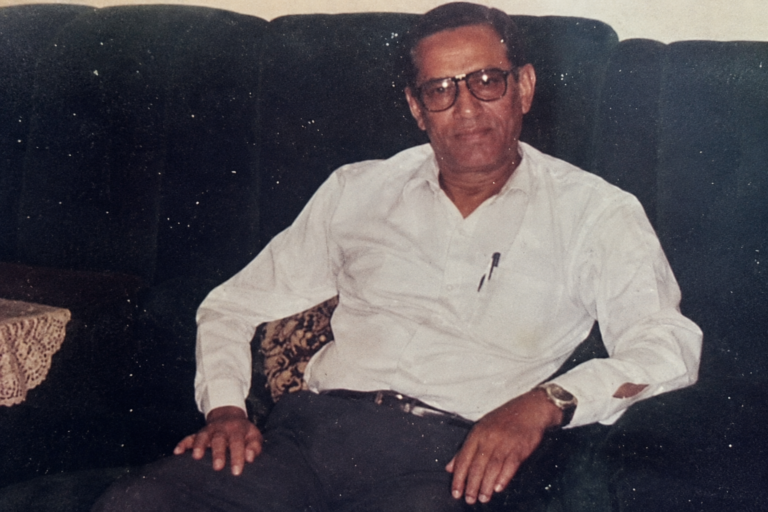
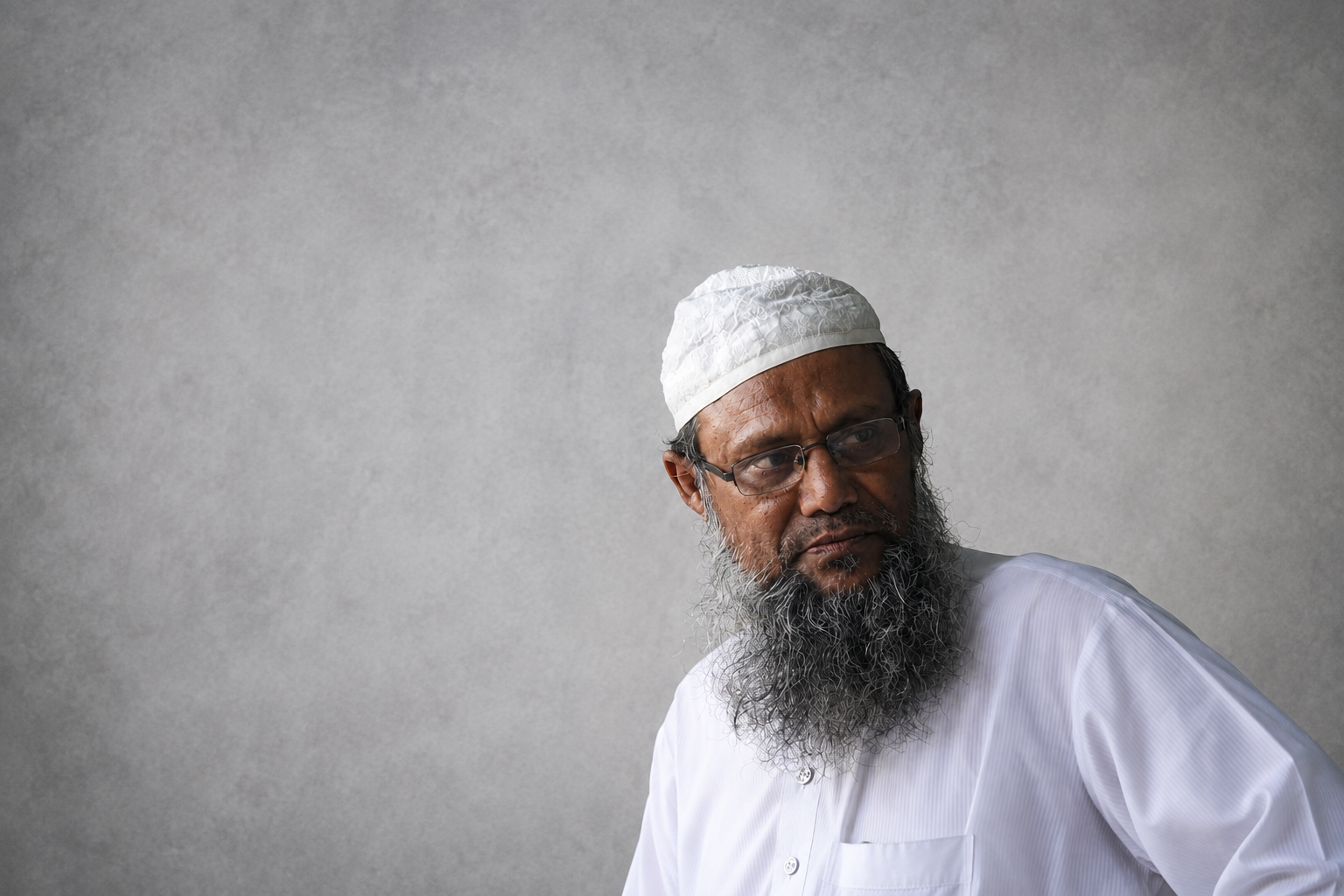
Mufti Muhammad Hanif Ragheb Arakani (Photo: Internet. AI-enhanced)
Sheikh Allama Mufti Muhammad Hanif Ragheb Arakani was a Rohingya Islamic jurist, Sheikh al-Hadith, linguist, author, and institutional founder whose career spanned northern Arakan, Karachi, and Cox's Bazar. He is remembered above all as the principal developer of the Rohingya Hanifi script, a purpose-built writing system designed in the 1980s to capture the tonal Indo-Aryan Rohingya language, later encoded into Unicode in 2018. Alongside that linguistic legacy, he served as a Karachi-trained Mufti, a senior professor of Hadith in Bangladesh, the author of several Arabic and Urdu treatises, and the founder of Dar al-Tarbiyah and the Center for Islamic Research and Studies in Teknaf.
At a Glance
Name and Identity
His formal scholarly title was Sheikh Allama Mufti Muhammad Hanif Ragheb Arakani. His personal name was Muhammad Hanif. "Ragheb" (Rāghib, راغب) was a literary epithet and pen name (takhallus) he adopted in his published poetry and prose, signifying "one who is desirous [of sacred knowledge and truth]." The regional nisba "Arakani" (al-Arakānī, الأركاني) designates his origin in Arakan. The variants Muhammad Hanif, Mohammad Hanif, Hanif Ragheb, Hanif Raghib, Mufti Muhammad Hanif Ragheb, Sheikh Allama Muhammad Hanif Ragheb, Hanif Arakani, and Muhammad Hanif al-Arakani all refer to the same person.
Birth and Family Lineage
Muhammad Hanif Ragheb was born in 1952 CE (1371 AH) in the village of Frindang, Rathedaung Township, within the Mayu Frontier District of northern Arakan.
Primary biographical documentation records his complete lineage (nasab) as Muhammad Hanif bin Wali Ahmed bin Tarab Ali bin Nuruddin. His family traces its tribal connections to the scholarly lineage of Sheikh Maulana Muhammad Saleh Yunshenghi and the martyred scholar Sheikh Maulana Din Muhammad (Shahid) Frindanghi. His father, Wali Ahmed, was a village elder and landowner who raised his family within the traditional agrarian and religious structures of northern Rathedaung, a region that maintained close cultural, religious, and economic cross-border ties with the Chittagong region of modern Bangladesh.
His birth occurred during a brief period of parliamentary democracy in post-independence Burma under Prime Minister U Nu, four years after Myanmar's 1948 independence, a period when the Muslim population of northern Arakan maintained state-recognized administrative structures, political representation, and local educational networks.
Childhood
Raised in Frindang, young Muhammad Hanif grew up in a religious household centered on the local mosque and village madrasa. From early childhood, he demonstrated an aptitude for language acquisition, classical Arabic phonetics, and Islamic jurisprudence, laying the groundwork for his later higher studies in Bangladesh and Pakistan. He was later blessed with nine children: three sons, Professor Hassan Hanif, Professor Emran Hanif, and Professor Ebrahim Hanif, along with six daughters.
Early Islamic Education
His formal educational trajectory began within the local and regional madrasa networks of northern Arakan. He received his primary education at the Qasim Ulum School in his native village of Frindang, before transferring to the Rahmaniyah School in nearby Saki Para for intermediate Islamic studies. For higher secondary studies, he enrolled at Darul Uloom Miyajanpur (also transliterated Mayyazipur), in northern Maungdaw Township near the Bangladesh border, one of northern Arakan's principal centers for traditional Islamic learning and an academic bridge for students intending to pursue higher seminary degrees in Chittagong.
Higher Education in Chittagong
To complete the advanced stages of the traditional Dars-i Nizami curriculum, Muhammad Hanif Ragheb traveled to Bangladesh. He initially pursued higher Islamic studies at Darul Uloom Mu'inul Islam in Hathazari, Chittagong, the flagship Deobandi seminary of Bengal, where he studied classical Arabic syntax (Nahw), morphology (Sarf), logic (Mantiq), and legal philosophy (Usul al-Fiqh). He subsequently transferred to Jamia Islamia Patiya in Chittagong to complete his master's-level degree, graduating in 1977 (1397 AH) after completing the Dawra-e-Hadith program and obtaining formal authorization (ijazah) in the canonical Hadith collections.
Mufti Qualification in Karachi
Following his 1977 graduation, Muhammad Hanif Ragheb traveled to Karachi, Pakistan, to undertake post-graduate specialization in Islamic jurisprudence and legal verdict issuance (Takhassus fi al-Ifta). He enrolled at the Institute of Dar al-Ifta in Nazimabad, Karachi, where, under the supervision of senior Pakistani jurists, he trained in applying Hanafi legal principles to contemporary social and economic issues, drafted formal legal verdicts (fatwas), and studied classical legal manuals such as Radd al-Muhtar by Ibn Abidin. He completed his specialization and received his formal qualification as a certified Mufti in 1981.
Hadith Scholarship
His training in Hadith studies was anchored by his 1977 Dawra-e-Hadith degree at Jamia Patiya, encompassing the six canonical Sunni Hadith collections (al-Kutub al-Sittah): Sahih al-Bukhari, Sahih Muslim, Sunan Abi Dawud, Jami' al-Tirmidhi, Sunan al-Nasa'i, and Sunan Ibn Majah, alongside the Muwatta of Imam Malik and Imam Muhammad al-Shaybani. Later in his career, he attained the scholarly title of Sheikh al-Hadith at Jamia Dar al-Sunnah in Nhilla, Bangladesh, occupying the senior teaching chair responsible for delivering the final-year lectures on Sahih al-Bukhari and granting chains of oral and academic transmission (isnad) to graduating seminary students. In his later years, he also attained the status of Hafiz al-Qur'an, having memorized the Holy Qur'an with proper tajweed.
Teaching Career
Upon attaining his Mufti qualification in Karachi in 1981, he initiated an educational career spanning institutions in Myanmar, Pakistan, and Bangladesh. He initially returned to northern Arakan to teach as a senior instructor at his alma mater, Darul Uloom Miyajanpur in Maungdaw. During his periods of residency in Pakistan, he served on the faculty of Al-Madrasah Al-Khaliliyah in the Musa Loni district of Karachi, teaching Islamic sciences to South Asian and refugee students. After establishing his base in Teknaf, Bangladesh, he served as a primary instructor at Dar al-Tarbiyah Al-Islamiyyah, and later assumed the senior positions of Sheikh al-Hadith and Head of the Board of Legal Verdicts (Ra'is Dar al-Ifta) at Jamia Dar al-Sunnah in Nhilla, Cox's Bazar.
Institutions He Founded and Led
In 1985, he founded Dar al-Tarbiyah Al-Islamiyyah in Teknaf, Cox's Bazar District. The school was established in the wake of the 1978 Operation Nagamin refugee crisis to provide structured primary and secondary education to displaced Rohingya children, integrating classical Islamic studies with literacy training in Arabic, Urdu, and the newly formulated Hanifi Rohingya script, serving as a primary operational center for testing early Hanifi pedagogical materials.
In 2002, he founded the Center for Islamic Research and Studies in Teknaf, established to fulfill three strategic functions: preserving historical manuscripts, legal decrees, and literary heritage authored by Rohingya scholars; conducting jurisprudential research into contemporary issues affecting stateless populations and refugee communities; and serving as a central committee for standardizing, publishing, and distributing educational primers and literature written in the Hanifi script.
He also served as a senior academic leader at Jamia Dar al-Sunnah in the town of Nhilla (Nahila/Khadiz area) within Teknaf Sub-district, holding a dual mandate as Sheikh al-Hadith and Head of Dar al-Ifta, directing the seminary's post-graduate legal department, overseeing the drafting of judicial verdicts, and delivering the definitive lectures on classical Hadith texts.
| Institution | Location | Role | Period |
|---|---|---|---|
| Qasim Ulum School | Frindang, Rathedaung, Arakan | Primary Student | 1958-1964 |
| Rahmaniyah School | Saki Para, Rathedaung, Arakan | Intermediate Student | 1964-1968 |
| Darul Uloom Miyajanpur | North Maungdaw, Arakan | Student, later Senior Teacher | 1968-1972 / 1981 |
| Darul Uloom Hathazari | Chittagong, Bangladesh | Higher Student | 1972-1975 |
| Jamia Islamia Patiya | Chittagong, Bangladesh | Graduate Student | 1975-1977 |
| Dar al-Ifta Nazimabad | Karachi, Pakistan | Post-Graduate Scholar | 1978-1981 |
| Al-Madrasah Al-Khaliliyah | Musa Loni, Karachi, Pakistan | Lecturer | 1981-1984 |
| Dar al-Tarbiyah Al-Islamiyyah | Teknaf, Cox's Bazar, Bangladesh | Founder & Director | 1985-2000s |
| Center for Islamic Research & Studies | Teknaf, Cox's Bazar, Bangladesh | Founder & Chairman | 2002-2023 |
| Jamia Dar al-Sunnah | Nhilla, Teknaf, Bangladesh | Sheikh al-Hadith / Head of Ifta | Late 2000s-2023 |
Students, Teachers, and Scholarly Network
Over four decades of teaching in Myanmar, Pakistan, and Bangladesh, he trained hundreds of seminary graduates, village imams, and community leaders, drawn primarily from the Rohingya refugee camps in Cox's Bazar and the broader madrasa network of southern Chittagong. Many of his graduates subsequently established local literacy circles teaching the Hanifi script, while others assumed positions as madrasa instructors and mosque prayer leaders across the international Rohingya diaspora.
His own academic development was shaped by the faculty of Darul Uloom Hathazari, the Hadith masters (Shuyukh al-Hadith) of Jamia Islamia Patiya who conferred his 1977 Dawra-e-Hadith degree, and the senior Hanafi jurists at Dar al-Ifta Nazimabad in Karachi who supervised his legal training through 1981. His scholarly network stretched from Karachi, where he maintained ties with Pakistani jurists and the urban Rohingya diaspora, to Chittagong, Cox's Bazar, and northern Arakan, providing the organizational and financial support necessary to publish his writings, maintain his research center, and propagate the Hanifi script across international borders.
Books and Publications
He was a prolific author, producing works in Arabic and Urdu across theology, history, jurisprudence, poetry, and political advocacy. The thematic focus of his published corpus reflects a continuous effort to apply classical Islamic legal concepts to the socio-political crisis facing the Rohingya people. As a jurist trained within the Hanafi school, his legal methodologies emphasized strict fidelity to classical Hanafi texts, structured reasoning (Qiyas), and the preservation of religious identity amid statelessness, frequently addressing practical legal questions on marriage, inheritance, property rights, and community governance among refugee populations living outside formal state legal frameworks.
| Title | Language | Subject | Status |
|---|---|---|---|
| Kulliyat Ragheb | Urdu / Arabic | Poetic Anthology | Published Book |
| Jihad Arakan | Arabic | Defensive Jurisprudence | Printed Treatise |
| Izhar al-Haqiqah | Arabic | Historical Defense | Printed Monograph |
| Dawat al-Haq | Arabic / Urdu | Theology & Ethics | Circulated Tract |
| Mas'ala Arakan wa Hal | Arabic | Socio-Political Analysis | Lobbied Document |
| Sharh Waqi' Qadiyyat Muslimi Arakan | Arabic | Legal Analysis | Printed Monograph |
Rohingya Political and Community Activity
Beyond his academic scholarship, he actively participated in community leadership and political advocacy. In 1988, during the nationwide political turmoil in Myanmar surrounding the 8888 Uprising, he established the Rohingya Mujahideen Union (Ittihad al-Mujahidin al-Ruhingiyyin). Within the context of the borderlands during the late 1980s, the term Mujahideen was used by local leaders to denote organized civic defense, political mobilization, and religious resistance against military disenfranchisement, rather than transnational militancy. The organization sought to unify disparate community factions, advocate for the restoration of citizenship rights stripped under Burma's 1982 Citizenship Law, and secure international humanitarian and diplomatic backing from bodies such as the Organization of Islamic Cooperation and the Muslim World League.
The Rohingya Language and Its Writing Systems
To understand his orthographic work, a clear distinction must be drawn between the Rohingya language and its writing systems. The Rohingya language is an Eastern Indo-Aryan language closely related to Chittagonian and Assamese, characterized by a complex tonal system (high, low, and nasalized tones) and retroflex consonants, and it remained largely unwritten in formal education, functioning primarily as a spoken vernacular. He did not invent the Rohingya language; rather, he designed a customized writing system engineered to capture its specific phonology.
Prior to Hanifi, attempts to write Rohingya relied on borrowed orthographies, each with structural and political limitations. The Perso-Arabic (Molvi) script, adopted by Islamic scholars, lacked dedicated characters for Rohingya's retroflex consonants and tone variations, leading to phonetic ambiguity. The Burmese script, used in state schools, was rejected by many community members due to its association with state assimilation policies and its poor structural match for Indo-Aryan grammar. Latin systems (Rohingyalish), emerging later in the twentieth century, required multi-letter combinations or diacritics to represent native tones, and faced initial resistance from traditional scholars. The Hanifi script was developed specifically to resolve these phonetic inefficiencies through an intuitive, indigenous alphabet.
Development of the Hanifi Script
He began designing the script in the early 1980s while residing in Karachi and Teknaf. His design goals focused on creating a right-to-left alphabet that maintained visual harmony with traditional Islamic scripts while functioning as a complete alphabet, containing explicit letters for both consonants and vowels. He incorporated dedicated diacritic marks (harakat) to explicitly indicate tone pitches, ensuring that written words precisely reflected spoken pronunciation.
The earliest surviving Hanifi documents consist of handwritten instructional primers, literacy charts, and educational pamphlets produced by him and his associates in Teknaf during the late 1980s and early 1990s, including basic alphabetic charts (Alif-Ba), elementary readers for children, and short religious handbooks designed for distribution within refugee camps. Instruction in the script was initially disseminated through informal community networks, village madrasas, and specialized summer workshops (Dawrat) he organized in Teknaf and Cox's Bazar. During the 1990s and 2000s, literacy circles spread the script across refugee communities in Bangladesh, Pakistan, Saudi Arabia, and Malaysia, with teachers using standardized primers developed at the Center for Islamic Research and Studies to instruct both children and adults.
From Manual Alphabet to Unicode
A clear historical line separates his original manual design of the script in the 1980s from its later digital encoding in the 2010s. While he created the alphabet, a subsequent generation of Rohingya technologists, linguists, and international advocates, including figures such as Muhammad Noor, led the technical effort to digitize it. This culminated in June 2018, when the Unicode Consortium officially added the Hanifi Rohingya block to Unicode Version 11.0 (code range U+10D00 to U+10D3F), enabling its use across modern digital platforms, mobile devices, and operating systems.
The Documentary Record
Arabic biographical repositories provide the most detailed primary documentation of his life, lineage, and institutional affiliations, including a formal biographical entry (Sirat al-Shaykh al-'Allamah Muhammad Hanif Raghib) published by the regional archival organization Arakan News Agency (ANA), recording his full genealogical lineage, exact educational dates, published works, and funeral details. Urdu sources consist primarily of records from Pakistani madrasas, religious journals, and published literature from his years in Karachi, with his poetic collection Kulliyat Ragheb serving as a key Urdu-language document of his literary style and emotional attachment to Arakan. Bengali-language sources, including regional newspaper reports, madrasa commemorative booklets, and local community notices from Chittagong and Cox's Bazar, record his institutional work at Dar al-Tarbiyah and Jamia Dar al-Sunnah. Rohingya community media, oral histories, and digital archives maintain extensive records of his contributions to vernacular literacy, frequently citing his work as a foundational milestone in the preservation of Rohingya national identity.
Family testimony recorded in community memoirs highlights his personal dedication to teaching and scholarship, describing a disciplined routine focused on research, writing, and teaching, even during periods of displacement and illness. Firsthand testimonies from former students and colleagues at Jamia Dar al-Sunnah describe an exacting teacher devoted to classical Hadith analysis and linguistic accuracy, recalling his summer intensive workshops, where he used the Hanifi script to explain complex Arabic grammatical rules.
Resolving the Death-Date Conflict
Sheikh Muhammad Hanif Ragheb Arkani passed away on Friday, 10 November 2023, at Dar al-Sunnah University in Cox's Bazar, corresponding to the 26th of Rabi' al-Thani, 1445 AH.
Funeral and Burial
His funeral prayer (Janazah) took place on Friday, 10 November 2023, following his death at Dar al-Sunnah University in Cox's Bazar, attended by scholars, madrasa students, and community members from across the refugee camps and local districts. He was buried in the Safrang village cemetery (Maqbarat Qaryat Safrang) in Teknaf Sub-district, Cox's Bazar.
Legacy
His historical influence spans four distinct fields: Islamic jurisprudence, providing legal guidance and religious leadership to displaced Rohingya populations; vernacular education, establishing schools and research centers that maintained educational continuity during refugee crises; linguistics, engineering an indigenous alphabet that solved long-standing phonetic limitations in writing Rohingya; and political advocacy, documenting community history and advocating for human rights through international scholarly networks.
His legacy endures through the institutional work of his research center in Teknaf and the international adoption of the Hanifi script. The script's inclusion in the Unicode Standard ensures that the writing system he developed in the 1980s remains available to future generations of Rohingya speakers worldwide, a lasting symbol of a people's language, identity, and historical continuity.
Complete Timeline
Tap any year for the fuller account.
1952 1371 AH+
1960 1379 AH+
1968 1387 AH+
1972 1391 AH+
1977 1397 AH+
1981 1401 AH+
1983 1403 AH+
1985 1405 AH+
1988 1408 AH+
2002 1423 AH+
2012 1433 AH+
Jun 2018+
10 Nov 2023 26 Rabi' al-Thani 1445 AH+
Sources & Bibliography
This profile is built from Arabic biographical repositories, seminary and institutional records, and cross-referenced Unicode Consortium documentation, with particular attention to resolving the conflicting death-date claims found in secondary digital sources.
- Arakan News Agency (ANA) — Sīrat al-Shaykh al-'Allāmah Muhammad Hanīf Rāghib.
arakanna.net - Unicode Consortium — Unicode 11.0.0, Hanifi Rohingya block, U+10D00-U+10D3F.
unicode.org