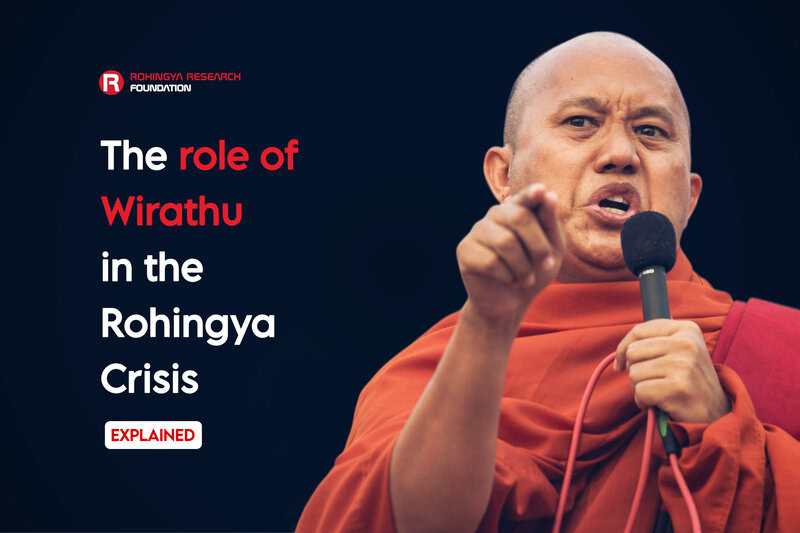
Timeline of what Wirathu did against the Rohingya, from his release from prison in 2012 to his honouring by the Myanmar military in 2023

Wirathu in Rohingya Crisis
Ashin Wirathu, a Buddhist monk from Mandalay, became one of the loudest voices against the Rohingya in Myanmar. For more than a decade, he used sermons, rallies and Facebook to describe them as “Bengali” invaders who threatened Buddhism and the nation.
He marched for their expulsion in 2012. He helped build a nationwide movement that pushed through laws aimed at Muslim families. He travelled to northern Rakhine just months before the army’s 2017 campaign drove more than 740,000 Rohingya into Bangladesh, and he never condemned the killings that followed.
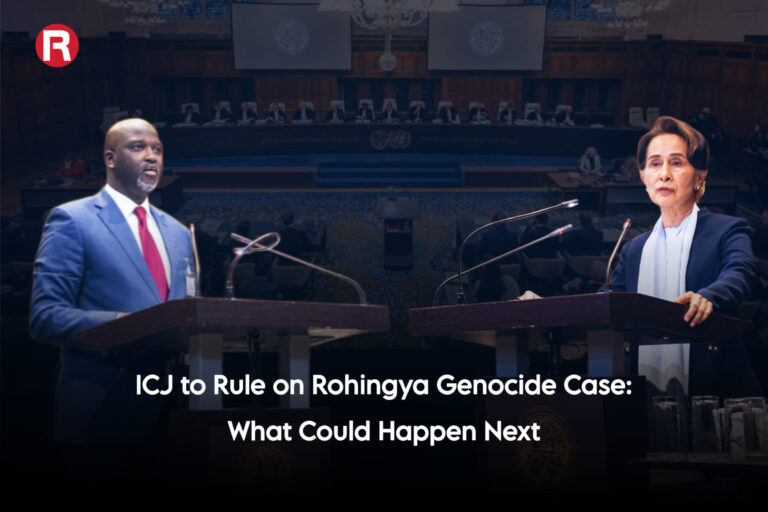
His words reached the world’s highest court. When The Gambia filed its genocide case against Myanmar at the International Court of Justice (ICJ) in November 2019, its application named Wirathu as an example of the anti-Rohingya hate speech behind the violence. Four years later, the general accused of leading that violence gave him one of Myanmar’s highest honours.
Here is a timeline of what Wirathu did against the Rohingya.
2012: Marching for expulsion
Wirathu was released from prison in January 2012 under a general amnesty by President Thein Sein. He had served nine years of a 25-year sentence for inciting anti-Muslim riots in Kyaukse in 2003.
He returned to his monastery in Mandalay and restarted the 969 campaign, which told Buddhists to boycott Muslim shops and avoid marrying Muslims. With the internet and mobile phones spreading quickly across Myanmar, his message reached far more people than before.
In June 2012, violence between Rakhine Buddhists and Rohingya in Rakhine State displaced more than 100,000 people, most of them Rohingya. The following month, Thein Sein told the UN refugee agency that the Rohingya should be sent to third countries or placed in UN-run camps.
On September 2, 2012, Wirathu led thousands of monks through Mandalay in support of that plan. He told the crowds that the Rohingya were “Bengalis” who had entered the country illegally and were not citizens. A month later, a second wave of violence swept through Rakhine.
2013: “The Face of Buddhist Terror”
Throughout early 2013, Wirathu toured towns across central Myanmar. His sermons, distributed on DVDs and audio recordings, accused Muslims of cheating Buddhists in business and attacking Buddhist women. In March, anti-Muslim violence in Meiktila killed more than 40 people, and 969 stickers were seen across the destroyed neighbourhoods.
In June 2013, he helped found the Association for the Protection of Race and Religion, known as Ma Ba Tha. The group turned his campaign into a national organisation with branches across the country, and he became its best-known voice.
In July, TIME magazine put him on its cover under the headline “The Face of Buddhist Terror”. In the interview, he said Muslims were “breeding fast” and taking Buddhist women, and that protecting race and religion mattered more than democracy.
The government did not condemn him. It banned that issue of TIME instead, and President Thein Sein’s office defended the 969 movement.
2014-2015: Laws against Muslim families
In 2014, Ma Ba Tha launched a campaign for four “Race and Religion Protection Laws”. They required state approval to change religion, restricted Buddhist women from marrying non-Buddhist men, allowed authorities to enforce birth spacing in chosen areas and criminalised polygamy.
Rights groups said the laws targeted Muslims, especially Rohingya families in Rakhine, where local rules had already tried to limit them to two children. Ma Ba Tha collected more than a million signatures, and parliament passed all four laws in 2015.
On January 16, 2015, at a rally in Yangon, Wirathu called the UN Special Rapporteur on human rights in Myanmar, Yanghee Lee, a “bitch” and a “whore”. She had criticised the proposed laws and the treatment of the Rohingya. The UN human rights office condemned his remarks, but he refused to apologise.
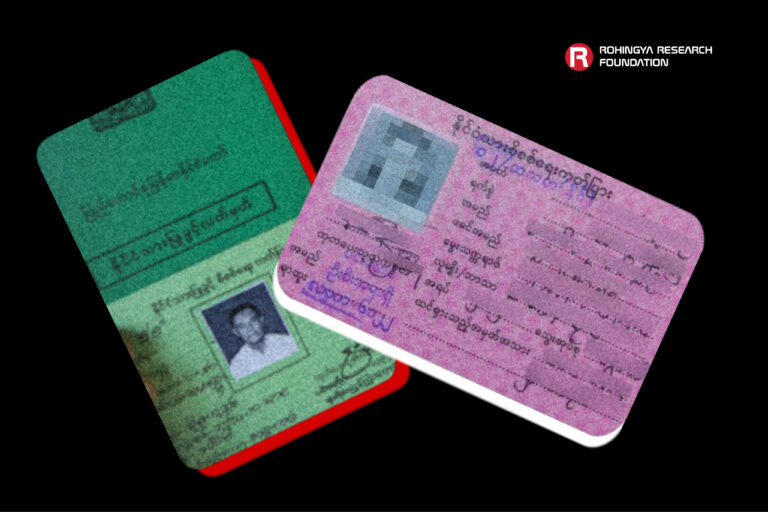
In early 2015, nationalist monks protested against allowing holders of temporary identity cards, known as “white cards”, to vote. The government cancelled the cards, and most Rohingya lost the right to vote that they had held in earlier elections.
Ahead of the November 2015 election, Ma Ba Tha held rallies celebrating the new laws and attacked parties that had opposed them.
2016: Against the name, behind the army
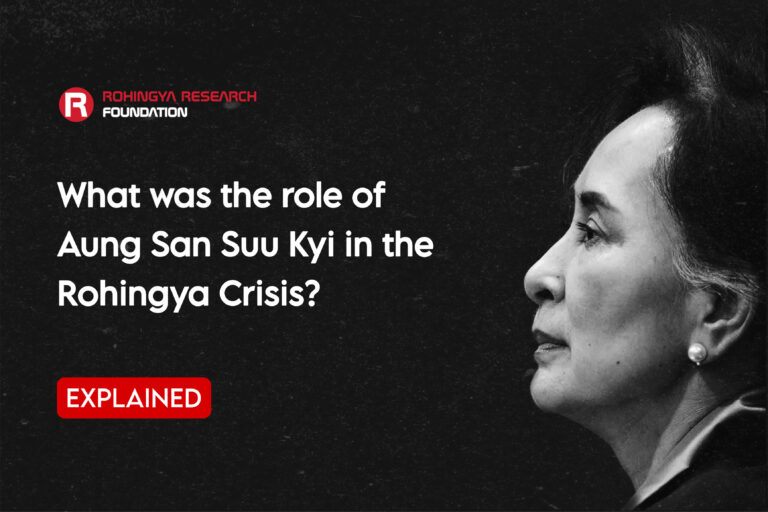
After Aung San Suu Kyi’s party took power in 2016, Wirathu and his movement kept up pressure on the issue of the Rohingya’s identity. In April, nationalist monks protested outside the US Embassy in Yangon because it had used the word “Rohingya”. To them, the name itself was a threat.
In October 2016, after an attack on border posts, the army launched “clearance operations” in northern Rakhine. About 75,000 Rohingya fled to Bangladesh, and the UN later documented killings, rapes and burned villages. Wirathu sided with the army and called the Rohingya “Bengali” terrorists.
2017: Preaching before the massacres
On March 10, 2017, Myanmar’s highest Buddhist authority, the State Sangha Maha Nayaka Committee, banned Wirathu from preaching for one year. It said he had repeatedly used hate speech against other religions to cause conflict.
He found ways around the ban. He appeared at events with his mouth taped shut while recordings of his old sermons played over loudspeakers, and he kept posting online.
On May 3, 2017, he arrived in Sittwe, the capital of Rakhine State, where the head of the Arakan National Party welcomed him. He then travelled to Maungdaw, the centre of the army’s operations, and met the chief of the Border Guard Police before ending his trip in Buthidaung. Fearing trouble, Rohingya elders warned their communities to stay calm and avoid confrontation.
That same month, he told The Guardian it only takes one terrorist to destroy a country, and he boasted of his influence over government policy toward the Rohingya.
On August 25, 2017, the army began the campaign that drove more than 740,000 Rohingya into Bangladesh. Villages were burned, and massacres were reported in Tula Toli, Chut Pyin, Maung Nu and Inn Din. Wirathu did not condemn any of it. He backed the army and kept calling the victims “Bengalis”.
2018: Denial and a Facebook ban
For years, Facebook had been Wirathu’s most powerful tool. In a country where many people used Facebook as their only window to the internet, his posts about Muslims spread faster than they could be challenged. In 2018, after long pressure from rights groups, Facebook removed his account for hate speech.
In March 2018, his preaching ban ended. He denied that his sermons had anything to do with the violence in Rakhine and said the state was facing the “terrorism of Bengalis”.
In September 2018, the UN Fact-Finding Mission called for Myanmar’s top generals to be investigated for genocide. It described how hate speech by nationalist monks, including Wirathu, had helped create the conditions for the violence.
2019-2020: Named at the world court
In May 2019, a Yangon court issued an arrest warrant for Wirathu on a sedition charge. The case was over his attacks on Aung San Suu Kyi and her government, not his speeches against the Rohingya. He went into hiding for about 18 months.
On November 11, 2019, The Gambia filed its genocide case against Myanmar at the ICJ in The Hague. Its application named Wirathu as an example of anti-Rohingya hate speech, pointing to statements in which he likened the Rohingya to an invasive species. A monk who had never held office was now part of the evidence in a state genocide case.
On November 2, 2020, six days before the general election, Wirathu surrendered to police in Yangon. Before walking in, he urged monks to tell their followers to vote for parties that would protect “race and religion”, a call widely seen as support for the military-backed USDP. The Rohingya were again denied the vote.
2021-2026: Freed and honoured by the military
The military seized power on February 1, 2021. On September 6, the new junta dropped all charges against Wirathu and released him, saying he was being treated at a military hospital.
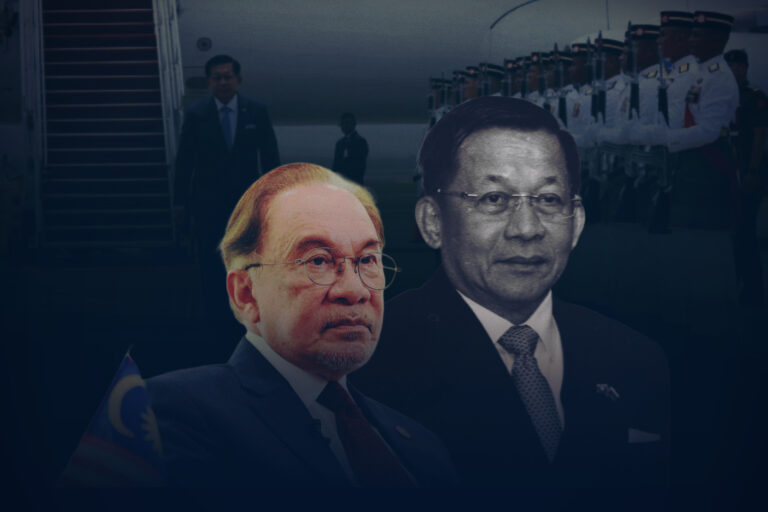
On January 3, 2023, ahead of Independence Day, junta leader Min Aung Hlaing gave him the honorary title “Thiri Pyanchi” for “outstanding work for the good of the Union of Myanmar”. The general accused of overseeing the 2017 campaign was now honouring the monk who had spent years preaching against its victims.
In January 2026, the ICJ held full hearings on the genocide case. The Gambia’s lawyers argued that hate speech against the Rohingya, spread by military officials and nationalist monks, showed an intent to destroy them. Myanmar’s lawyers argued that hate speech was irrelevant to proving genocide. The court is now deliberating.
Wirathu has never apologised to the Rohingya.
For the Rohingya, his story is one of hatred given the authority of religion. He did not command soldiers or sign the orders, but he spent years teaching millions of people to see the Rohingya as invaders rather than neighbours. Six years after the villages burned, the military that carried out the killings rewarded him with one of the country’s highest honours.