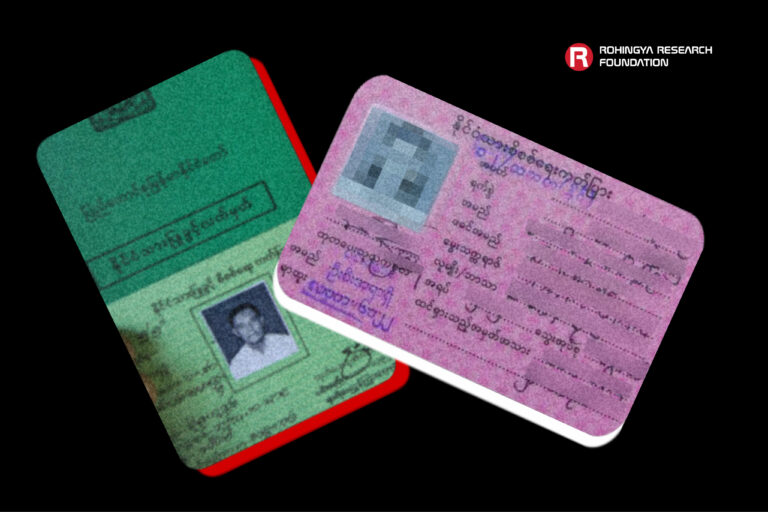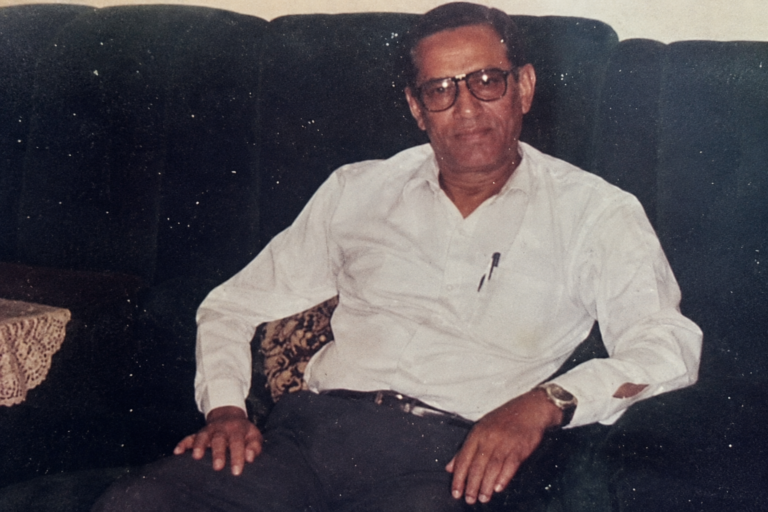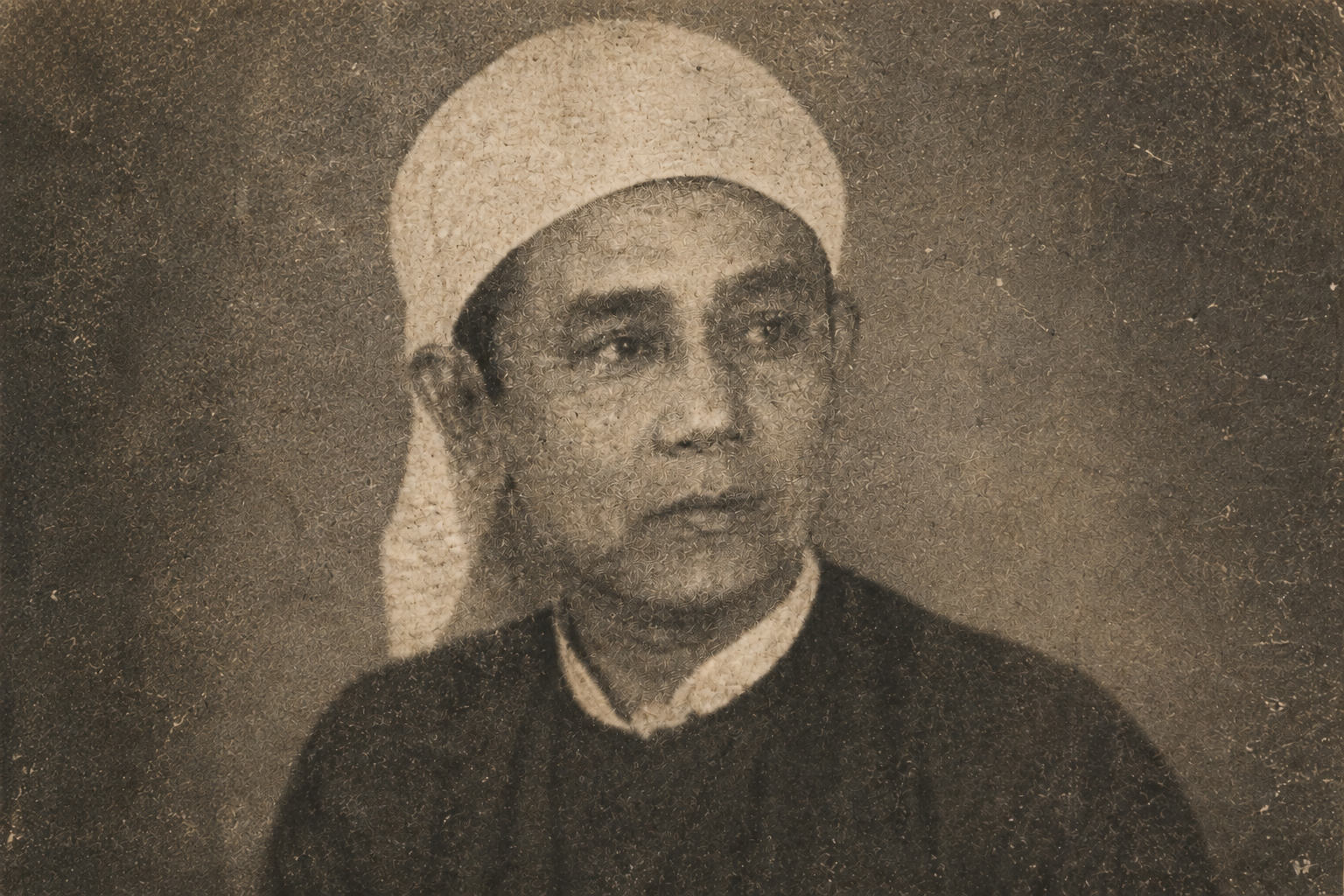
Member of the Legislative Council for Akyab West (1936, 1947) and Member of Parliament for Akyab North (1951-1956), father of Daw Aye Nyunt and father-in-law of Sultan Ahmed

U Pho Khaing (Nasir Uddin), M.L.C. for Akyab West (Photo: AI-generated historical representation)
U Pho Khaing, recognized in legal and parliamentary records by his Islamic name Nasir Uddin, was an Arakanese Muslim legal professional, parliamentary representative, and political leader in twentieth-century Burma. Based as an advocate in Akyab, the administrative capital of Arakan Division, he emerged during the late British colonial era as a representative for the settled Muslim communities of western Burma. His political career spanned three constitutional periods: the late colonial legislative era under the Government of Burma Act of 1935, the post-World War II decolonization transition surrounding the 1947 Constituent Assembly, and the early democratic parliamentary period of the Union of Burma following independence in 1948.
At a Glance
Names and Identity
Establishing the identity of U Pho Khaing requires addressing multilingual naming conventions, legal aliases, and transliteration variations across British colonial records, Burmese state publications, and modern academic literature. In colonial and post-independence Burma, individuals from non-Buddhist minority communities frequently maintained a dual naming system: an official Burmese name used in civil registration, legal practice, and government gazettes, alongside an Islamic name used within family, religious, and community archives.
Official parliamentary documentation from the 1947 Constituent Assembly explicitly confirms the identity linkage through the standard legal formula "U Pho Khaing (a) Nasir Uddin," where the abbreviation "(a)" denotes "alias" or "also known as." Transliteration variations across historical sources include the Burmese name variants U Pho Khaing, U Po Khine, U Poe Khaine, and Advocate U Pho Khaine, alongside the Islamic name variants Nasir Uddin, Nasiruddin, and Nasir Uddin Arakan. Archival analysis confirms that these designations all refer to a single historical person: the advocate from Rupah Quarter, Akyab, who presided over the All Burma Muslim Congress and represented Akyab in successive legislative bodies.
Birth and Family
U Pho Khaing was based in Akyab (Sittwe), the administrative and commercial capital of Arakan Division. Family records and biographical profiles document that he resided in Rupah Quarter, an established urban neighborhood in Akyab known for its concentration of prominent Arakanese Muslim civic leaders, traders, and legal professionals.
He was married to Daw Ma Ma. Their daughter, Daw Aye Nyunt, also known by her Islamic name Zura Begum or Zhura Begum, was born on 10 April 1919, in Rupah Quarter, Akyab. Daw Aye Nyunt subsequently entered public life, achieving historical significance in 1951 as one of the first two women elected to the post-independence Union Parliament of Burma. Through her marriage to Sultan Ahmed, a prominent attorney, President of the Jamiat-ul-Ulama, and multi-term MP for Maungdaw North, U Pho Khaing was directly connected to the leading political dynasty of mid-twentieth-century Arakanese Muslim parliamentarians.
Specific civil records detailing U Pho Khaing's exact birth year, birth date, parents' names, and siblings are not documented in the sources located. However, his professional status as a senior advocate in 1936 indicates a birth date in the late nineteenth century.
Early Life
U Pho Khaing was raised in Akyab during the peak of British colonial rule in Arakan. During the late nineteenth and early twentieth centuries, Akyab developed into a major rice-exporting port in the British Empire, fostering distinct urban merchant and legal classes. Growing up within the long-settled Arakanese Muslim community of Akyab, U Pho Khaing developed bi-cultural literacy, navigating both traditional Islamic education and British colonial schooling. This urban background distinguished him and his peers from the agrarian Muslim populations of northern Arakan, such as Buthidaung and Maungdaw, placing him at the center of civic interactions between Arakanese Buddhists, Burman administrative elites, and British colonial officers.
Education and Legal Career
U Pho Khaing received legal training under the judicial system of British Burma, successfully qualifying as an Advocate. Formal legal practice in colonial Burma required rigorous examination in legal procedure, British Indian codes, customary law, and constitutional regulations overseen by the High Court of Judicature at Rangoon. While primary institutional registers detailing his specific primary and secondary schooling remain unlocated in available public archives, his professional designation in colonial election gazettes as "Advocate U Pho Khaine" establishes his status as a licensed legal practitioner authorized to plead before senior division courts. This formal legal education provided him with the statutory vocabulary and procedural expertise necessary to navigate colonial legislative structures and lead constitutional advocacy efforts.
As a practicing Advocate in Akyab, U Pho Khaing engaged in legal work that placed him at the intersection of local land tenure disputes, commercial litigation, civil rights, and community representation. In colonial Arakan, legal advocates frequently served as intermediaries between the local population and British district administrators. His legal acumen enabled him to draft petitions to colonial authorities regarding local governance, educational access, and municipal administration, a background that proved fundamental to his political rise, as the early legislative bodies established under British rule prioritized representatives who could engage in parliamentary drafting and constitutional debate.
Community Leadership
U Pho Khaing's leadership extended beyond his legal practice into structured community institutions. He organized educational initiatives, supported local religious trusts (waqf), and managed civic institutions within Akyab. Rather than acting merely as an informal elder, U Pho Khaing organized Arakanese Muslims into recognized socio-political bodies. A central focus of his leadership was establishing the distinct identity of native Arakanese Muslims, emphasizing their long-standing historical settlement in Burma to differentiate them from seasonal migrant workers who arrived from Bengal during British colonial expansion. This distinction became a cornerstone of his advocacy during the constitutional reform debates of the 1930s and 1940s.
President of the All Burma Muslim Congress
U Pho Khaing served as President of the All Burma Muslim Congress (ABMC), the premier political organization representing Muslim interests across Burma during the decolonization era. The ABMC was formed in the post-World War II period to consolidate Muslim political action and integrate Muslim citizens into the broader national independence movement led by General Aung San's Anti-Fascist People's Freedom League (AFPFL).
Under U Pho Khaing's presidency, the ABMC adopted an explicit policy of national integration, formally opposing communal partition schemes and aligning with the AFPFL's vision of a unified, sovereign, secular Union of Burma. As President, he advocated for constitutional provisions that guaranteed religious freedom, civic equality, and legislative representation for minority communities without compromising national unity, maintaining close working relationships with mainstream Burman nationalist leaders and positioning the ABMC as an essential constituent unit of the AFPFL electoral alliance.
Representing Akyab West, 1936
U Pho Khaing's representation of the Akyab West constituency in the 1936 elections remains a critical landmark in Burmese political history. Under the Government of Burma Act of 1935, which formally separated Burma from British India effective 1 April 1937, the legislature comprised 132 seats divided among communal and non-communal categories. The electoral framework distinguished between "Burmese National" (indigenous) seats and specific minority/immigrant categories such as Indian, Karen, Anglo-Burman, European, and Commercial seats. U Pho Khaing contested and won the Akyab West seat under the Burmese national category. Simultaneously, Gani Markan was elected under the same Burmese national category for the Maungdaw-Buthidaung constituency.
This electoral classification was significant: it demonstrated that colonial authorities and local electoral boards recognized Arakanese Muslims as indigenous nationals, or "Burmese nationals," rather than foreign Indian immigrants. This legal status separated U Pho Khaing and his constituents from non-indigenous British Indian populations residing in Burma.
The 1947 Constituent Assembly
In April 1947, General Aung San organized the election for the Constituent Assembly of Burma to frame the constitution for the forthcoming independent nation. U Pho Khaing contested the election and was returned as Member of the Legislative Council / Constituent Assembly for Akyab West, his seating officially documented in government rosters under the entry "U Pho Khaing (a) Nasir Uddin."
Serving alongside other elected Arakanese Muslim representatives, including Sultan Ahmed, representing Maungdaw, and M. A. Gaffar, representing Buthidaung, U Pho Khaing participated in the constitutional deliberations that defined Union citizenship, fundamental rights, and regional representation. Their active participation in framing the 1947 Constitution ensured that Arakanese Muslims were recognized as full citizens under Section 11 of the Constitution and the Nu-Attlee Treaty of 1947.
Union Parliament, 1951-1956
Following the Declaration of Independence on 4 January 1948, the Constituent Assembly functioned as the provisional legislature until national elections could be organized. In the post-independence general elections held in stages between June 1951 and April 1952, U Pho Khaing stood as an AFPFL candidate and was elected to the Union Parliament representing Akyab North. During his parliamentary tenure, he contributed to legislative debates concerning regional development in Arakan, rehabilitation of post-war infrastructure, civic security, and minority integration.
His parliamentary service continued until the 1956 general elections, when he contested the Akyab North constituency on an ABMC/AFPFL ticket but was defeated by Sultan Mahmud, an independent Muslim leader who subsequently became Minister of Health in Prime Minister U Nu's cabinet.
| Period | Body | Constituency | Outcome |
|---|---|---|---|
| 1936 | Legislative Council | Akyab West | Elected |
| Apr 1947 | Constituent Assembly | Akyab West | Elected |
| 1951-52 | Union Parliament | Akyab North | Elected |
| 1956 | Union Parliament | Akyab North | Defeated by Sultan Mahmud |
A Parliamentary Family Dynasty
Archival records verify that U Pho Khaing was the biological father of Daw Aye Nyunt. Born in Akyab in 1919, she was educated at St. Anne's Convent and Akyab Government High School before pursuing university education in Yangon. Influenced by her father's civic leadership and political involvement, she entered active politics within the AFPFL framework. In the 1951-1952 general election, she contested and won the constituency of Maungdaw South, securing 75.41 percent of the vote against independent candidate U Saw Pru, a victory that made her the first female Member of Parliament from Arakan and one of the first two women elected to the Union Parliament of independent Burma, alongside Daw Khin Kyi, widow of General Aung San.
Three Relatives, Three Seats
The 1951-1956 Union Parliament featured a distinct family dynamic, with three immediate relatives serving simultaneously as elected legislators: U Pho Khaing as MP for Akyab North; his daughter, Daw Aye Nyunt (Zura Begum), as MP for Maungdaw South; and his son-in-law, Sultan Ahmed, as MP for Maungdaw North and Parliamentary Secretary. This family representation highlights the central role U Pho Khaing's household played in mid-century Burmese parliamentary politics.
Political Associates
Throughout his legal and parliamentary career, U Pho Khaing maintained documented working relationships with key political figures in Arakan and the Union government. Sultan Ahmed, his son-in-law, President of the Jamiat-ul-Ulama, MP for Maungdaw North, and Parliamentary Secretary, coordinated with him on electoral strategy and parliamentary advocacy. M. A. Gaffar (U Abdul Ghaffar), MLC and MP for Buthidaung and Parliamentary Secretary, worked alongside him in the 1947 Constituent Assembly to secure constitutional citizenship provisions for Arakanese Muslims. Sultan Mahmud, later Cabinet Minister of Health and MP for Buthidaung/Akyab North, was initially an ally within Arakanese Muslim community structures before later becoming U Pho Khaing's primary political opponent, defeating him in the 1956 election for the Akyab North seat. He also engaged directly with General Aung San and U Nu through the All Burma Muslim Congress to maintain the AFPFL coalition.
Later Life
Following his electoral defeat in the 1956 general election, U Pho Khaing stepped back from active parliamentary campaigning. He remained an influential elder statesman within the All Burma Muslim Congress and continued to advise legal and civic organizations in Akyab and Yangon. During the late 1950s, as political debates intensified regarding the potential establishment of a separate Arakan State or Mayu Frontier Administration, U Pho Khaing consistently supported civil rights guarantees and political integration within the Union of Burma. He spent his final years between Sittwe and Yangon, remaining engaged in community legal welfare.
Death
Specific documentation recording U Pho Khaing's exact date, location, cause of death, burial site, or official obituary is not verified. Available family narratives indicate that his death occurred in the post-parliamentary era, prior to the 1980s. His daughter, Daw Aye Nyunt, passed away in 1990 in Yangon at the age of 71.
Legacy and Terminology
U Pho Khaing's historical legacy is tied to the constitutional and legal history of western Myanmar. His election in 1936 under the "Burmese national" category provides modern historians with official, colonial-era documentation demonstrating that Arakanese Muslims were legally recognized as indigenous citizens prior to Burma's independence. As President of the All Burma Muslim Congress and representative in the 1947 Constituent Assembly, he helped establish the legal framework that guaranteed citizenship and voting rights to minority populations in post-war Burma, making his political career a primary historical example of how Arakanese Muslims actively participated in building democratic institutions in the Union of Burma.
Historical analyses of his career also highlight points of nuance in how he is described across sources. Contemporary British colonial gazettes and early Union parliamentary records consistently referred to him as an "Arakanese Muslim," "Burmese Muslim," or "Burmese National," while modern Rohingya historians and academic studies classify him as an ethnic Rohingya pioneer, a difference reflecting shifting political terminology across different historical periods rather than factual contradictions regarding his personal identity. Certain secondary compilations also confuse his 1936 and 1947 representation of Akyab West with his later 1951 representation of Akyab North, or blend his career with his son-in-law Sultan Ahmed's representation of Maungdaw North; primary parliamentary rosters confirm he represented Akyab West in 1936 and 1947, and Akyab North from 1951 to 1956.
Complete Timeline
Tap any year for the fuller account.
Late 19th c.+
c. 1920s-30s+
1936+
c. 1945-47+
Apr 1947+
4 Jan 1948+
1951-52+
1956+
Post-1956+
Pre-1980s+
Related Figures
Read more about his daughter, son-in-law, and fellow Rohingya parliamentarians of this era:
Sources & Bibliography
This profile is built from British colonial electoral gazettes, the 1947 Constituent Assembly roster, Union Parliament records, and cross-referenced Rohingya archival and academic scholarship.
- Scribd — Towards Understanding Arakan History, by Abu Anan.
scribd.com - University of Dhaka — Securitization of "Rohingyas" in Myanmar: An Analysis, by Mst Tahmina Akter.
reposit.library.du.ac.bd - Wikipedia — Rohingya People.
en.wikipedia.org - Scribd — Nasir Uddin, The Rohingya: An Ethnography of Subhuman Life, Oxford University Press, 2020.
scribd.com - Wikipedia — Arakan Division.
en.wikipedia.org - Scribd — Report on the Conditions and Sufferings of the Rakhaines in Maungdaw.
scribd.com - Wikipedia — Gani Markan.
en.wikipedia.org - Scribd — The Rohingyas of Arakan and Their Quest for Justice.
scribd.com - Wikipedia — Aye Nyunt.
en.wikipedia.org - Ek Khaale — They Did Not Deny Us, Rohingya.
ekkhaale.org