Member of the Legislative Council of Burma for Maungdaw-Buthidaung, 1936-1939, and the First Muslim Legislator Elected from Northern Arakan

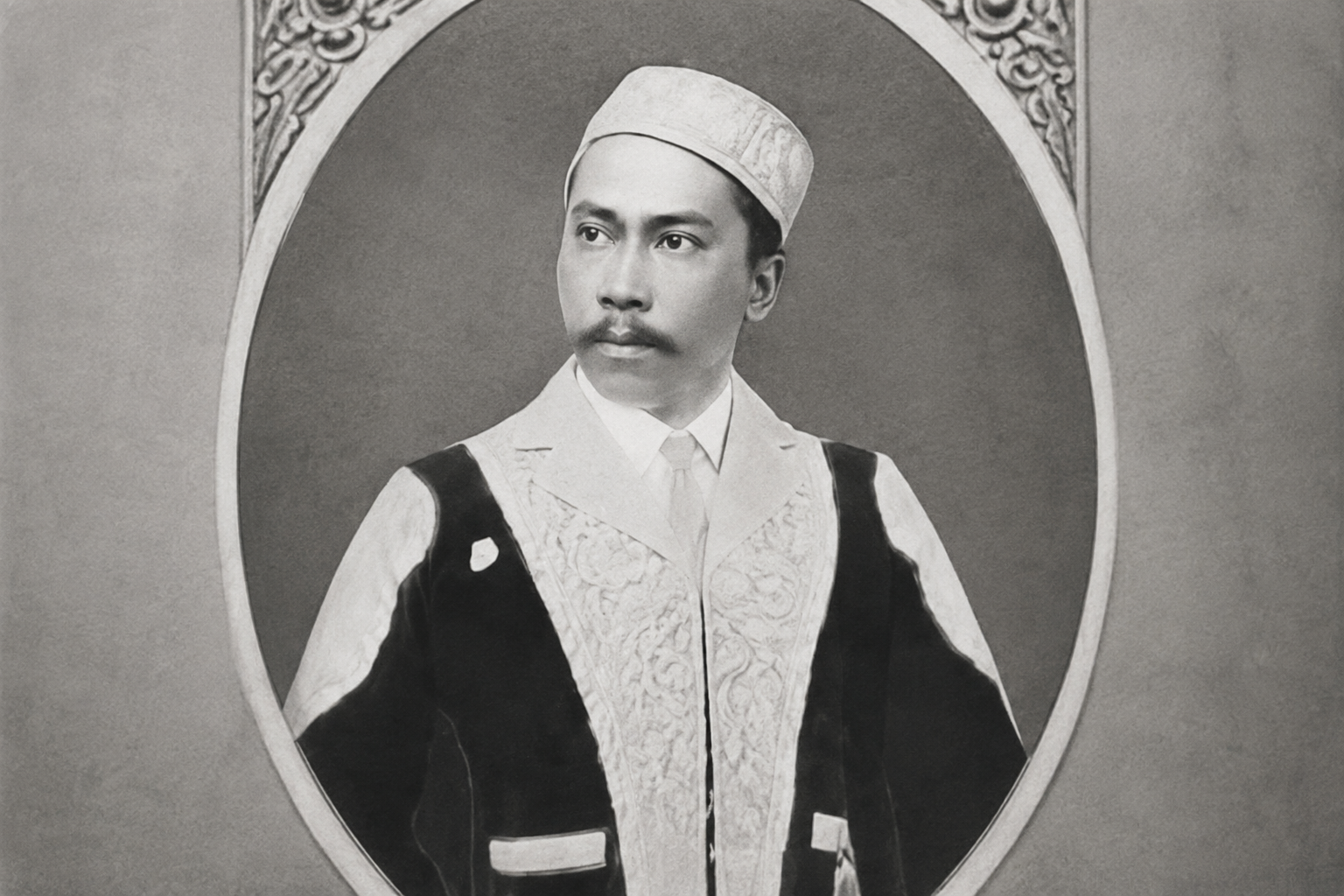
Gani Markan (Photo: Photo: Wikipedia. AI-enhanced, @mayyukhan)
Gani Markan, frequently transcribed in colonial and regional records as Gani Marakan, Mr. Gani Marakan, or U Gani Markan, was a Muslim civic leader, landowner, and politician from northern Arakan. He achieved historical significance during the British colonial era by winning election to the Legislative Council of Burma in the November 1936 general election, representing the Maungdaw-Buthidaung constituency, making him the earliest documented Muslim legislator elected to a national colonial body from the Muslim-majority heartland of northern Arakan.
At a Glance
Name and Identity
Gani Markan's name appears across British colonial, Burmese, and South Asian historical literature in several orthographic variants. In British parliamentary papers and the Burma Gazette, he is predominantly listed as "Mr. Gani Marakan" or "Gani Markan." Contemporary Burmese-language accounts and later historical works append the respectful honorific "U," producing U Gani Markan or U Gani Marakan. In certain regional Chittagong and Arakanese Muslim registers, the name is rendered with the traditional aspirate as Ghani Markan.
The suffix "Markan," or "Marakan," functions in northern Arakan as a distinct family or clan descriptor associated with mercantile and landholding Muslim families settled along the Mayu River delta and the Naf River borderland. The prefix "Gani," derived from the Arabic Ghani, meaning "wealthy" or "beneficent," was a common given name among Arakanese Muslims. The use of the Burmese honorific "U" in post-colonial records reflects a retrospective incorporation into national Burmese political historiography, whereas colonial-era records maintained the standard English designation "Mr." for non-European members of the Legislative Council.
Birth and Family
Gani Markan was born in the northern region of Akyab District, encompassing the townships of Maungdaw and Buthidaung, during the late nineteenth century, a period when British colonial administration had consolidated Arakan as a division of the Burma Province within British India.
His family belonged to the landed upper class of northern Arakan. The Markan family held extensive agricultural estates, salt-pans, and local trade concessions in the fertile valleys between the Mayu Mountains and the Naf River. This economic base allowed the family to exercise social leadership, arbitrate local disputes, and interact directly with British district commissioners and township officers in Akyab. While specific parental names and maternal lineage are unverified in surviving official colonial civil registers, local oral traditions documented in community archives associate the Markan lineage with long-established Muslim landed families in Maungdaw Township.
Education
Gani Markan received a dual education typical of the Muslim landed aristocracy in British Burma during the late nineteenth and early twentieth centuries. His early schooling combined traditional Islamic religious and linguistic instruction, in Arabic, Persian, and Urdu, in local madrasas with formal primary and secondary education in vernacular and Anglo-Vernacular schools in Maungdaw and Akyab. Biographical accounts indicate that he possessed fluency in the local Arakanese Muslim dialect (Ruaingga), written and spoken Burmese, and functional administrative English, enabling him to navigate both local village affairs and the institutional environment of the colonial legislature in Rangoon.
Early Life and Professional Career
Prior to his entry into formal electoral politics in 1936, Gani Markan operated as an influential agrarian leader and civic arbitrator in northern Arakan. Unlike central Burma, where Indian immigration in the late nineteenth century led to sharp economic competition with ethnic Burmans, northern Arakan maintained a continuous Muslim population that had been settled for generations alongside ethnic Rakhine Buddhist populations. His early civic work centered on managing agricultural tenant relationships, petitioning the British district administration regarding land revenue assessments, and supporting local community infrastructure, including village schools and mosques.
Gani Markan's professional life was rooted in landholding, agricultural trade, and civic leadership. Unlike contemporary Arakanese Muslim politicians such as Advocate U Pho Khaine, who practiced law in Akyab, Gani Markan derived his influence primarily from his status as a prominent zamindar, or landholder, and local leader in Maungdaw and Buthidaung. His economic standing as an established property owner qualified him under the property-based franchise rules of British Burma, positioning him as a natural candidate when open electoral politics expanded under the constitutional reforms of the 1930s.
Arakan Before the 1936 Election
During the early 1930s, Arakan Division was an administrative unit of British Burma consisting of four main districts: Akyab, Northern Arakan Hill Tracts, Kyaukpyu, and Sandoway. Akyab District was the economic and demographic center of the division. Demographically, northern Arakan, specifically Maungdaw and Buthidaung townships, maintained an overwhelming Muslim majority. The 1931 Census of India (Volume XI: Burma) recorded that Muslims in parts of Akyab District were so long-established and demographically dense that colonial authorities explicitly noted they should be regarded as "indigenous" to the region, distinguishing them from transient Indian coolie laborers in Rangoon or the Irrawaddy Delta.
Politically, the 1930s was a decade of intense constitutional debate surrounding the proposed separation of Burma from British India. While Burman nationalists advocated separation to control Indian immigration, minority communities, including Arakanese Muslims, Anglo-Burmans, Karens, and Indian merchants, expressed deep anxieties regarding their future representation and rights in a separated Burma.
The British Colonial Political System
Following the Montagu-Chelmsford Reforms of 1919, Burma had been governed under a "Dyarchy" system introduced in 1923, which created a Legislative Council with limited transferred powers. Following the Simon Commission reports and the Burma Round Table Conferences in London, the British Parliament enacted the Government of Burma Act 1935. This Act formally separated Burma from British India, effective 1 April 1937, and established a new constitutional structure known locally as the 91 Departments Administration (91 Taa-na). The new framework created a bicameral legislature consisting of a Senate and a House of Representatives, often referred to generically as the Legislative Council of Burma, comprising 132 elected seats.
The 1936 General Election
The 1936 Burmese general election was held in November 1936 to elect members to the new 132-seat legislature established under the Government of Burma Act 1935. It was one of the most crucial elections in colonial Burmese history, determining the political leadership that would guide the colony through its formal separation from India in 1937. The election was conducted under complex franchise rules based on tax payments, property ownership, and literacy, which expanded the electorate to approximately 20 percent of the adult population.
The constituency of Maungdaw-Buthidaung encompassed the rural, Muslim-majority northern townships of Akyab District. Crucially, under the electoral schedules of the 1935 Act, this constituency was classified as a Burmese General (National/Native) seat rather than a Communal Indian seat, meaning that the candidate elected from Maungdaw-Buthidaung represented the general territorial electorate of Burma, not a separate communal Indian roll.
In the contest for the seat, Gani Markan faced competition from local Arakanese figures, including ethnic Rakhine candidates who sought to capture the general constituency. Historical references identify his main electoral opponents as U Shwe Tha and U Aung Tun Khaing, prominent local figures from Akyab District. Gani Markan's victory was secured through the overwhelming mobilization of the rural Muslim electorate of Maungdaw and Buthidaung, who leveraged their demographic majority within the general constituency boundaries.
Legislative Council Career
Gani Markan took his seat in the Legislative Council of Burma following the official convening of the legislature in early 1937. His term formally spanned the period from 1936 to 1948 in broad administrative retrospectives, though active parliamentary sessions were disrupted by the Japanese invasion in 1942. In the legislature, he aligned primarily with non-partisan regional representatives and independent minority blocs. His presence in the chamber alongside Advocate U Pho Khaine, elected from Akyab West, ensured that the specific voice of Arakanese Muslims was represented in national debates over taxation, land tenure, and educational funding.
While complete verbatim Hansard transcripts for individual backbench members during the 1937-1941 legislative sessions are only partially preserved in digital repositories, official notices in the Burma Gazette confirm Gani Markan's attendance, voting record on revenue bills, and committee assignments. Where verbatim text of specific parliamentary speeches is unavailable in surviving digital archives, his record is established instead through official electoral returns, gazette membership lists, and contemporary legislative rosters.
| Date | Topic | Action |
|---|---|---|
| Nov 1936 | General Election | Returned as elected member for Maungdaw-Buthidaung general constituency |
| 1 Apr 1937 | 91 Departments Inauguration | Sworn in as Member of the Legislative Council (MLC) in Rangoon |
| 1937-40 | Agrarian & Revenue Debates | Supported petitions on agricultural debt relief and border trade regulation in Akyab District |
Political Views and Community Work
Gani Markan's documented political stance was characterized by three core principles: indigenous recognition, maintaining that the Muslims of northern Arakan were permanent, indigenous inhabitants of Burma rather than foreign immigrant laborers; agrarian rights, advocating for the protection of local agricultural landholders and tenants against arbitrary revenue extraction and external moneylenders; and regional autonomy and administrative equity, seeking increased government allocation for vernacular education, roads, and medical facilities in the isolated border townships of Maungdaw and Buthidaung.
Within northern Arakan, Gani Markan served as a key liaison between the British colonial administration and the local Muslim peasantry. Historical community records credit him with facilitating the establishment of local primary schools, supporting Islamic institutions, and mediating land disputes between neighboring villages along the Naf River borderland.
Relationship with Other Muslim and Rohingya Politicians
Gani Markan belonged to the founding generation of elected Muslim politicians in Arakan, paving the way for later Rohingya parliamentary leaders. His contemporaries included Advocate U Pho Khaine (Nasir Uddin), who represented Akyab West. In 1939, historical records note the election of U Tanvy Markan from the same Maungdaw-Buthidaung constituency, suggesting either a planned political succession or a family-linked candidacy to maintain the regional seat, though primary documentary proof of exact genealogical kinship remains unverified.
Following World War II, a new generation of university-educated Rohingya leaders, most notably Sultan Ahmed, M. A. Gaffar, Abul Khair, and Daw Aye Nyunt (Zura Begum), expanded upon the electoral precedent established by Gani Markan in 1936.
| Politician | Year | Constituency | Body |
|---|---|---|---|
| Gani Markan | 1936 | Maungdaw-Buthidaung | Legislative Council of Burma |
| U Pho Khaine (Nasir Uddin) | 1936 | Akyab West | Legislative Council of Burma |
| U Tanvy Markan | 1939 | Maungdaw-Buthidaung | Legislative Council of Burma |
| Sultan Ahmed | 1947 | Maungdaw | Constituent Assembly / Union Parliament |
| M. A. Gaffar | 1947 | Buthidaung | Constituent Assembly / Union Parliament |
| Daw Aye Nyunt (Zura Begum) | 1951 | Maungdaw South | Union Parliament |
| Abul Khair | 1956 | Maungdaw South | Union Parliament |
World War II and the 1942 Arakan Violence
The outbreak of World War II in the Pacific completely transformed the political landscape of Arakan. In early 1942, the Imperial Japanese Army invaded Burma, driving British forces out of most of the country. Arakan became a direct battleground and frontline zone between British-controlled India and Japanese-occupied Burma. During the war, formal parliamentary governance under the 1935 Act ceased. Like many prominent landed elites in northern Arakan, Gani Markan's local authority was tested as civil administration collapsed.
In 1942, widespread communal violence erupted in Arakan. As British administrative control evaporated, inter-communal clashes broke out between ethnic Rakhine Buddhists and Arakanese Muslims. Hundreds of villages were destroyed, resulting in massive internal displacement: tens of thousands of Muslims fled from southern and central Arakan into the Muslim-majority north, Maungdaw and Buthidaung, while Rakhine populations fled southward. The British military subsequently organized local Muslim irregular units known as the V Force to counter Japanese advances and maintain a buffer zone. While specific military participation by Gani Markan in V Force units is not documented in official war diaries, landed leaders of his stature in Maungdaw were inevitably involved in local relief efforts and maintaining community security during this period.
Post-War Political Activity and the 1947 Transition
Following the Allied reconquest of Burma in 1945, British military administration (CAS-B) temporarily governed the region before civilian rule was restored. The post-war era, 1945-1947, was dominated by rapid constitutional negotiations led by General Aung San and the Anti-Fascist People's Freedom League. During this period, political leadership among northern Arakan Muslims shifted toward younger, organizationally aligned figures such as Sultan Ahmed and M. A. Gaffar, who formed the Jamiat-ul-Ulema and the Arakanese Muslim Organization. Gani Markan, having served in the pre-war legislature, acted as an elder statesman within local advisory councils in Maungdaw.
In April 1947, elections were held for the Constituent Assembly of Burma, tasked with drafting the constitution for an independent nation. In these elections, Maungdaw and Buthidaung were split into separate constituencies, with Sultan Ahmed elected to represent Maungdaw and M. A. Gaffar elected for Buthidaung. Gani Markan did not contest a seat in the 1947 Constituent Assembly, marking a formal generational transition in northern Arakan's parliamentary leadership.
Post-Independence Life and Death
On 4 January 1948, Burma achieved full independence as the Union of Burma. In the post-independence democratic period, 1948-1962, Muslims from northern Arakan participated actively in national politics, holding cabinet positions and parliamentary seats. Gani Markan retired from national legislative politics during this era, remaining in his ancestral homeland in northern Arakan, where he continued to manage local agricultural holdings and civic matters in Maungdaw Township.
His exact death date is not verified. Primary official records, such as formal obituaries or death certificates from the late colonial or early post-independence Burmese civil registers, are not available in current digital archival holdings. Local community oral traditions place his passing in northern Arakan in the post-war or early independence era, roughly the late 1940s to 1950s. He was buried in his native Maungdaw district according to traditional Islamic rites.
Assessing the "First Rohingya Legislator" Claim
A central question in evaluating Gani Markan's legacy is the widely repeated assertion that he was "the first Rohingya legislator." The phrase appears extensively in modern Rohingya political literature, community archives such as those maintained by historical researchers like Master Aman Ullah, and contemporary digital encyclopedias.
Terminologically, the word "Rohingya" was not used as an official administrative label on the 1936 British ballot papers; colonial registrars classified candidates by legal categories such as "Burmese National." Substantively, however, in terms of geographic, demographic, and political representation, Gani Markan was indeed the first Muslim representative elected to the national colonial legislature of Burma specifically representing the Muslim-majority heartland of northern Arakan, Maungdaw-Buthidaung, under a native general seat. While earlier Muslim individuals served on municipal boards or appointed advisory bodies elsewhere in Burma, Gani Markan holds the distinction of being the first elected member of the Burmese Legislative Council from the northern Arakan constituency.
Three Interpretive Frameworks
Discrepancies in historical accounts of Gani Markan stem from the distinct ideological frameworks of different chroniclers. British colonial records focused strictly on franchise qualifications, revenue status, and broad communal classifications such as "Arakanese Indian / General." Post-independence Burmese nationalist accounts emphasize his "Indian" designation in certain colonial reports to support claims that Arakanese Muslims were non-indigenous settlers. Rohingya community historians emphasize his election in the "Burmese National" category to demonstrate continuous, indigenous political participation in Burma's parliamentary institutions.
How Sources Identify Him
| Source | How It Identifies Him | Reliability |
|---|---|---|
| Colonial Electoral Returns (1936) | Candidate, General (Native) Constituency | Tier A, Primary Official |
| Census of India (1931, Vol. XI) | Indigenous Arakanese Muslim / Settled Population | Tier A, Primary Official |
| New Mandala / Academic Analysis | Rohingya MP, elected under Burmese National category | Tier B, Scholarly Analysis |
| Rohingya Community Archives | First Rohingya Legislator / Pioneer MP | Tier C, Community History |
| Modern Digital Encyclopedias | Arakanese Indian Legislator / Burmese Native Category | Tier D, Secondary Synthesis |
Legacy
Gani Markan's historical legacy is interpreted through three primary perspectives. In colonial administrative history, he is viewed as an influential rural landholder who successfully navigated the property-based electoral system of British Burma to win a general seat in the 1936 Legislative Council. In Rohingya political historiography, he is celebrated as a foundational pioneer of Rohingya parliamentary representation, with his election under the "Burmese National" category cited by Rohingya historians as concrete archival proof that the colonial state recognized northern Arakan Muslims as native citizens rather than foreign immigrants. In modern Burmese historiography, he is frequently minimized or categorized under generic terms such as "Arakanese Indian," aligning with post-1960s state narratives regarding minority ethnic identities.
Complete Timeline
Tap any year for the fuller account.
c. 1880s-90s+
1931+
2 Aug 1935+
Nov 1936+
1 Apr 1937+
1939+
1942+
Apr 1947+
4 Jan 1948+
c. late 1940s-50s+
Related Figures
Read more about the generation of Rohingya parliamentarians who followed Gani Markan's precedent:
Sources & Bibliography
This profile is built from British colonial electoral records, the 1931 Census of India, and cross-referenced Rohingya archival and academic scholarship.
- Scribd — Report on the Conditions and Sufferings of the Rakhaines in Maungdaw.
scribd.com - Wikipedia — Gani Markan.
en.wikipedia.org - New Mandala (ANU) — Making Rohingya Statelessness.
newmandala.org - Ek Khaale — They Did Not Deny Us, Rohingya.
ekkhaale.org - Wikipedia — Category: Rohingya Politicians.
en.wikipedia.org - Wikipedia — Arakan Division.
en.wikipedia.org - Scribd — Towards Understanding Arakan History, by Abu Anan.
scribd.com - Wikipedia — Aye Nyunt.
en.wikipedia.org - University of Dhaka — Securitization of "Rohingyas" in Myanmar: An Analysis.
reposit.library.du.ac.bd