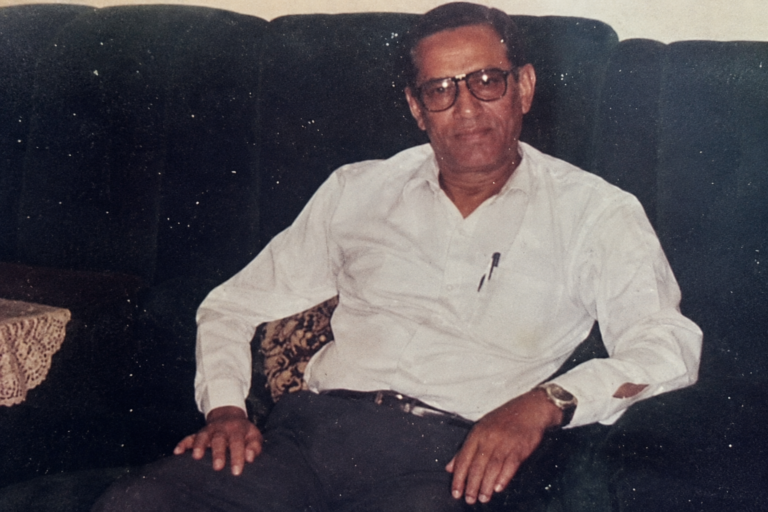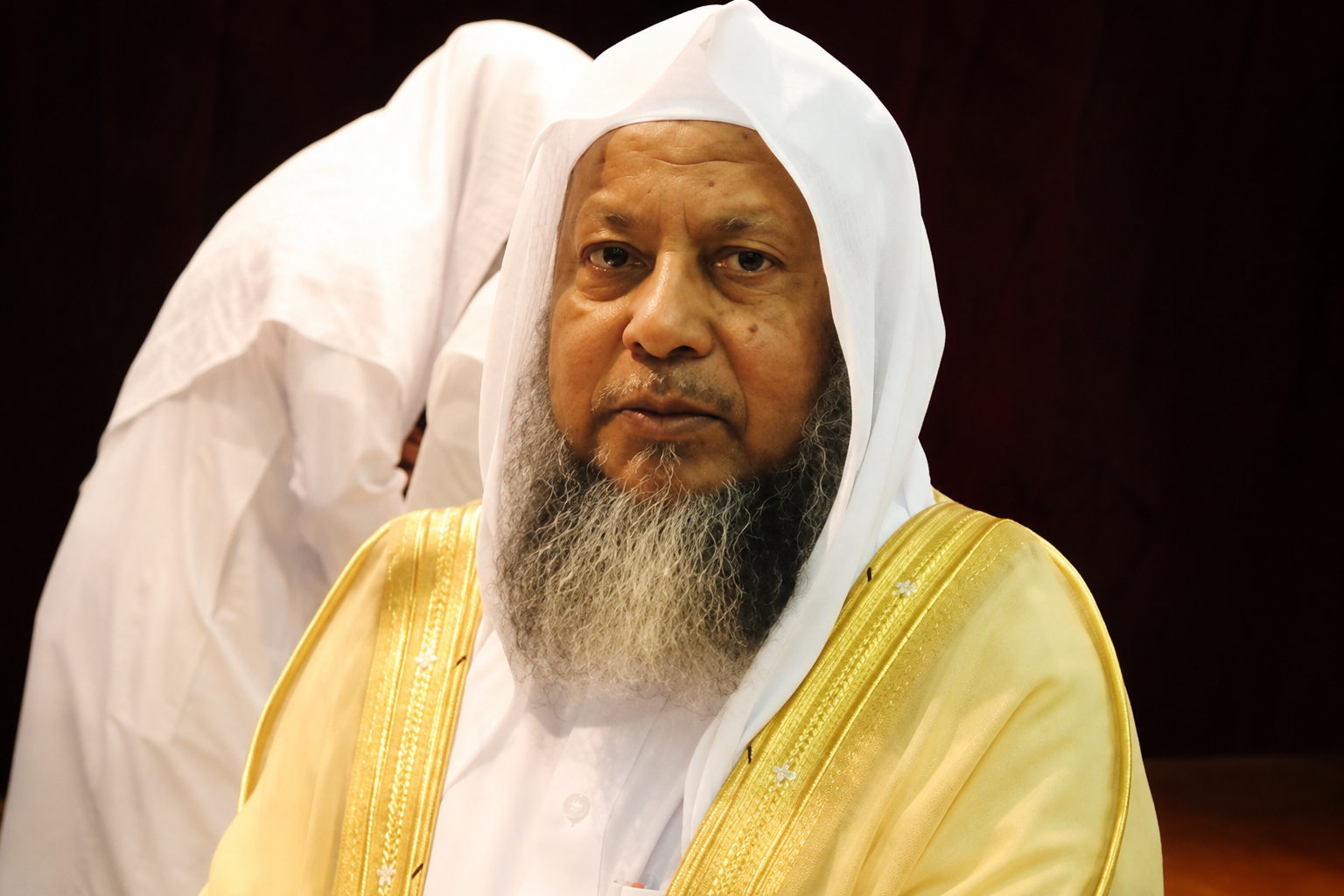
Former Rohingya Imam of Al-Masjid an-Nabawi and Masjid Quba, and faculty member in the Department of Tafsir at the Islamic University of Madinah

Sheikh Dr. Muhammad Ayyub, former Imam of Al-Masjid an-Nabawi. (Photo: @Muhammad_Ayop / X)
Sheikh Dr. Muhammad Ayyub ibn Muhammad Yusuf ibn Sulayman Umar al-Arakani is remembered across the Muslim world as one of the great voices of the Hijazi recitation tradition, an imam whose Ramadan broadcasts from the Prophet's Mosque reached hundreds of millions of listeners. He is remembered by Rohingya people everywhere as something more: proof that a family driven from Arakan with nothing could still reach the highest mihrab in Madinah, without ever hiding who they were.
At a Glance
Roots in Arakan: A Family Born From Displacement
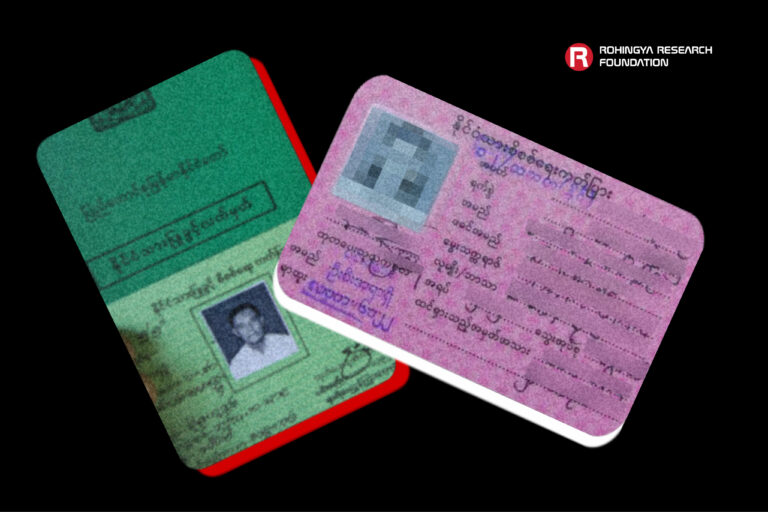
Sheikh Muhammad Ayyub's story does not begin in Makkah, it begins in a small farming village roughly three miles from Maungdaw in northern Arakan. That is where his grandfather, Sulayman Umar, worked the land, and where his father, Muhammad Yusuf, grew up before the mid-20th century brought escalating restrictions, violence, and disenfranchisement down on Arakan's Rohingya population. Muhammad Yusuf made the decision to leave, travelling west through South Asian transit routes until he reached the Kingdom of Saudi Arabia, where King Abdulaziz ibn Abdul Rahman Al Saud and the monarchs who followed him had opened the door to displaced Muslims from Arakan.
The family settled in Makkah al-Mukarramah, joining an already-established Arakani community of traders, laborers, and scholars who had made the same journey. Muhammad Ayyub was born into that community in 1952, carrying both the inherited memory of his homeland's displacement and the sanctuary of the city that had taken his family in.
He grew up in Dahlat al-Rush, a historic quarter within Makkah's Misfilah and Hafair neighborhoods, close enough to the Grand Mosque that the rhythm of his household ran on its five daily prayers. His father supported the family from a small retail stall near the Haram, modest work that left little room for anything beyond necessity, yet Muhammad Yusuf treated his children's religious education as the one investment that mattered above all else. Recognizing his son's sharp memory and unusual vocal gift, he personally walked young Muhammad to the neighborhood's Qur'an circles and placed him under the direct guardianship of Makkah's most respected reciters.
Memorizing the Qur'an
Muhammad Ayyub completed the memorization of the entire Qur'an by the age of twelve, studying at the study circles of the Society for Qur'an Memorization at Bin Laden Mosque in Makkah's Hafair district. Two teachers shaped this period above all others: Sheikh Zaki Daghistani, a master of the traditional Hijazi cadence, and Sheikh Khalil ibn Abd al-Rahman al-Qari, the figure widely credited as the founding patriarch of the modern Hijazi recitation revival.
Sheikh Khalil recognized something exceptional in the boy and took him on as a close personal student, so much so that when Khalil relocated temporarily to Ta'if, young Muhammad went with him to continue daily recitation checks. His father had asked Sheikh Khalil directly to mold his son into a servant of the Qur'an, and Khalil answered that request with rigorous, years-long instruction in Tajweed, breath control, and vocal delivery. Muhammad Ayyub received his formal Qur'an memorization certificate from Makkah's Ministry of Knowledge in 1386 AH.
A Scholar's Path
Qur'an memorization complete, Muhammad Ayyub moved to Madinah to pursue formal academic study, a relocation that would define the rest of his life. He progressed steadily through the Islamic University of Madinah's system, eventually specializing in Tafsir, the discipline of Qur'anic exegesis, at the university's Faculty of the Holy Qur'an and Islamic Studies.
| Stage | Institution | Year | Output |
|---|---|---|---|
| Qur'an Memorization | Ministry of Knowledge, Makkah | 1386/1389 AH | Primary Certificate |
| Secondary | Madinah Scientific Institute | 1392 AH | Diploma |
| Bachelor's | Faculty of Sharia, IUAM | 1396 AH | B.A., Islamic Jurisprudence |
| Master's | Faculty of the Holy Qur'an, IUAM | 1402 AH / 1982 | Thesis on Sa'id ibn Jubayr |
| Doctorate | Faculty of the Holy Qur'an, IUAM | 1408 AH / 1987 | Ph.D., First Class Honors |
Both his Master's thesis and doctoral dissertation examined the exegetical narrations of Sa'id ibn Jubayr, an early and highly respected authority in Qur'anic interpretation, together spanning the entire Qur'an from beginning to end across the two projects. His Master's research was initially supervised by the Egyptian scholar Dr. Mustafa Zayd, and after Zayd's death, supervision passed to Sheikh Abu Bakr Jaber al-Jaza'iri. During this period, Ayyub also spent a month at the Qatar National Library in Doha on an official university assignment to microfilm rare classical commentaries. He earned his doctorate in 1408 AH (1987 CE) with First Class Honors.
Teachers Who Shaped Him
Beyond his two primary Qur'an teachers, Ayyub studied under a wide circle of Makkah and Madinah's leading scholars, in Qira'at, Hadith, jurisprudence, and exegesis alike. Tap any name below for their role in his formation.
Sheikh Hasan ibn Ibrahim al-Sha'ir+
Sheikh Ahmad Abd al-Aziz al-Zayyat+
Sheikh Muhammad Sayyid Tantawi+
Sheikh Muhammad al-Amin al-Shanqiti+
Sheikh Abdul-Muhsin al-Abbad+
Sheikh Abdallah Muhammad al-Ghunayman+
Through his teachers al-Sha'ir and al-Zayyat in particular, Ayyub secured an unbroken chain of transmission for the Hafs 'an 'Asim reading stretching back to the Prophet Muhammad through the Shatibiyyah route, the kind of scholarly lineage that gives a reciter's authority its weight in the Islamic tradition.
Building an Academic Career
After his Bachelor's degree in 1396 AH, Ayyub was appointed Teaching Assistant at the Faculty of the Holy Qur'an, and for ten years served as the faculty's Examination Secretary, overseeing testing and evaluation. Following his doctorate, he was promoted to Assistant Professor of Tafsir, a position he held at the Islamic University of Madinah until his retirement around 1435 AH, teaching classical exegetical texts, Hadith narrations relevant to Tafsir, Tajweed rules, and Qur'anic sciences to generations of students.
Alongside his teaching post, Ayyub served on the Scientific Committee of the King Fahd Complex for Printing the Holy Qur'an, where he took part in proofreading and verifying official Qur'anic printings and translations. His institutional standing also carried him abroad: he led Arabic-language and Qur'an teacher-training courses in Pakistan, Turkey, Senegal, Malaysia, and the United Kingdom, and represented Saudi religious institutions at an Islamic youth conference in Campinas, Brazil.
Imam of the Prophet's Mosque
The defining public chapter of Ayyub's life opened in 1410 AH (1990 CE), when King Fahd ibn Abdulaziz issued a royal approval naming him a guest imam for Tarawih and Tahajjud prayers at Al-Masjid an-Nabawi during Ramadan. What happened that first year became part of his legend: with his co-assigned imams largely absent or unwell, Ayyub ended up leading the night prayers almost entirely alone for nearly the whole month, twenty rak'ahs of Tarawih plus Tahajjud, solo, night after night, completing a full recitation of the Qur'an from the mihrab in the process.
The Return, Ramadan 1436 AH
In June 2015, King Salman ibn Abdulaziz issued a royal decree reappointing Sheikh Muhammad Ayyub to lead Tarawih and Tahajjud at the Prophet's Mosque, nineteen years after his last appointment there. Footage of his emotional return spread across the Muslim world. It would be his final Ramadan at the mihrab; he passed away the following year.
A Life in Dates
Tap any year below for the fuller account.
1372 AH 1952 CE+
1386 AH 1966 CE+
1392 AH 1972 CE+
1394 AH 1974 CE+
1396 AH 1976 CE+
1402 AH 1982 CE+
1408 AH 1987 CE+
1410 AH 1990 CE+
1417 AH 1997 CE+
c. 1429 AH c. 2008 CE+
1435 AH 2014 CE+
Ramadan 1436 AH June 2015 CE+
9 Rajab 1437 AH 16 Apr 2016 CE+
Neighborhood Mosques of Madinah
Alongside his fame at the Prophet's Mosque, Ayyub kept a continuous pastoral presence in Madinah's neighborhood mosques throughout his adult life, leading five daily prayers, delivering Friday sermons, mediating community disputes, and mentoring local youth in memorization.
| Mosque | Period | Role |
|---|---|---|
| An-Anabiya Mosque | 1394–1403 AH | Resident Imam; founded youth memorization circles |
| Quba Mosque | Intermittent, mid-1400s AH | Guest Imam for Tarawih and Tahajjud |
| Abdullah al-Husayni Mosque | 1403–1426 AH (23 years) | Resident Imam and Khateeb |
| Hasan al-Sha'ir Mosque | 1427–1437 AH | Primary Imam until his death |
The Voice of the Hijaz
Ayyub is widely regarded as one of the premier modern masters of Hijazi-style Qur'anic recitation, a tradition distinct from the more standardized Egyptian recitation styles that dominated recorded media through much of the twentieth century. His delivery combined precise Tajweed and phonetic articulation with deep spiritual restraint, softening in passages of mercy, firming in verses of warning, moving through the traditional Hijazi maqamat of Bayati, Hijaz, and Nahawand with what listeners consistently described as unshowy, unforced emotional command.
In recognition of that mastery, King Fahd commissioned Ayyub to record a complete studio Qur'an at the King Fahd Complex for Printing the Holy Qur'an, a recording broadcast worldwide over Saudi Qur'an Radio alongside those of Sheikh Ali al-Hudhaify and Sheikh Ibrahim al-Akhdar, and still circulated globally today.
"...the finest Imam to stand in that mihrab in fifty years."
Dr. Abdul-Aziz bin Abdal-Fattah QariFormer Dean, Faculty of the Holy Qur'an, IUAM"...the sixth pyramid alongside the five famous Egyptian reciters."
Dr. Ahmad Isa al-Ma'sarawiFormer Grand Sheikh, Egyptian Qur'an Readers"...one of the most distinctive voices in the Islamic world."
Dr. Saleh bin Abdullah bin HumaidImam, Al-Masjid al-Haram"He was an independent school unto himself in recitation and delivery."
Dr. Ayman Rushdi SwaydAuthority in Qira'at & Qur'anic SciencesWritten Works
| Work | Type | Year |
|---|---|---|
| Sa'id ibn Jubayr and His Exegetical Narrations, Fatihah to al-Tawbah | Master's Thesis | 1402 AH / 1982 |
| The Exegetical Narrations of Sa'id ibn Jubayr, Yunus to the End of the Qur'an | Doctoral Dissertation | 1408 AH / 1987 |
| Do Scholars Not Have Rights Like Everyone Else?! | Article, Al-Madina newspaper | 1415 AH / 1995 |
A Voice for the Rohingya
Ayyub never treated his Rohingya identity as something to leave behind. He carried the nisbah al-Arakani openly throughout his life, in his academic titles, in how he introduced himself, in how the Muslim world came to know him. Within Saudi Arabia's substantial Arakani diaspora, he was more than a famous reciter, he was a respected elder and a moral anchor, regularly visiting Rohingya community centers, residential quarters, and study circles across Makkah, Jeddah, and Madinah, personally arranging financial support for struggling families and backing youth education programs.
In interviews and public appearances, he spoke directly about the persecution facing Muslims in Arakan, using the platform his position gave him to keep the crisis visible internationally. For Rohingya communities scattered across the world, many living in exactly the kind of displacement his own family had once fled, his standing at the mihrab of the Prophet's Mosque became a source of collective pride: living proof that a refugee's grandson could rise to the highest religious office in Islam's second holiest city without erasing where he came from.
Return to Arakan, 2008
Around 2008, Ayyub made the only journey of his life back to his family's homeland. With coordination through the Bangladeshi embassy and regional channels, he secured clearance to enter Myanmar and travel to his ancestral village near Maungdaw in northern Arakan, where his grandfather had farmed and his father had fled decades earlier.
He spent a week there, meeting relatives who had lived through decades of military rule under conditions his own family had escaped. Local accounts describe large, emotional gatherings of villagers, religious leaders, and students drawn to his presence. He visited village madrasahs, spoke about perseverance and steadfastness in faith, and quietly distributed charitable funds to local schools before returning to Madinah, having finally set foot on the soil his family's story began on.
Family and Daily Life
Those who knew him, family, colleagues, students, describe a man who treated fame as incidental to a life built around the mosque, the university, and his household. Sheikh Saleh al-Maghamsi recalled inviting him to lunch shortly before his death; Ayyub accepted, then gently excused himself, explaining that he had made a standing habit of spending every Friday exclusively with his children and grandchildren.
He was married to two wives and the patriarch of a household of thirteen. All five of his sons memorized the complete Qur'an under his personal supervision, several going on to pursue advanced degrees in medicine, engineering, and Islamic studies. Family testimonies released after his death also describe a quieter side of his life: he reportedly gave away half of his monthly income to charitable causes, maintaining stipends for more than a hundred needy families, orphans, and students in Madinah, and often served as an informal mediator in community and marital disputes.
His funeral prayer was held after Dhuhr that Saturday at Al-Masjid an-Nabawi, attended by tens of thousands of worshippers alongside senior Saudi scholars and state officials. He was carried to Baqi' al-Gharqad, Madinah's historic cemetery, and buried close to the graves of the Prophet's companions and household.
Legacy
Ayyub's significance is often described across three dimensions. He preserved and globalized the Hijazi recitation tradition at a moment when recorded media leaned heavily toward more standardized styles, his King Fahd Complex studio recording keeping that heritage alive for future generations. Through his doctoral research on Sa'id ibn Jubayr and roughly three decades of teaching at the Islamic University of Madinah, he contributed directly to the preservation of classical Hadith-based exegesis, training generations of scholars now serving around the world.
And within the modern history of Arakan, he stands as something rarer still: proof, reached at the literal center of the Islamic world, that Rohingya excellence and Rohingya dignity were never in question, only ever denied the room to be seen.
Sources & Bibliography
This profile draws on the research compilation Gharreed al-Maharib: Al-Shaykh Muhammad Ayyub, al-Unmudhaj wa al-Qudwah by Ammar bin Muhammad bin A'zam (Dar al-Awraq, Jeddah, 1442 AH), built from 36 field interviews and 68 documented testimonies, together with the Arabic and English news, encyclopedic, and video sources listed below.
- Wikipedia (Arabic) — Muhammad Ayyub biography entry.محمد أيوب - ويكيبيديا
ar.wikipedia.org - IslamWeb — Farewell to Sheikh Muhammad Ayyub.وداعاً الشيخ محمد أيوب
islamweb.net - Midad — Muhammad Ayyub, scholars and preachers profile.محمد أيوب - العلماء والدعاة
midad.com - Wikipedia (English) — Muhammad Ayyub.
en.wikipedia.org - Mustaml — A profile of Sheikh Muhammad Ayyub, may Allah have mercy on him.نبذة عن الشيخ محمد أيوب رحمه الله
mstaml.com - Alukah Network — Introducing the book Gharreed al-Maharib.نبذة وتعريف بكتاب: غريد المحاريب
alukah.net - Al Arabiya — Funeral procession of the Prophet's Mosque imam, Sheikh Muhammad Ayyub.تشييع جنازة إمام المسجد النبوي الشيخ محمد أيوب
alarabiya.net - Arakan News Agency (ANA) — Death of Sheikh Muhammad Ayyub, the most famous Rohingya figure.وفاة الشيخ محمد أيوب.. أشهر شخصية روهنغية
arakanna.net - Al-Anba (Kuwait) — Death of Sheikh Muhammad Ayyub, imam of the Prophet's Mosque.وفاة الشيخ محمد أيوب إمام الحرم النبوي
alanba.com.kw - Al Jazeera — Funeral procession of Sheikh Muhammad Ayyub, imam of the Prophet's Mosque.تشييع جنازة الشيخ محمد أيوب إمام المسجد النبوي
aljazeera.net - Asharq Al-Awsat — The passing of Sheikh Muhammad Ayyub, most famed reciter of Hijazi style at the Prophet's Mosque mihrab.رحيل الشيخ محمد أيوب أشهر من قرأ الحجازية بمحراب المسجد النبوي
aawsat.com - IHH Humanitarian Relief Foundation — IHH answers the call of young Arakanis.تلبي نداء الشاب الأراكاني
ihh.org.tr - Al Jazeera — Buddhist monks distance themselves from the killing of Myanmar's Muslims.رهبان بوذيون يتنصلون من قتل مسلمي ميانمار
aljazeera.net - Al-Sharq (Qatar) — Contemporary coverage referencing regional Arakani affairs.
al-sharq.com - Salaf Center for Research and Studies — A profile of Sheikh al-Musnid Saleh al-Arakani.نبذة عن الشيخ المسند صالح الأركاني
salafcenter.org - Dr. Muhammad bin Abdullah al-Surai — Sheikh Muhammad Ayyub as a researcher.الشيخ محمد أيوب باحثًا
msurayyi.com - Quranpedia (The Qur'anic Encyclopedia) — Sa'id ibn Jubayr and his exegetical narrations, Fatihah to end.سعيد بن جبير ومروياته في التفسير من أول القرآن
quranpedia.net - Quranpedia (The Qur'anic Encyclopedia) — The narrations of Sa'id ibn Jubayr, Yunus to the end.مرويات سعيد بن جبير في التفسير من أول سورة يونس
quranpedia.net - Quran-Uni (Comprehensive Qur'anic Sciences Portal) — The narrations of Sa'id ibn Jubayr in exegesis.مرويات سعيد بن جبير في التفسير
quran-uni.com - Univeyes eBook Library — The narrations of Sa'id ibn Jubayr, Yunus to the end of the Qur'an (PDF).
ebook.univeyes.com - Assabile — Abdul Wali al-Arkani recitation profile.عبد الولي الأركاني
ar.assabile.com - Ajyal Network — Death of Sheikh Muhammad Ayyub, imam of the Prophet's Mosque.وفاة الشيخ محمد أيوب إمام المسجد النبوي
arn.ps - Al-Eqtisadiah (Economic Daily) — King Fahd Complex for Printing the Holy Qur'an, serving the Muslim world's editions and translations.مجمع الملك فهد لطباعة المصحف
aleqt.com - Sayd al-Fawaid — Biography of His Eminence Sheikh Muhammad Ayyub, Imam of the Prophet's Mosque.ترجمة فضيلة الشيخ محمد أيوب
saaid.org - YouTube — Sheikh Saleh al-Maghamsi on the signs of a good ending for Sheikh Muhammad Ayyub.من بشائر الخاتمة الحسنة للشيخ محمد أيوب
youtube.com - Alukah Network — "Gharreed al-Maharib," a review.غريد المحاريب بوح
alukah.net - Sayd al-Fawaid — The nightingale of the Prophet's Mosque has departed, Sheikh Muhammad Ayyub.ورحل بلبل المسجد النبوي الشيخ محمد أيوب
saaid.org - YouTube — The passing of the Haram imam, Muhammad Ayyub.رحيل إمام الحرم محمد أيوب
youtube.com - YouTube — Death of Sheikh Muhammad Ayyub trends globally as scholars mourn on Twitter.وفاة الشيخ محمد أيوب إمام الحرم النبوي تتصدر الترند العالمي
youtube.com - YouTube — Gharreed al-Maharib: Sheikh Muhammad Ayyub echoes Sheikh al-Minshawi (end of Surat al-Nahl).غريد المحاريب الشيخ محمد أيوب يحاكي الشيخ المنشاوي
youtube.com - YouTube — Sheikh Muhammad Ayyub's advice to his son Khalid.وصية الشيخ محمد أيوب لابنه خالد
youtube.com - YouTube — Sheikh Dr. Muhammad Ayyub speaking about Arakan-Burma.الشيخ الدكتور محمد أيوب وحديثه عن أراكان - بورما
youtube.com