Elections, Legislative Independence, Military Power, and the Right of Political Representation

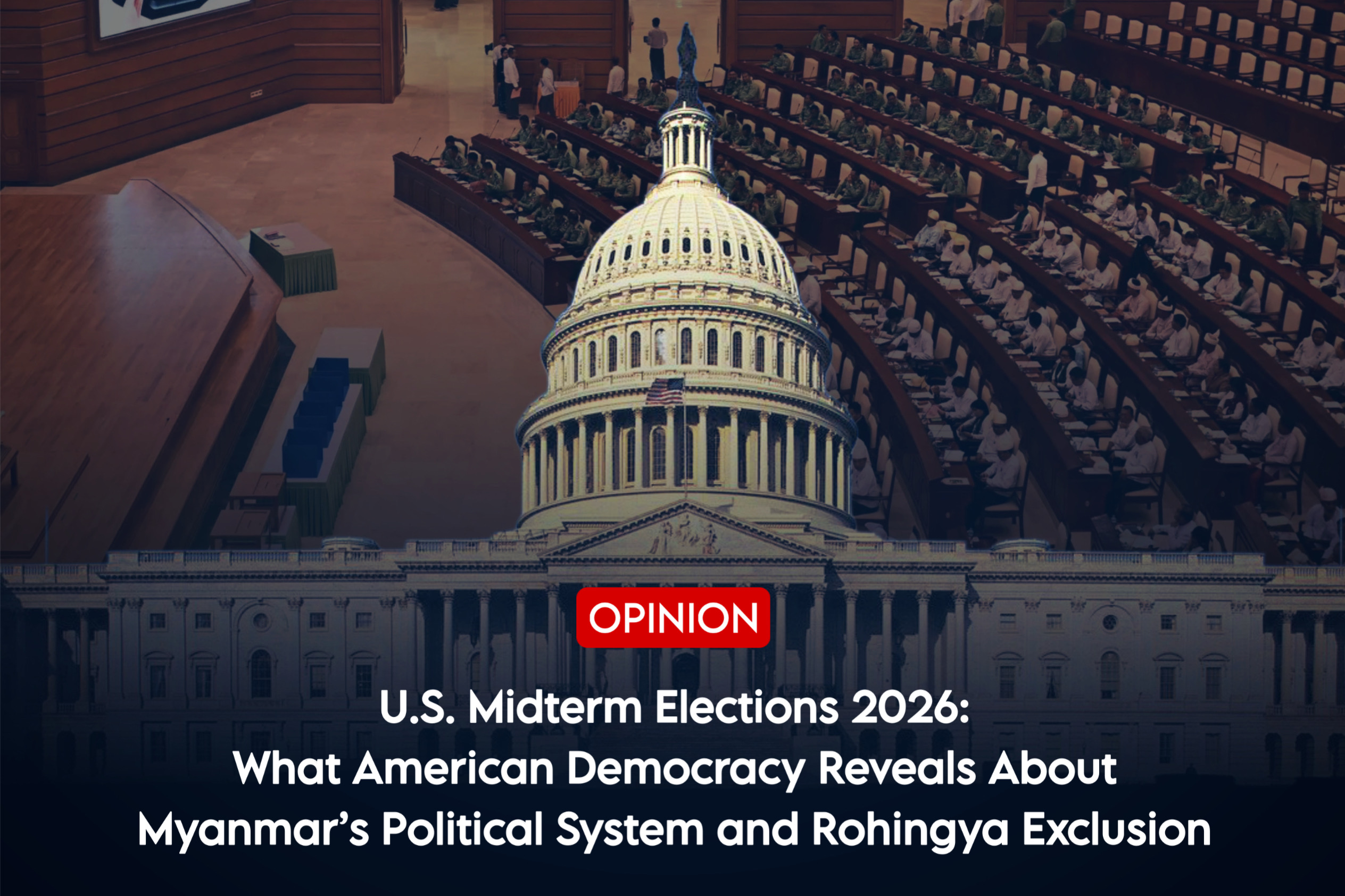
Behind the image: Myanmar’s Parliament and the United States Capitol
Americans will cast their ballots in the midterm elections on Tuesday, November 3, 2026, selecting representatives who could have a major impact on President Donald Trump’s final two years in office.
As a former Member of Myanmar’s Parliament (2010 – 2015), I have a special interest in these elections. The United States has two chambers of legislature, elected representatives, political parties, and constitutional provisions for political power. Myanmar has two chambers of legislature, elected representatives, political parties, and constitutional provisions for political power. But the differences in their political systems run deep.
My experience in Myanmar’s Parliament and even being disqualified from the 2015 general election has taught me that elections and a Parliament do not automatically equate to meaningful democracy or political accountability.
The U.S. Congress and Myanmar Parliament: Number and Representation
The U.S. Congress is made up of 435 voting members of the House of Representatives and 100 senators. All 535 seats are filled by elections.
The 2008 Constitution of Myanmar allows for a maximum of 664 members in the two chambers of the Pyidaungsu Hluttaw (Union Parliament), comprising 440 seats in the Pyithu Hluttaw and 224 seats in the Amyotha Hluttaw.
Of these, 498 are reserved for elected representatives and 166 seats – 25 percent – are appointed by the military.
This is an important distinction.
In America there is no constitutional provision for seats for military officers in Congress. The army is awarded a quarter of the seats in Myanmar’s parliament without a single public vote.
In general, the process to amend the constitution in Myanmar requires more than 75 percent approval in parliament. This means that a united military bloc can block amendments demanding that threshold.
Midterm Elections and By-Elections: What Is the Difference?
American House Representatives serve two-year terms; Senators do six-year terms. About one-third of Senate seats are up for grabs every two years.
The President’s term is four years. It also gives Americans an opportunity to change their congressional representation in the middle of a presidential term.
On Nov. 3, there will be 435 voting seats in the House and 35 seats in the Senate, including two special Senate elections, on the ballot.
Members of Myanmar’s parliament normally serve five-year terms. But Myanmar also conducts by-elections to fill vacancies caused by appointments to government positions, resignations, deaths, or other circumstances.
Myanmar, for example, had by-elections on April 1, 2012, after the 2010 general election. Many of the vacancies were caused by elected MPs taking ministerial posts under President U Thein Sein.
Following the general election in 2015, there was a further round of by-elections in April 2017.
The difference is simple: American midterms always replace the whole House and some of the Senate, thus opening the possibility of shifting control of Congress. Myanmar’s by-elections are held mainly to fill vacant parliamentary seats.
Red and Blue: The Politics of Competition in America
In American politics, there are two major parties. The Republican Party is represented by the color red, and the Democratic Party is represented by the color blue.
In general, Republicans support conservative policies, whereas Democrats support more progressive approaches to public policy. But in each party there are different views.
Candidates battle in primary elections, public debates, community meetings, advertising, fundraising, and social media campaigns.
American campaign finance laws govern contributions, disclosure, and some types of political spending.
Myanmar has many political parties, but its electoral competition has been repeatedly marred by military interference, political restrictions and discrimination against certain communities.
The military organized the December 2025 and January 2026 elections in a context of armed conflict and serious limitations on the participation of the opposition.
The number of parties is not the real measure of electoral competition; what matters is whether candidates can compete freely and voters can have meaningful choices.
Parliamentary Independence: Can Representatives Challenge the Government?
The United States Congress can propose laws, interrogate officials in the executive branch, investigate the activities of the executive branch, oversee the expenditures of the public purse, and question the policies of the president.
Congress also has constitutionally defined powers to make federal laws, approve budgets, and provide oversight.
Myanmar’s parliamentary rules also permit Members of Parliament to raise questions, motions, bills, and proposals.
But during my time in Parliament I realized there was a big difference between the theoretical right to raise an issue and the practical ability to influence government policy.
The views and advice of the relevant government ministries often carried considerable weight in determining whether parliamentary proposals received support or led to action.
While Parliament officially held decision-making powers, ministerial posts often influenced results.
It is not a truly independent Parliament because it allows its members to speak. The foundation of its independence is the ability of representatives to challenge government decisions and to hold executive authorities to account.
One of the most important lessons I have learned in my parliamentary experience.
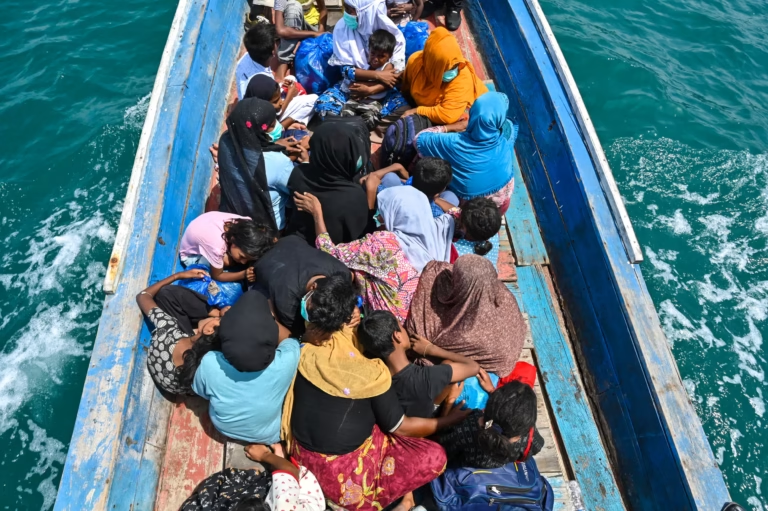
Rohingya Political Exclusion: My Personal Experience
The question of equal political representation is a very personal one for me.
The 1982 Citizenship Law of Myanmar has been central to the denial of citizenship and political rights to the Rohingya. In my opinion, its discriminatory provisions and selective application have been time and again resorted to in an effort to keep out communities considered politically undesirable.
Before the November 2015 general election, the government invalidated Temporary Identity Cards, known as White Cards, effectively disenfranchising hundreds of thousands of Rohingya who had previously been allowed to vote.
Rohingya and other Muslim candidates were also barred from running due to citizenship-based eligibility criteria.
As far as I know, I was the only sitting elected Rohingya MP to apply to contest the 2015 general election.
I was elected by the people of Buthidaung Township in 2010 and had served in Myanmar’s Parliament for five years. But I was denied candidacy in 2015 on grounds relating to my citizenship.
In 2010 the political system decided I was eligible. In 2015 the political system decided I was ineligible.
How could a person be fit to serve in Parliament for a full term and then be barred from running for re-election on grounds of citizenship?
I view this as part of a broader pattern of targeted political exclusion toward Rohingya and other Muslim groups.
The democratic process is unequal before a single vote is cast when citizenship laws are selectively applied to bar people from voting or standing for election.
The reform of citizenship and equal political representation must remain core constitutional questions for the future of Myanmar.
Choosing the President: Another Major Difference
In the United States, the president is elected through the Electoral College following state-based popular elections and serves a four-year term.
Congress has a separate electoral mandate.
In Myanmar, the president is elected by a presidential electoral group consisting of members of the Pyidaungsu Hluttaw (Union Parliament).
The group is composed of three subgroups under the 2008 Constitution: elected members of the lower house, elected members of the upper house, and military-appointed representatives from both chambers.
Each subgroup nominates a candidate, and the presidential electoral group chooses the president.
This means that someone who has never won a parliamentary constituency or a direct presidential election can become president of Myanmar.
The military’s constitutionally reserved parliamentary seats also give it a direct role in presidential selection.
Min Aung Hlaing: Presidential Legitimacy and Military Power
On April 3, 2026, Myanmar’s military-dominated Union Parliament elected former military Commander-in-Chief Min Aung Hlaing as the country’s president, receiving 429 of the 584 votes cast.
He had never won a parliamentary election himself, nor had he received a direct popular mandate to the presidency.
On February 1, 2021, Myanmar’s elected civilian government was overthrown in a military coup led by Min Aung Hlaing.
His military leadership has also been associated with serious allegations of atrocities against civilian populations, such as the Rohingya during the military operations in Arakan State in 2017.
In February 2025, a federal court in Argentina issued an arrest warrant for Min Aung Hlaing and other Myanmar officials over allegations of genocide and crimes against humanity against the Rohingya.
The warrant is part of the criminal proceedings and is not a conviction.
But his ascension to the presidency raises serious questions about constitutional safeguards, civilian authority, and democratic accountability.
A political system where a former military commander who came to power in a coup and who is seriously accused of international crimes can become president through a military-controlled parliament is, in my view, a system that calls for a radical constitutional review.
The key question is whether the institutions that choose the president are truly a reflection of the will of the people.
US Midterms and President Trump
American midterm elections do not directly decide who becomes president, unlike Myanmar’s parliamentary presidential selection.
President Trump will still be in office, unless removed through some other constitutional process, no matter which party controls Congress.
But the election results could have a big impact on his administration.
If Republicans control both chambers, the president might have an easier time pushing through legislation that’s backed by his party.
If Democrats win one or both chambers, expect more congressional investigations, legislative horse-trading, and budget disputes.
The Constitution also provides a separate impeachment process and grants oversight powers to Congress.
The American midterm elections enable voters to shift the balance of legislative power while the president remains in office.
This is one important point of separation of powers.
Conclusion: Elections Must Serve The People, Not Those Who Control Power
I do not believe Myanmar should simply copy the American political system. Each country has its own history, political problems, and constitutional requirements.
Nevertheless, the American midterm elections have some important lessons to teach about electoral accountability, independence of the legislature, and separation of powers.
Myanmar held general elections and by-elections, established parliamentary institutions, and elected presidents through constitutional processes.
But these arrangements have not prevented military intervention, discriminatory citizenship practices, or political exclusion.
My own experience of being in Parliament and then being disqualified from standing in the 2015 election drives home an important lesson:
The existence of Parliament does not guarantee parliamentary independence, and the holding of elections does not guarantee democratic accountability.
Equal citizenship, inclusive political representation, accountable civilian authority, and independent constitutional institutions are also essential for meaningful democratic development in Myanmar.
These are not theoretical political concepts for Rohingya and other communities excluded from political participation. They are about the fundamental right to have a voice in shaping their country’s future.
Elections should give people the power to choose their representatives; they should not become a means for those already in power to preserve their control.
That is, to me, the most important lesson of comparing American democracy with the political system of Myanmar.