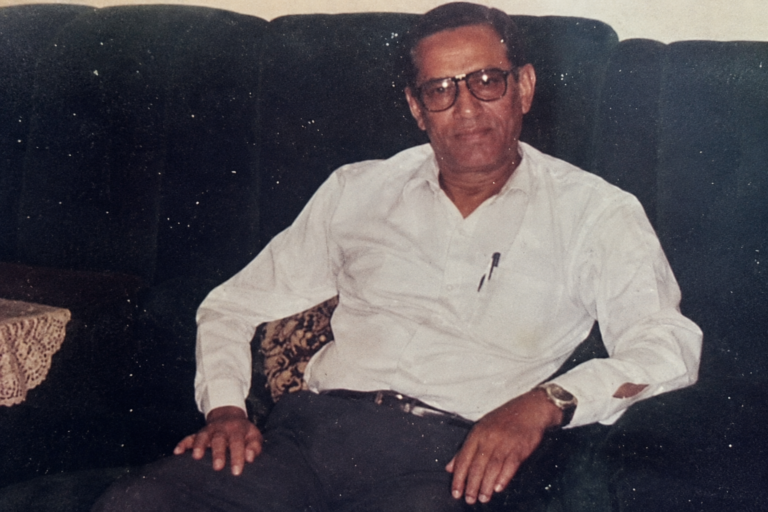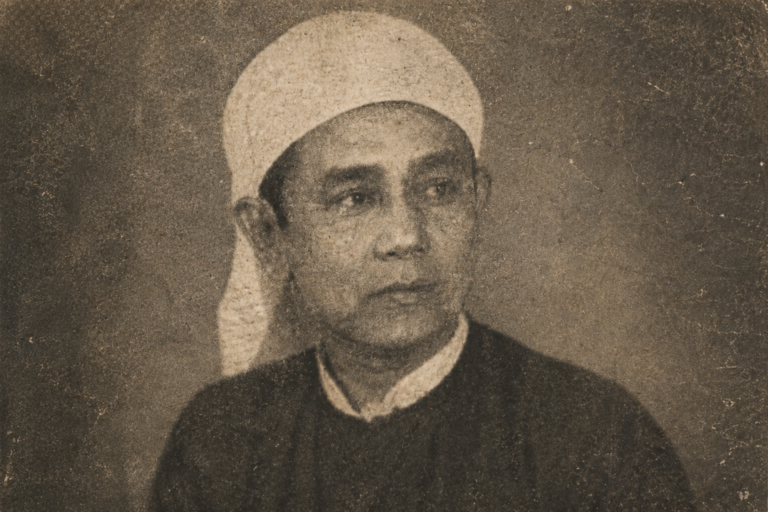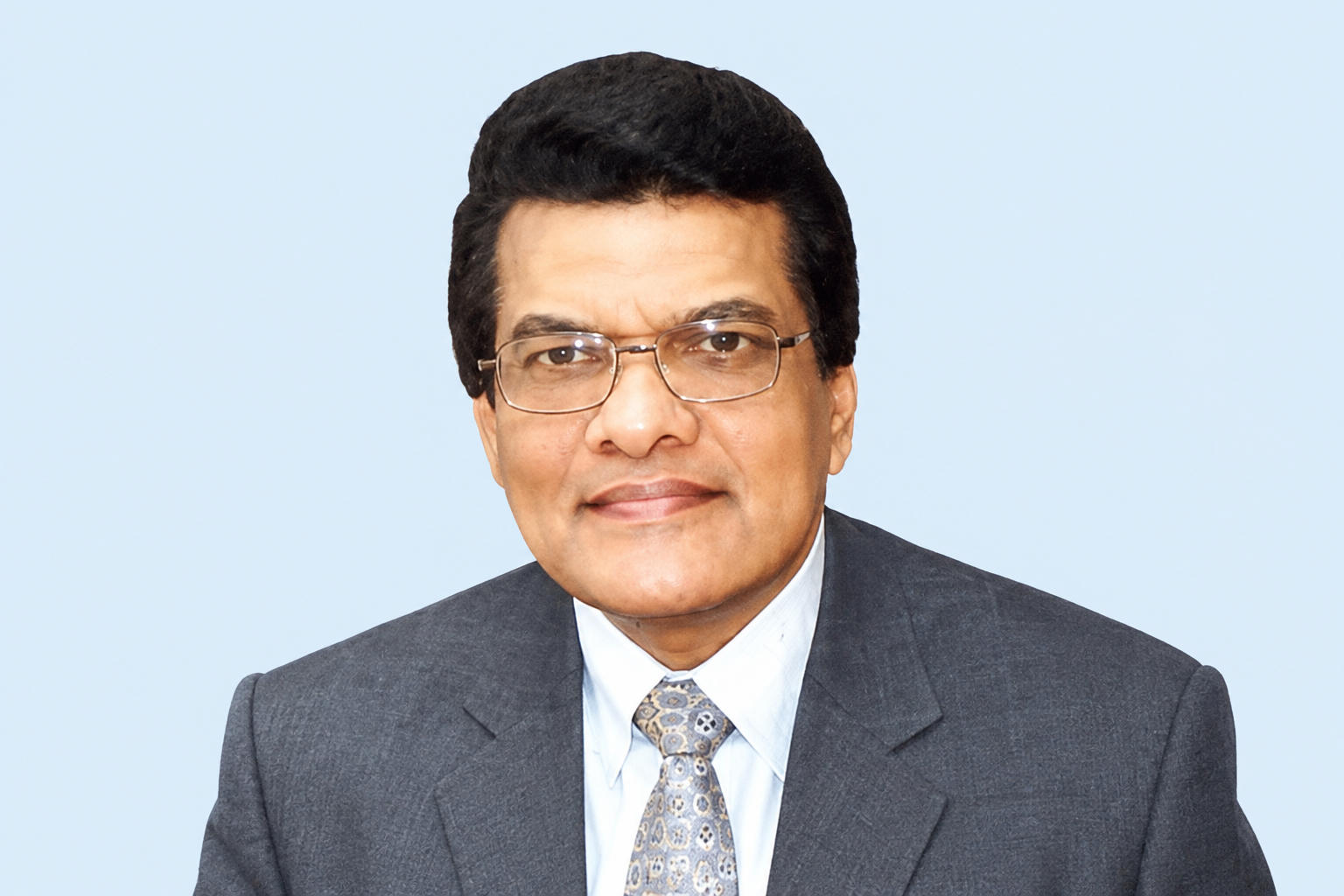
Former Director General of the Arakan Rohingya Union, and Professor of Plant Pathology at the Pennsylvania State University

Dr. Wakar Uddin (Photo: Wakar Uddin / LinkedIn)
Dr. Wakar Uddin was a Rohingya American plant pathologist and international diplomat who spent over a decade as the primary institutional representative of the Rohingya people abroad. A tenured full professor in the Department of Plant Pathology and Environmental Microbiology at the Pennsylvania State University, he simultaneously served as Director General of the Arakan Rohingya Union, an OIC-backed federation representing more than 60 Rohingya organizations worldwide, and as an accredited adviser to The Gambia's legal team at the International Court of Justice.
At a Glance
Early Life in Maungdaw
Wakar Uddin was born in 1954 in Maungdaw, a border township in northern Arakan (now Rakhine) State, Burma. His birth fell during the country's post-independence parliamentary era, a period when Rohingya individuals were recognized as citizens, voted in elections, and held office in the Burmese government.
That changed with General Ne Win's 1962 military coup. Growing up in Maungdaw under the military government that followed, Uddin witnessed the systematic disenfranchisement of northern Arakan's Rohingya population, including Operation Nagamin in 1978 and the steady erosion of civil rights that came with it. These conditions shaped his decision to pursue higher education abroad in the United States, and laid the foundation for the advocacy work that would define the second half of his life.
Education in the United States
Uddin completed his entire higher education in the United States, earning his Bachelor's and Master's degrees at the University of Nevada, Reno, before pursuing doctoral studies at the University of Georgia. Between degrees, he worked as a research assistant at the Columbia Basin Agricultural Research Center at Oregon State University, and during his doctoral years he served as a diagnostician at the University of Georgia's Plant Disease Clinic. He completed his Ph.D. in 1996 and spent a further year as a postdoctoral research associate in plant pathology before moving into a full-time faculty position.
Academic Career at Penn State
In 1998, Uddin joined the faculty of the Pennsylvania State University as an Assistant Professor of Plant Pathology. He was promoted to Associate Professor with tenure in 2004, and later attained the rank of full Professor in the College of Agricultural Sciences, a 24-year academic career spent entirely at Penn State.
He became an internationally recognized authority on turfgrass pathology, focusing on gray leaf spot (also called blast disease) in perennial ryegrass, caused by the fungal pathogen Magnaporthe oryzae. His research group developed temperature- and leaf wetness-based predictive models that let golf course superintendents and sports turf managers forecast outbreaks and reduce unnecessary fungicide use, investigated non-chemical disease suppression through induced systemic resistance, and ran multi-year field trials on soil amendments for turfgrass wear tolerance. He authored more than 50 peer-reviewed articles over his career and supervised numerous Ph.D. and Master's students, including Dr. Benjamin A. Aynardi, Dr. Yinfei Li, and Yu Huang, alongside teaching core plant pathology courses both on campus and through Penn State World Campus.
Clarifying the Saudi Arabia Connection
Some secondary sources have claimed Uddin held a formal professorship at a Saudi university, a claim that does not hold up against primary academic records. His full-time academic affiliation throughout his career was exclusively with Penn State; the confusion appears to trace back to event materials, such as a 2020 international Rohingya conference brochure, that listed him alongside Saudi-based academics like Dr. Morad Alsahafi of King Abdulaziz University.
What is accurate is that Uddin maintained extensive diplomatic and humanitarian ties with Saudi Arabia. The Organization of Islamic Cooperation, headquartered in Jeddah, served as the founding patron of the Arakan Rohingya Union, and Saudi Arabia is home to one of the largest historic Rohingya diaspora populations in the world. Uddin traveled frequently to Jeddah and Riyadh to convene ARU congresses, meet Saudi officials and OIC leadership, and engage Saudi-based Rohingya community organizations.
Founding the Arakan Rohingya Union
The Arakan Rohingya Union was established on May 30-31, 2011, at a convention held at the OIC's General Secretariat in Jeddah, formed under Resolution No. 4/37-MM of the 38th OIC Council of Foreign Ministers as an umbrella federation representing more than 60 Rohingya organizations worldwide. Uddin served as the ARU's Director General, its chief executive and primary international spokesperson, from its founding in 2011 until his death in 2022, operating out of a registered headquarters in State College, Pennsylvania.
At the ARU's second General Congress, held in Jeddah in July 2013, Uddin was formally re-elected to a six-year term as Director General alongside Council Chair Dr. Tahir Mohamed Siraj, a mandate later extended to preserve continuity through the 2017 refugee crisis and the international legal proceedings that followed.
Policy Positions
Uddin's advocacy combined institutional lobbying, policy analysis, direct humanitarian mobilization, and public diplomacy, built around a consistent set of demands.
Congressional and International Diplomacy
Uddin represented the ARU and the North American Rohingya diaspora in engagements across multiple capitals. In May 2012, he testified before the Canadian House of Commons Subcommittee on International Human Rights in Ottawa. In September 2013, he delivered expert testimony to the US House Foreign Affairs Committee at a hearing titled "An Unclear Roadmap: Burma's Fragile Political Reforms and Growing Ethnic Strife," urging caution against lifting US sanctions on Myanmar and documenting state segregation and arbitrary arrests, before committee members including Chairman Steve Chabot. He returned to Washington in April 2014 to brief US lawmakers and State Department officials on Rohingya disenfranchisement ahead of Myanmar's 2015 general election.
His diplomatic relationship with Turkey deepened over the following years: in November 2016 he briefed Turkish Deputy Foreign Minister Ahmet Yıldız on the military escalation in northern Rakhine State, and in November 2017, as more than 700,000 Rohingya fled into Bangladesh, he met Foreign Minister Mevlüt Çavuşoğlu in Ankara to coordinate relief and diplomatic strategy, a partnership that also produced media training programs for Rohingya journalists run with TRT and Anadolu Agency. He represented the ARU at OIC Council of Foreign Ministers meetings and summits, and in 2014 traveled to Kuwait to meet human rights advocates including Dr. Al-Saqer, presenting strategies for engaging Gulf Arab civil society on behalf of stateless Rohingya.
The Gambia v. Myanmar at the ICJ
In December 2019, during the preliminary hearings of the genocide case brought by The Gambia against Myanmar at the International Court of Justice in The Hague, Uddin was officially accredited as a member of The Gambia's delegation in his capacity as ARU Director General, serving alongside human rights advocate Razia Sultana and Solicitor General Cherno Marenah's legal team. He also submitted formal documentation to the UNHCR and OHCHR detailing camp conditions in Cox's Bazar, forced labor in northern Rakhine State, and legal barriers to repatriation.
Muslim Aid America and Humanitarian Work
Alongside his diplomatic role, Uddin founded and served as President of Muslim Aid America in 2014, a registered 501(c)(3) organization directing humanitarian relief programs for displaced populations. He also served as Founding Chairman of the Burmese Rohingya Association of North America (BRANA), and in his later years engaged in political dialogue with the United League of Arakan, the political wing of the Arakan Army, and with Rakhine diaspora leaders, working toward inter-communal dialogue between ethnic Rakhine Buddhists and Rohingya Muslims.
Media Presence
Uddin maintained an active presence across international, Arabic, Rohingya, and Burmese-language media. Al Jazeera Arabic and Al Jazeera Mubasher reported on his calls for international intervention to halt violence in Rakhine State, while Saudi outlets including Arab News and the Saudi Gazette covered his role at OIC summits in Jeddah. Within Rohingya community media, outlets including Kaladan Press Network, Rohingya Vision, and Arakan Times closely followed and debated his activities, republishing ARU statements and testimony transcripts, while also reflecting internal community scrutiny of ARU governance and delegate selection. Burmese exile outlets such as Mizzima, The Irrawaddy, and Narinjara covered his advocacy abroad, while state-controlled and ultra-nationalist Burmese media frequently targeted him and the ARU as outside political actors.
Controversies
Uddin's long leadership of the ARU occurred within a genuinely contested diaspora political environment, and two episodes stand out in the community record. Ahead of the ARU's second congress in Jeddah in July 2013, several North American, European, and Bangladesh-based Rohingya organizations publicly criticized the conference's organization, alleging that invitation letters went out with insufficient notice, making Saudi travel visas difficult for overseas delegates to secure and resulting in a high proportion of Saudi-based proxy delegates, a procedural imbalance critics argued helped Uddin's re-election. Supporters described the delays as administrative rather than political.
In a September 2018 Burmese-language interview with Voice of America, Uddin expressed skepticism about relying solely on the International Criminal Court to resolve the Rohingya crisis, arguing that judicial processes were slow and that practical progress required domestic political engagement alongside negotiated security guarantees for repatriation. Two days later, twenty-eight Rohingya organizations, including the Arakan Rohingya National Organisation and the British Rohingya Community, issued a joint statement rejecting his comments, stating they did not represent genocide survivors who wanted immediate international prosecution of Myanmar's military leadership. The episode exposed a lasting strategic divide within the diaspora between advocates of uncompromising international legal accountability and proponents of pragmatic political negotiation.
Death
Wakar Uddin died peacefully at 11:00 AM EST on Friday, April 29, 2022, at Johns Hopkins University Hospital in Baltimore, Maryland, at the age of 68. Penn State's College of Agricultural Sciences issued a memorial tribute, with Department Head Dr. Carolee Bull praising him as a "respected mentor, friend, and statesman." Myanmar's National Unity Government issued an official statement of condolence acknowledging his lifelong advocacy for democratic rights, and on May 3, 2022, the United League of Arakan issued its own letter of condolence, describing his passing as a major loss and highlighting his efforts toward inter-communal bridge-building between Rakhine and Rohingya communities.
Legacy
Uddin is remembered as a figure who moved the Rohingya cause into formal international institutional channels, the US Congress, the OIC, and the International Court of Justice, while maintaining a full academic career on an entirely separate track. On September 19, 2023, one year after his death, the Arakan Rohingya Union and BRANA established the annual "Dr. Wakar Uddin Award" to honor extraordinary contributions to the Rohingya cause. The inaugural award was presented in New York City to the human rights organization Fortify Rights, accepted by CEO Matthew Smith, in recognition of its work documenting the genocide and advocating for international accountability.
Confirmed vs. Unverified Claims
A source-critical review of the record separates what is independently confirmed from what remains uncertain.
| Claim | Evidence | Assessment |
|---|---|---|
| Tenured professorship at Penn State | Official promotion records, faculty obituary, peer-reviewed journals | Confirmed |
| Director General of the ARU | OIC resolutions, ARU documentation, US Congressional records | Confirmed |
| Accredited adviser at the ICJ | Official ICJ delegation list, The Gambia v. Myanmar | Confirmed |
| Date and place of death | Penn State, Narinjara News, NUG statement | Confirmed |
| Exact vote margins, 2013 Jeddah congress | Re-election to six-year term confirmed; exact tallies archived internally | Probable |
| Formal professorship at a Saudi university | Refuted by primary Penn State academic records | Unverified / Refuted |
Complete Timeline
Tap any year for the fuller account.
1954+
1962+
1996+
1998+
2004+
May 2011+
May 2012+
Sep 2013+
Jul 2013+
2014+
Nov 2016+
Nov 2017+
Sep 2018+
Dec 2019+
Apr 29, 2022+
Sep 2023+
What Others Said
A respected mentor, friend, and statesman who made profound contributions to plant pathology and global humanitarian work.
Dr. Carolee BullDepartment Head, Penn State Plant PathologyA major loss, remembered for his pragmatic efforts toward peaceful coexistence between Rakhine and Rohingya communities.
United League of ArakanOfficial letter of condolence, May 2022Sources & Bibliography
This profile is built from official institutional and government records, peer-reviewed journal publications, and international, Arabic, and Burmese-language press coverage. Archive and record references are cited inline where they identify a specific primary document.
- Penn State University — Plant pathology professor remembered for impact on turfgrass industry, students.
psu.edu - US House Foreign Affairs Committee — Official hearing transcript, Sept 19, 2013.
docs.house.gov - International Court of Justice — Official record, The Gambia v. Myanmar.
icj-cij.org - Republic of Türkiye, Ministry of Foreign Affairs — Deputy Foreign Minister Yıldız receives ARU Director General.
mfa.gov.tr - Republic of Türkiye, Ministry of Foreign Affairs — Foreign Minister Çavuşoğlu receives ARU Director General.
mfa.gov.tr - Phytopathology — Induction of Salicylic Acid–Mediated Defense Response in Perennial Ryegrass.
apsjournals.apsnet.org - Plant Disease — Gray Leaf Spot (Blast) of Perennial Ryegrass Turf: An Emerging Problem.
apsjournals.apsnet.org - Burma Link — Joint statement: Rohingya communities reject ARU and its head Dr. Wakar Uddin.
burmalink.org - Fortify Rights — Fortify Rights receives the Dr. Wakar Uddin Award.
fortifyrights.org - ProPublica Nonprofit Explorer — Muslim Aid America, tax and leadership filing record.
propublica.org - Parliament of Canada — Official committee witness records, May 31, 2012.
ourcommons.ca - Narinjara News — ULA condoles the demise of Dr. Wakar Uddin.
narinjara.com - Mizzima — Spring Revolution Daily News, May 2, 2022.
mizzima.com - Anadolu Agency — Rohingya envoy: UN should protect Rohingya Muslims.
aa.com.tr - Daily Sabah — Rohingya diaspora take determined steps to regain their rights.
dailysabah.com - Kuwait Human Rights Society — Diplomatic visit report, 2014.
humanrights.org.kw - Burma News International / Kaladan Press — ARU members complain of late invitations for convention.
bnionline.net - Progressive Voice Myanmar — Joint statement: Rohingya communities reject ARU and its head.
progressivevoicemyanmar.org - Penn State University Libraries — Promotion and Tenure Recognition: Wakar Uddin, 2004.
libraries.psu.edu - US House of Representatives — Official biographical sheet, April 29, 2014.
docs.house.gov - Center for Peace and Justice, BRAC University — International e-Conference on Connecting the Rohingya Diaspora, 2020.
cpj.bracu.ac.bd