Timeline of what Suu Kyi did against the Rohingya until she was arrested by the Myanmar military in 2021

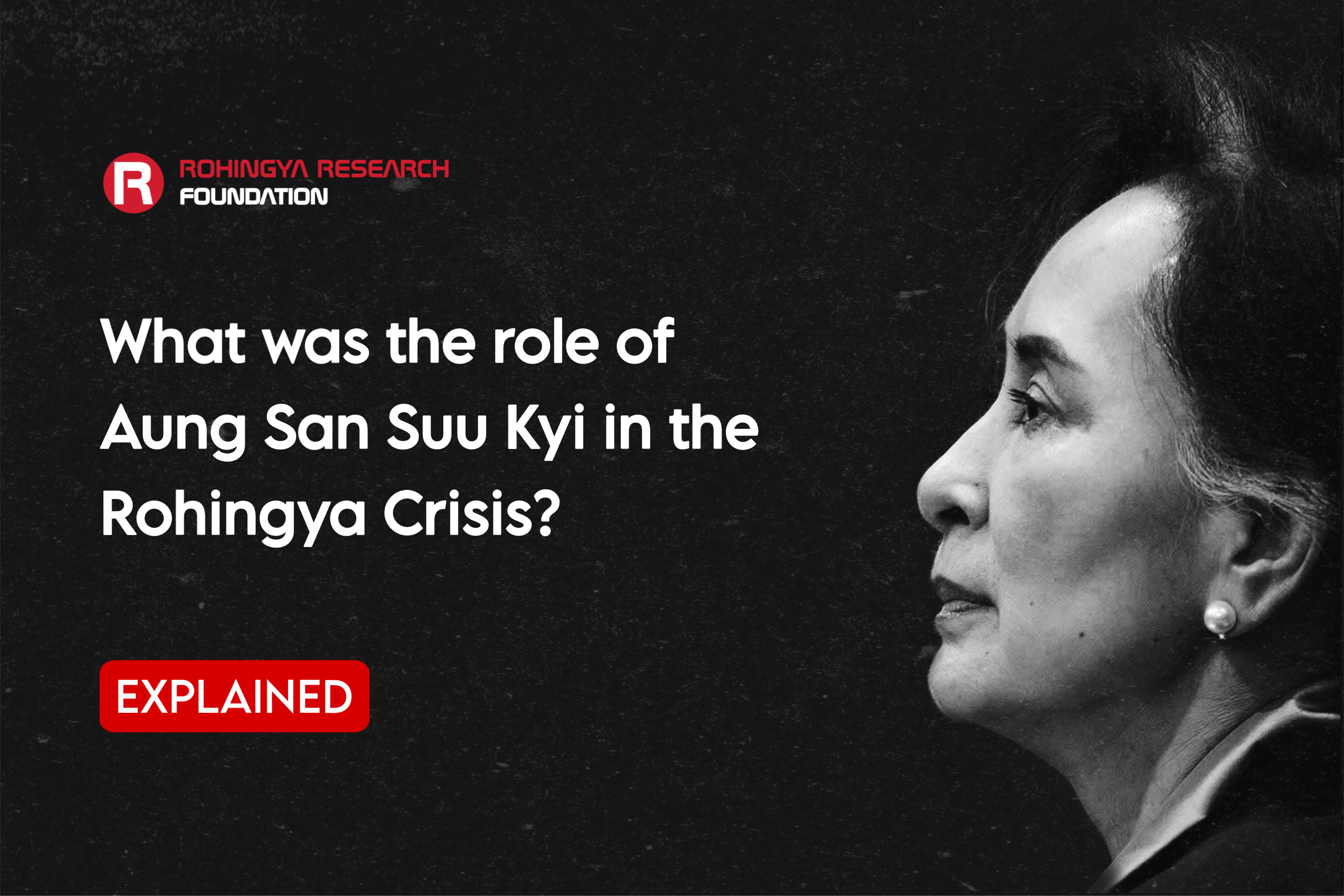
What was the role of Aung San Suu Kyi in the Rohingya Crisis? (Photo: TRTWorld)
Aung San Suu Kyi, in the context of the Rohingya, was not very popular until she came to power in 2015. Yet many Rohingya had real hope in her. She was a Nobel Peace Prize laureate who had spent fifteen years under house arrest fighting for democracy, and they believed someone who had suffered under the military herself would finally speak for them.
Her father, General Aung San, had dreamed of a Burma where all its peoples had a place. But when her moment came, his daughter did not stand with the Rohingya, a people who had suffered for decades under Myanmar’s oppressive laws. Instead, she became the military’s most powerful defender.
For decades the Rohingya had been made stateless by the 1982 Citizenship Law. It excluded them from Myanmar’s 135 recognized “national races,” denied them citizenship, and restricted where they could travel, study and work. They hoped a democratic government would change this.
Here is a timeline of what Suu Kyi did against the Rohingya until she was arrested by the Myanmar military in 2021.
2012: Silence in Oslo
In June 2012, state-sponsored violence against Rohingya displaced over 100,000 people. Suu Kyi, then an opposition leader, spoke of it only as a matter of immigration and the 1982 Citizenship Law.
Days later she gave her long-delayed Nobel lecture in Oslo. She spoke movingly about building a world free of the displaced and the homeless, without saying a word about the Rohingya being driven from their homes at that very moment.
In interviews that year she refused to say whether the Rohingya were citizens and said she had a “soft spot” for the army her father founded.
2013: Denying ethnic cleansing
In a BBC interview with Mishal Husain, she denied that ethnic cleansing was happening. She said Buddhists also suffered and lived in fear of being “submerged” by the world’s Muslim population.
A later biography reported that she complained off-air about being interviewed by a Muslim.
2015: Coming to power
Before the November election she declared she would rule “above the president” and warned foreign media not to “exaggerate” Rakhine’s problems. Her party, the NLD, did not field a single Muslim candidate anywhere in the country, and the Rohingya were not allowed to vote. Her party won a landslide, and she became State Counsellor and Foreign Minister, the de facto leader of Myanmar.
2016: Erasing the name, and the “Fake Rape” campaign
One of her first acts in government was to take away the Rohingya’s name. In May 2016, standing beside US Secretary of State John Kerry, she asked the world not to use the word “Rohingya,” calling it “emotive.”
A month later her Foreign Ministry instructed embassies and UN bodies to say “Muslims in Rakhine State” instead. For a people whose identity the state had long denied, this was deeply painful. It told them that even the democratic government would not recognize who they were.
In August she set up an advisory commission on Rakhine led by former UN Secretary-General Kofi Annan, focused on development rather than human rights abuses.
In September, at the UN General Assembly, she again avoided the word “Rohingya.”
In October, after a Rohingya armed group attacked border posts and killed nine officers, the army launched “clearance operations” in northern Rakhine. The area was sealed off from journalists and aid workers, and about 93,000 Rohingya fled to Bangladesh. Instead of investigating the victims’ accounts, her government attacked them.
In December her own office, the State Counsellor’s Information Committee, published a banner reading “Fake Rape” to dismiss the women’s testimonies. This was not the army speaking but the civilian office she directly controlled. A government inquiry led by a former general cleared the security forces.
2017: Massacres and denial
In February, 2017, a UN human rights report documented mass killings, gang rapes, disappearances and village burnings during the 2016 operations and said these likely amounted to crimes against humanity.
In April she told the BBC that “ethnic cleansing is too strong an expression” and said the army was free “to go in and fight” under the constitution.
On August 24 she accepted the Annan Commission’s final report, which recommended reviewing the citizenship law and ending movement restrictions.
The next day, ARSA attacked about thirty police posts, and the military unleashed one of the worst campaigns of violence of this century. Elite army divisions and local mobs swept through northern Rakhine. Massacres were reported in Tula Toli, Chut Pyin and Maung Nu, where men were killed, women raped and whole villages burned.
In Inn Din, ten Rohingya men and boys were executed and buried in a mass grave. Within weeks, more than 740,000 Rohingya had fled across the Naf River into Bangladesh. Suu Kyi’s response was denial.
On September 6 she blamed a “huge iceberg of misinformation” promoting “the interests of the terrorists,” without mentioning the 125,000 refugees who had already fled.
On September 11 the UN human rights chief, Zeid Ra’ad Al Hussein, called the campaign “a textbook example of ethnic cleansing.”
On September 19 she told diplomats that the operations had stopped on September 5 and that more than half of Muslim villages were intact. She said her government wanted to find out “why this exodus is happening,” as if the cause were a mystery. Satellite images showed hundreds of villages burned to the ground.
She had no command over the army, but she was not powerless, and the actions she did take worked against the Rohingya.
In October she founded and chaired the UEHRD, a reconstruction body under which burned Rohingya villages were bulldozed and security facilities built on the land.
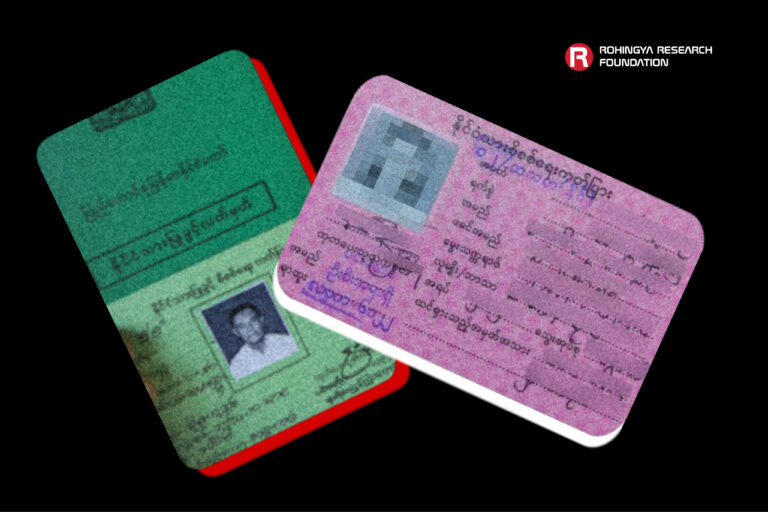
In November she signed a repatriation deal with Bangladesh that required papers many Rohingya had lost or had burned, and forced them to accept cards treating them as foreigners. Not a single refugee agreed to return. In December, Reuters journalists Wa Lone and Kyaw Soe Oo were arrested for exposing the Inn Din massacre, and her Foreign Ministry banned UN Special Rapporteur Yanghee Lee from the country.
2018: The world turns against her
In January, Bill Richardson, a longtime American friend, urged her to free the Reuters journalists. He later described how she exploded in anger. He resigned from her Rakhine advisory board and called it a “whitewash.” During the Reuters trial, a police officer testified that the journalists had been set up, yet they were sentenced to seven years.
In September, at the World Economic Forum in Hanoi, she admitted the crisis “could have been handled better” but defended the verdict, saying they were jailed for breaking the law, not for being journalists.
That year the UN Fact-Finding Mission, which her government had refused to let into the country, concluded that she had failed to use her position or moral authority to stop the events, and called for military leaders to be investigated for genocide.
In November, US Vice President Mike Pence told her publicly that the violence was “without excuse.” She replied that Myanmar understood its own country better than anyone else. Many of her honours were taken away that year, including Amnesty International’s highest award and her honorary Canadian citizenship, along with a number of city freedoms in Britain.
2019: Defending the army at the ICJ
In May, the Reuters journalists were finally freed through a presidential amnesty after 511 days in prison. Parts of Rakhine were placed under one of the world’s longest internet shutdowns.
In November, The Gambia brought a genocide case against Myanmar at the International Court of Justice. Many Rohingya hoped this would be the moment she finally acknowledged their suffering. Instead, in December, Suu Kyi travelled to The Hague and led Myanmar’s defence in person.
A Nobel Peace laureate stood before the world court to defend an army accused of genocide. She described the violence as part of an internal conflict with ARSA, argued that even if crimes had happened they were war crimes and not genocide, and said Myanmar’s own military courts should deal with them. As proof of justice, she pointed to the soldiers convicted over Inn Din, though those soldiers had been released early by military pardon.
Across three days in court she reportedly used the word “Rohingya” only once, and only in the name of the armed group. At home her party organized rallies and billboards celebrating her defence.
2020: “Give Myanmar time”
In January a government-appointed commission admitted possible war crimes but denied genocide. She then wrote in the Financial Times asking the world to “give Myanmar time” to deliver justice. Within hours the ICJ unanimously ordered Myanmar to protect the Rohingya from genocide and preserve evidence.
In November her party won another landslide election, while the Rohingya were again denied the vote and Muslim candidates were again excluded.
For the Rohingya, her story is one of disappointed hope. She was not the commander who ordered the killings, but she became the civilian face and voice that defended them before the world.