Genocide is more than killing. For decades, the Rohingya have been losing their language, songs, scholars and traditions. This is the slow-burning genocide the world has ignored.

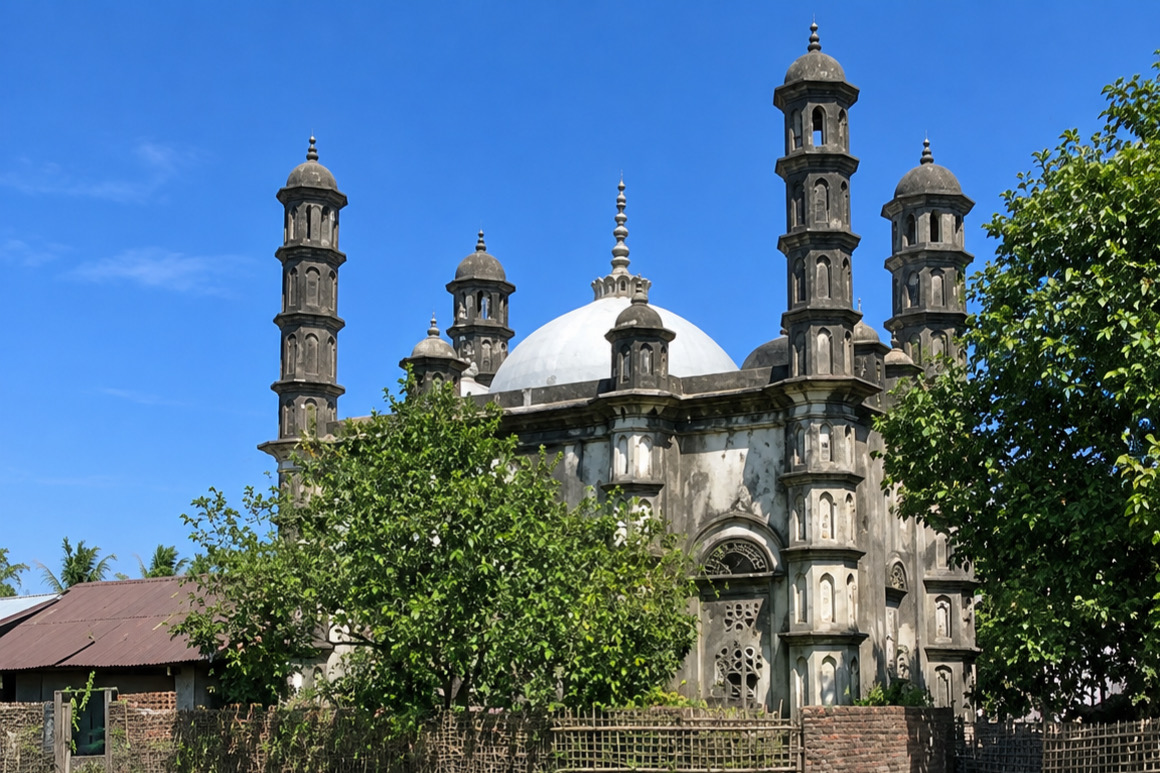
A Rohingyas' mosque in Arakan (Photo: Arakan Watch)
Rohingya people have been living in Arakan for centuries, with our own culture, language and traditions. The history of Arakan cannot be told without the Rohingya. But when the world talks about the Rohingya genocide, it mostly talks about 2017: the killings, the burning villages, the boats and the camps. That violence is real and it must never be forgotten.
But there is another genocide that started long before 2017, and it is still going on. It is the slow destruction of who we are. The world has ignored it. And honestly, most of the time, even we have not noticed it.
How it started
After Burma became independent in 1948, a trend against Rohingya people grew among Rakhine Buddhist nationalists. In 1961, the government formed the Mayu Frontier District based on the proposal of Rohingya leaders. Muslim-majority areas like Buthidaung, Maungdaw and part of Rathedaung were run directly by the central government. In those years we still had some place in the country and our leaders were in high positions in the central government. There was even a Rohingya broadcast program on the national radio.
Everything changed after the military took power in 1962. The Mayu Frontier was dissolved. The Rohingya radio program was stopped by 1965. Rohingya officials were slowly removed from their positions. Step by step, the name “Rohingya” was taken out of every official channel.
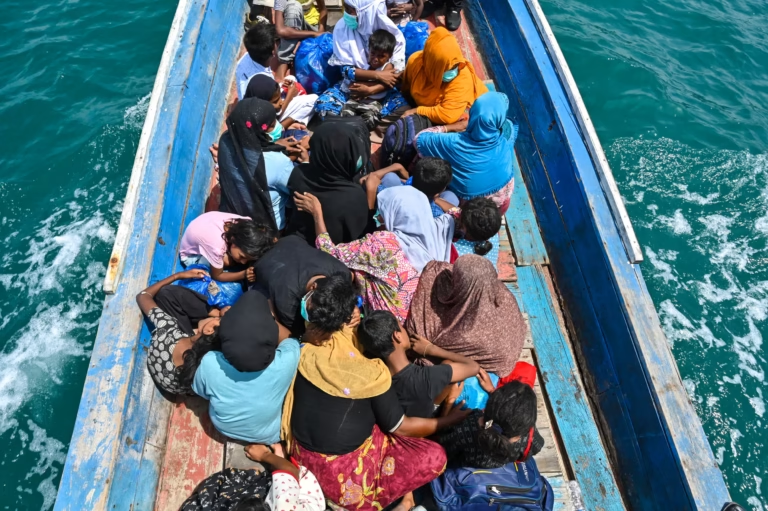
Then came the 1982 Citizenship Law. It left Rohingya out of the list of recognized national races, and it made most of us stateless in our own homeland. After that, the slow-burning genocide became intense. It had already pushed around 200,000 Rohingya into Bangladesh in 1978. In 1991 and 1992, around 250,000 more fled, and in 2017, more than 700,000. Thousands of people were killed, homes and villages were burnt down, women were raped and children were killed.
Genocide is more than killing
Genocide is more than killing people. It can also mean destroying the identity, language, religion, traditions and cultural heritage that hold a community together. You do not have to kill every person to destroy a people. Destroy their language, their faith, their songs and the people who teach them, and the next generation grows up with nothing left to inherit.
This is exactly what happened to us. The Burmese government put restrictions on our culture, our festivals, our traditions and our language. They removed Rohingya from official use. They stopped us from gathering and performing our cultural activities.
Our mosques and Madrasahs
In our society, a mosque is not only a place to pray. It is where the village meets, shares news and solves problems. A Madrasah is where children learn the Quran, and also where teachers pass down our customs and values. When these places are burned or closed, it is not only a building that is lost. A whole village loses its center, and children lose the place where they were learning who they are. The destruction of religious property is a way of erasing a community’s presence from its own land.
Our language
The Rohingya language carries our history. Our family stories, our proverbs, our folktales, the names of our rivers and villages, the memories of our elders. Most of this was never written down. It was passed from grandparents to children by speaking, storytelling and singing.
That is what makes it so easy to break. If children cannot study in their language, if teachers are killed or forced to flee, and if the language is never allowed to grow, then the chain breaks. The elders still know things the young ones will never learn. Old words disappear from daily life. When education is restricted and teachers are lost, we slowly lose the ability to read and write our own language.
For a long time, Rohingya people had no script of their own. We wrote our language unofficially in Urdu, Burmese or Arabic letters. None of them really fit. A distinct language like Rohingya needs its own way to be written.
Around 1980, Moulana Mohammed Hanif and other Rohingya scholars started working on a new script made only for Rohingya. Today it carries his name: the Hanifi script. But he could not teach it in Arakan, because the government would not allow it. Following the government-sponsored violence in the 1980s, he fled to Bangladesh, and he kept working on it there and with the diaspora. In 2018, the Hanifi Rohingya script was added to Unicode, so today it can be typed on phones and computers.
Inside Arakan, though, it was almost impossible to learn or use. I would say more than 95 percent of the people inside the country never even heard of it. So young people had no chance to speak, read or write Rohingya in their daily life. Slowly they started to believe their language was not important, and they moved to the languages that were used more widely.
A language can live without a state. But it cannot live long if its people are stopped from teaching it.
Our Tarana
Tarana is our traditional song and poetry. It is not just entertainment. It is our archive. Through Tarana, our people remembered their history, their homeland, their love, their grief, their separation and their hope. Anthropologist Kamalika Farzana has shown that Tarana is a form of everyday resistance, and that people kept singing it even in the refugee camps.
There is one Tarana line I cannot stop thinking about:
Añára ehón acá gorí, Tui honó din no foóráibi. (We are hoping, you will never forget us.)
That line says everything. It is the fear of being forgotten, and it is also the way we refuse to be forgotten. But if the language dies, nobody will understand the song. And if the singers die, the songs die with them.
Our musicians kept this going even outside Arakan. Shobu, a legendary Rohingya singer, sang to the diaspora about our language. In one of his songs he calls on every Rohingya to speak Rohingya, to read and write it, and to sing Rohingya songs:
Ruáinggár decí, Ruáinggá báci, Ruáingga hotá hoo.
Ruáingga fonna lekí, forí, Ruáinggár gaana goó!
(Rohingya people, Rohingya speakers, speak in Rohingya.
Read and write in Rohingya, and sing Rohingya songs.)
He was not singing only for entertainment. From far away, he was teaching the very thing the government would not let us teach at home.
Our teachers, poets and elders
This is the part people talk about the least. Every community has people who carry its knowledge: teachers, religious scholars, poets, singers, artists and elders. Sarah Albaladejo García, in her research on the cultural genocide of the Rohingya, documents the systematic killing of educated and influential Rohingya men, our intellectuals and scholars.
Think about one old singer who knows dozens of songs that were never written down. If he dies before teaching them, those songs are gone forever. Kill a teacher, and a whole generation loses its education. Kill a poet, and his unpublished poems are lost. Lose an elder, and you lose the only person who saw what happened with his own eyes. You do not need to burn a library to destroy knowledge. You can kill the people who carry it.
Our art and our customs
Culture is also in ordinary life. How we celebrate a wedding, how we mourn, how we welcome a guest, how we share food. Generosity and helping people in need are a big part of Rohingya life, and our henna art (Moódí Diya) is one of the ways we express ourselves. Where literacy is limited, drawings and art keep memories that books cannot: our villages, our clothes, our daily life. When families are separated and people are not allowed to gather, these things slowly stop being practiced. No bullet is needed for that.
What it did to us
A community that slowly loses the feeling of its own identity cannot survive for long. And that is what happened to us. Our people forgot who they were. We became lost within ourselves. The voice of Rohingya scholars went down almost to zero. Our language and culture were pushed close to extinction. Speaking our own language and practicing our own traditions became something to be ashamed of, even cringe, for our own people. Without noticing, we were forgetting our roots.
This damage lasts a long time. Even if our children survive, they may grow up without knowing the stories their grandparents told, the songs their ancestors sang, the poetry written in their language, or the names of our own historical figures. Some of what we lost can never come back.
What the law says
We should be honest about one thing. Under Article II of the 1948 Genocide Convention, destroying a culture is not listed as genocide by itself. The Convention lists five acts, like killing members of a group or causing them serious harm. But international courts have accepted that attacks on a group’s cultural and religious property can be evidence of an intent to destroy that group. In the Krstić case (paragraph 580), the Yugoslavia tribunal said that physical destruction often comes together with attacks on cultural and religious symbols, and those attacks can show intent.
So cultural genocide is not yet its own crime in international law. I believe it should be. But even today, the destruction of our culture is part of the evidence. It is not a side story. It is part of the same genocide.
Why we have to remember
Culture is essential to survival. Our oral traditions, poetry, tarana, language, art and religious practices hold the collective memory of our people. That is why writing down our poetry, recording our tarana, collecting oral histories, saving old words and telling the life stories of our cultural figures is not only a literary hobby. It is how we keep knowledge alive for the next generation, the knowledge they would never get otherwise.
They tried to erase us from the radio, from the government, from the law and from our own land. Preserving our culture is how we answer them. It is our work against being erased from history.
Añára ehón acá gorí, Tui honó din no foóráibi. (We are hoping, you will never forget us. And we will not forget ourselves either.)