This opinion explores the limits of the ICJ’s judgment in delivering justice for the Rohingya, arguing that legal recognition alone cannot end their suffering without accountability, citizenship, and meaningful political change.

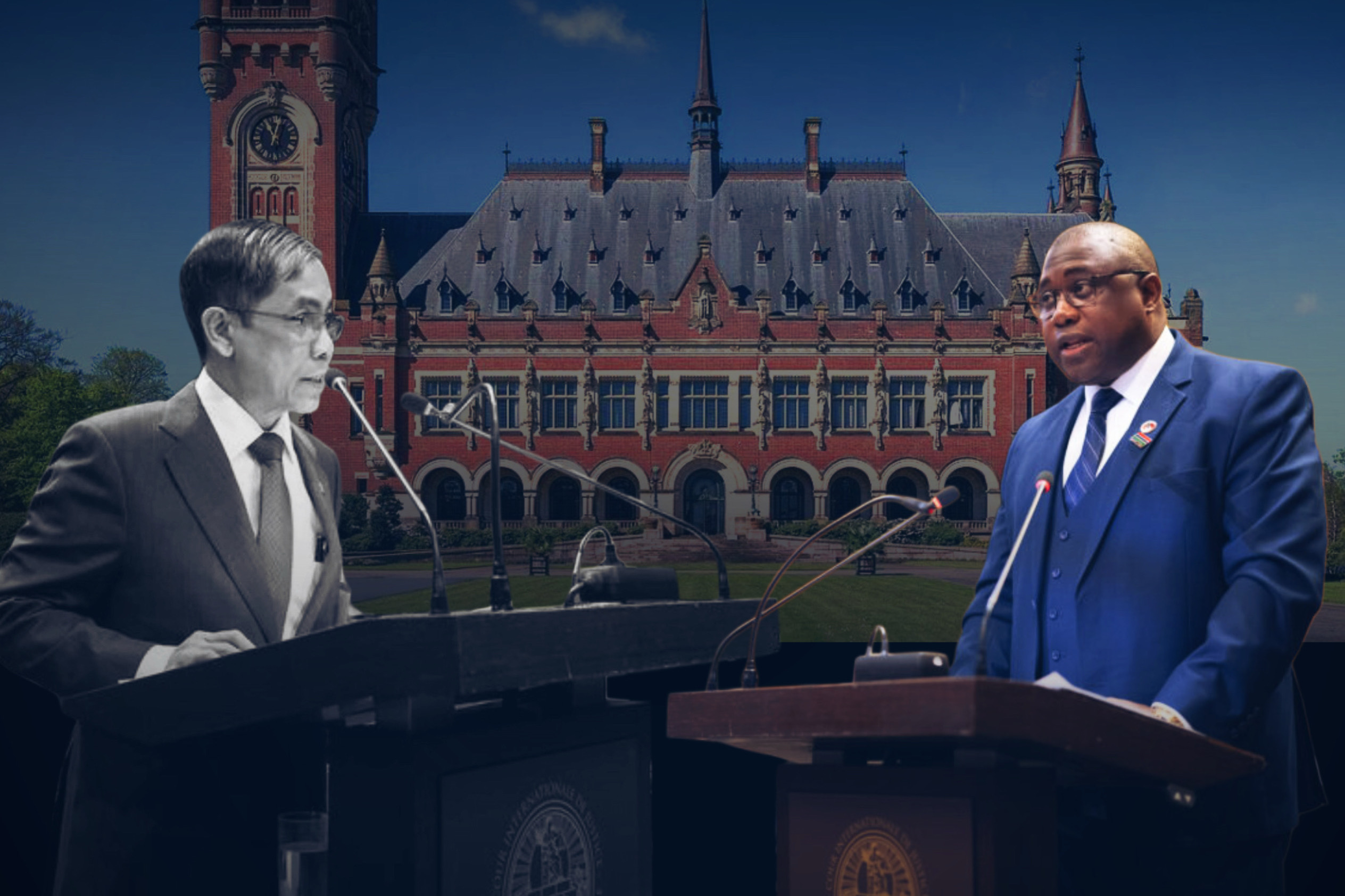
Myanmar’s agent, Ko Ko Hlaing (left), and the Gambia’s agent, Dawda A. Jallow (right)
On 19 November, the International Court of Justice (ICJ) is expected to deliver its judgment in The Gambia v. Myanmar, a case that has carried the hopes of millions of Rohingya for nearly seven years. For a people whose suffering has been denied, whose identity has been contested, and whose existence has been systematically stripped of legal recognition, the judgment could represent a historic moment. Yet it would be a mistake to confuse a legal victory with the arrival of justice.
If the Court finds Myanmar responsible for genocide, it would be an extraordinary affirmation of what Rohingya survivors have long testified to. It could challenge decades of denial, strengthen international pressure, and establish a powerful legal foundation for accountability. But even the strongest judgment cannot compel a military establishment that has repeatedly demonstrated its disregard for international law to suddenly change its behaviour.
And what if the Court’s judgment falls short of recognising genocide? Such an outcome could deepen the despair of survivors, provide ammunition for those who continue to deny the atrocities, and weaken the already fragile confidence Rohingya have placed in international institutions. It would not erase the evidence or the suffering. But it could make an already difficult struggle for recognition and accountability even more challenging.
Either outcome leaves us confronting an uncomfortable reality: the distance between international law and the lives of those it is supposed to protect.
The political landscape of Myanmar makes this distance even more troubling. Rakhine State, the homeland of the Rohingya, is now largely under the control of the Arakan Army (AA), rather than the Myanmar military. For Rohingya, this creates another layer of uncertainty. The question is no longer simply whether the military will permit our return, but whether any authority controlling our homeland will recognise our identity, citizenship, rights, and security. A change in territorial control does not necessarily mean a change in the conditions that made our lives unbearable.
Meanwhile, Myanmar’s military remains deeply entrenched, sustained in part by powerful international relationships, including with China and Russia. These geopolitical alliances complicate the prospects for meaningful international pressure and accountability. The world may recognise the crimes committed against the Rohingya, but recognition alone does not guarantee that powerful actors will be willing to confront those responsible.
In such a world, expecting a court judgment alone to transform the fate of the Rohingya may be an exercise in misplaced hope.
The ICJ is not a criminal court that can imprison individual perpetrators. Its judgment concerns the responsibility of the state of Myanmar. Enforcement, accountability for individuals, and meaningful political change require further action by states and international institutions. The Security Council, where geopolitical rivalries frequently paralyse action, remains a central obstacle.
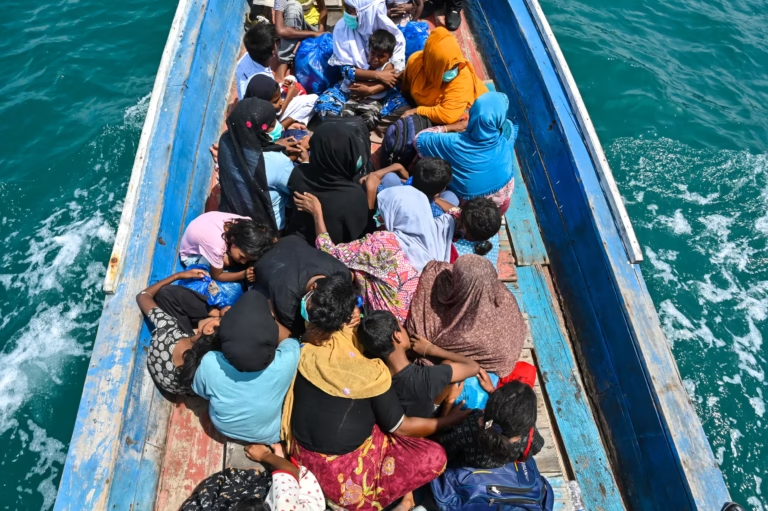
For Rohingya refugees in Bangladesh, Malaysia, and elsewhere, the consequences are painfully tangible. Families remain separated. Children grow up without citizenship. Refugees face restrictions on movement, education, and livelihoods. Those remaining in Rakhine continue to confront insecurity and discrimination. A verdict in The Hague will not automatically open borders, restore confiscated land, grant citizenship, or guarantee safe and voluntary repatriation.
This is not an argument against the ICJ. On the contrary, the case is indispensable. International law matters precisely because powerful actors often escape accountability. A judgment can establish the truth, challenge denial, and create obligations that the international community cannot legitimately ignore. But its significance will ultimately depend on whether governments are willing to act beyond the courtroom.
The Rohingya have spent generations waiting for the world to recognise what happened to them. We cannot afford another generation waiting for recognition to become reality.
The verdict may be historic. But history has taught the Rohingya that recognition without protection, accountability without enforcement, and promises without political will can become another form of abandonment.
The question is not simply whether the ICJ will deliver justice. It is whether the world will have the courage to make that justice mean something for the Rohingya.